
What kind of physical toll would a long-term space voyage take?
by Tara Haelle, DXS Health Editor
“Whether it happens in a hundred years or a thousand years or a million years, eventually our Sun will grow cold and go out. When that happens, it won’t just take us. It’ll take Marilyn Monroe, and Lao-Tzu, and Einstein, and Morobuto, and Buddy Holly, and Aristophanes, and all of this – all of this – was for nothing. Unless we go to the stars.” -Commander Jeffrey Sinclair, Babylon 5
I realize I’m showing off my nerd colors by quoting Babylon 5, but Commander Sinclair had a point. And while the space shuttles may have retired, the notion of Americans traveling through space is more alive than ever. Forget the moon. All eyes these days are on Mars, and the excitement of the Mars Rover has enthralled armchair scientists and lay people as well. Every day we appear to be another day closer to having the technology to carry humans on a Mars expedition. (Actually, if you’re itching to be one of the first on a Mars colony, you could apply for the chance to go through the Mars One Project’s training – which is, of course, also a reality TV show – and perhaps end up on human outpost in 2023. But I digress…)
The real question is, are WE – us actual humans – physiologically ready for such a trip?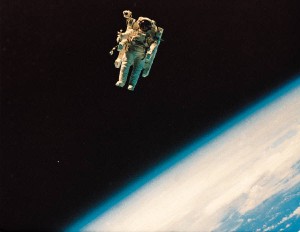
The health considerations of space travel are no small thing. In fact, in BMJ‘s Christmas issue, S. Marlene Grenon and colleagues explored some of the issues doctors may have to consider in clearing patients for flight, or issuing “fitness to fly through space” certificates, if you will. The FAA has already appropriated funds for building three commercial spaceports as well as drawn up legislation related to commercial human spaceflight regulation, so it’s reasonable for doctors to be thinking of their role as well.
Past research has already concluded that the G force passengers will encounter during launch and landing is nothing more than what most average people can manage as long as any medical conditions are well-controlled. However, other known clinical repercussions of space travel already include “space motion sickness, orthostatic intolerance, and neurovestibular dysfunction [dizziness, vertigo, inner ear problems] on return to Earth.”
Appetite loss, motion sickness, fatigue, insomnia, dehydration, dermatitis and back pain are also all common, if usually not life-threatening, but there are more serious implications of space exploration for human health as well. Extended periods of time in space can also increase individuals’ risk of cardiac dysrhythmias, osteoporosis, muscle atrophy, kidney stones, kidney infections and cancer from radiation exposure. Being in microgravity can also cause vision problems over the long-term.
Most of these more serious issues would be limited for casual space tourists, which is what the Grenon article focuses on. The authors are referring to people who may, for example, book one of Virgin Galactic‘s $200,000 reservations for a suborbital flight on the SpaceShipTwo. But what happens when people start booking hotel rooms on the moon? While studying the physiology and symptoms of astronauts can shed some light on what to expect, astronauts are hardly representative of the general population, and the approximately 530 people who have been in space so far make up a pretty small sample size for the kind of epidemiological studies we would probably want to see before exposing thousands of others to the possible dangers of something like space travel.
Then there are the possible hazards of serious long-term space travel, such as a trip to Mars.
According to a recent study looking at the possible effects of space travel on sleeping patterns and circadian rhythms, a trip to Mars would take about 250 days each way. The study involved observation and over 90 experiments on six men who volunteered to spend 520 days in a simulation experiment in Russia.
The results of the study weren’t surprising. Confined to their spaceship-like environment for 17 months, their sleeping patterns got out of whack and they became less active. They slept more, turned the light on less and were less alert during cognitive tests. Four of the six men reported problems with their sleep quality, including two whose sleeping time completely flipped from night to day, reminding me of the day-night confusion my newborn stubbornly had for a month. It’s easy to imagine the problems that could cause over a year. One of the men experienced sleep deprivation that slowed him down in the other cognitive tasks they tested him on.
“The results point to the need…to ensure maintenance of circadian entrainment, sleep quantity and quality, and optimal activity levels during exploration missions,” the authors wrote. Again, these findings weren’t terribly surprising — and probably didn’t require six very dedicated (or crazy) men to spend a year and half in isolation — but they’re serious concerns if we’re going to be exploring that final frontier.
Another study not long ago considered the possible long-term implications of extra cosmic radiation exposure to astronauts on long missions. Space is full of low-level radiation, which isn’t usually a problem since astronauts don’t generally spend years out there. But a trip to Mars would require at least a year, so the radiation exposure will build up.
One concern is that the radiation could raise astronauts’ risk for cancer, and now an increased risk for Alzheimer’s disease appears to be a possibility. To be fair, the study looking at cosmic radiation and Alzheimer’s was an animal study in which researchers used mice bred to eventually develop an Alzheimer’s-like condition. They exposed the mice to different radiation doses, gave them cognitive tests, and then autopsied their brains. The mice exposed to the higher doses did more poorly on their tasks, and their brains had more of the protein plaque called beta amyloid that signifies Alzheimer’s.
Does this mean the cosmic radiation could cause Mars explorers to develop Alzheimer’s sooner? Not necessarily. A single study on mice doesn’t really tell us a whole lot. But maybe that’s the point. We don’t have a way to learn a whole lot without actually sending folks out into space and seeing what happens.