“You are a consumer of science. As one, what bothers you about how science is offered to you? What questions do you have? How do you consume scientific information? How do you use it?”
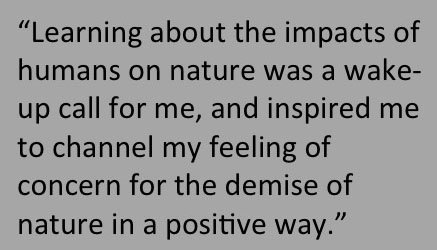
From there, I have walked the tightrope between science and policy. After getting my undergraduate degree in environmental biology, I wanted to do more than just the science. So I enrolled in a masters program at the University of Washington – an interdisciplinary program called Marine Affairs. It was a great experience, but I wanted to have more substance to my science background – I wanted to know how to do the science in addition to how to apply the science.
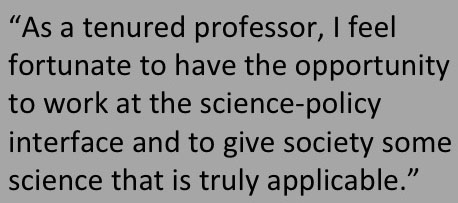
A major theme in my work has remained constant – that is, how to use the information we are generating in the natural and social sciences to better manage our natural world. Pre-tenure I focused a lot more on doing the science, publishing in good journals, and hoping that it made its way into good policy. Now that I am midcareer, meaning that I have a good amount of papers and tenure, I am enjoying the opportunity to work with practitioners outside of academia. For instance, I just got off the phone with someone from National Geographic regarding my recent publicationon seafood health and sustainability. In that study, we performed an analysis regarding seafood in the context of health and sustainability, to answer simple questions like, what to order when out to sushi? How do we educate about health benefits and risks? We will be organizing a workshop to help restaurant chains, grocery stores, as well as environmental NGOs identify a path forward in informing consumers about healthy and sustainable seafood choices. As a tenured professor, I feel fortunate to have the opportunity to work at the science-policy interface and to give society some science that is truly applicable.
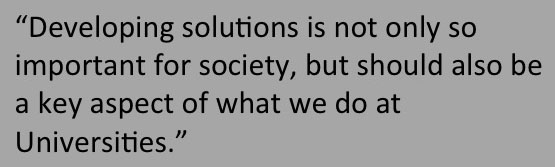
LG: Yes, I agree. There isn’t a clear path in academia when it comes to public engagement. But in recent years I have felt optimistic – the landscape within academia is starting to change, and at ASU this change is noticeable. We have a fabulous president, Michael Crow, who has really transformed ASU from just another state institution to a leader in sustainability. Part of this is the establishment of the Global Institute for Sustainability, and one of Michael Crow’s mantras is “community embeddedness.” He is really on board with this type of thing and I have seen evidence of his commitment trickle down throughout the University. For instance, when I first arrived, I had to justify and explain why I was serving on these federal recovery teams for endangered species. Now I feel that there is no justification needed. Developing solutions is not only so important for society, but should also be a key aspect of what we do at Universities.
One development emerging from this training is a science communication symposium at the AAAS meeting. Elena Bennett and I are giving a talk on overcoming institutional barriers for community engagement, and we will address the issues head on. We put out a survey asking others if they faced institutional barriers, and how they might work to engage more.
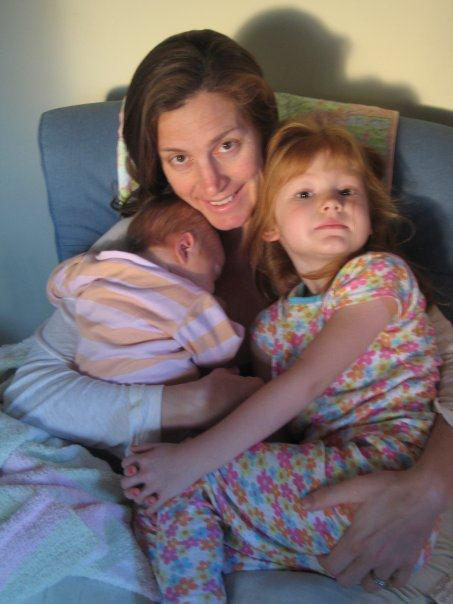
I am still pretty passionate about my work, and my kids know what I do and are proud of it. They share it with their classmates, and take every opportunity to wax poetic about how their mom saves animals in the ocean. They also have a built in conservation effort – my 7YO gets irritated when she can’t find a compost bin, and her new thing is to only fill her cup half way because she will only drink a little bit of water.
I had to shift it down a notch and realize that the world wasn’t going to freeze over, and that I could shift it back to high gear later. With “mommy brain”, I knew I wasn’t going to be at the top of my game at that point in my life. But I have incredible role models. Most notable is Jane Lubchenco, currently the Director of the National Oceanic and Atmospheric Administration. During the first part of her career, she shared a position with her husband – each did 50% – and they did that on purpose so they’d be able to enjoy having children and effectively take care of them. Now, she is in the National Academy, is having major scientific impacts, and she did it all despite having kids. If she can do it, why cant the rest of us?
DXS: Given your experiences as a researcher, as a mother, and now as a major science communicator, do you feel that your ability to talk to people has evolved?
LG: I think so. In fact, I am thinking back to when I had a paper in Sciencecome out around the time that I had my first child. It got a lot of news coverage and was featured in Time magazine. I thought it was so cool at the time, but looking back on it I realized that have come a long way. I said something to a journalist, who then asked me to translate it into “plain English.” It was a little bit of a jab.
Another thing that just happened today is that I was contacted by Martha Stewart’s office, and it seems that some of my research results will be featured in the October issue of Martha Stewart Living. The message here is that I happen to care about the ocean, but I also love sushi. I also I care about health. I am not just a nerd in a lab coat. I am a mom, I do yoga, I have wonderful friends, and here is the kind of science that I do. It seems to me that it is better to connect with others when I can give them something that is relevant to their lives instead of a more abstract ecological theory.
![]() |
| Does she look like an engineer to you? She should. She is one. |

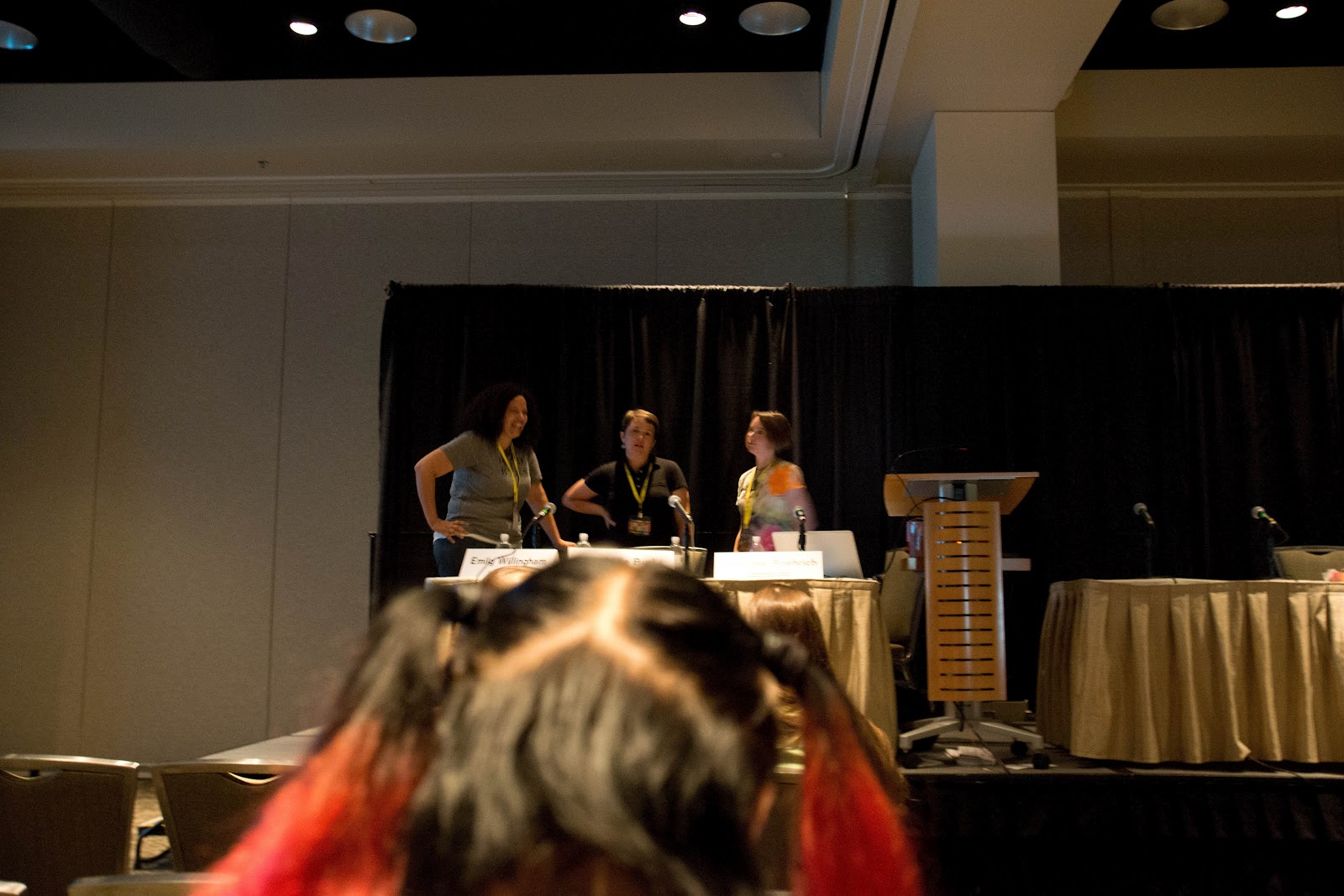
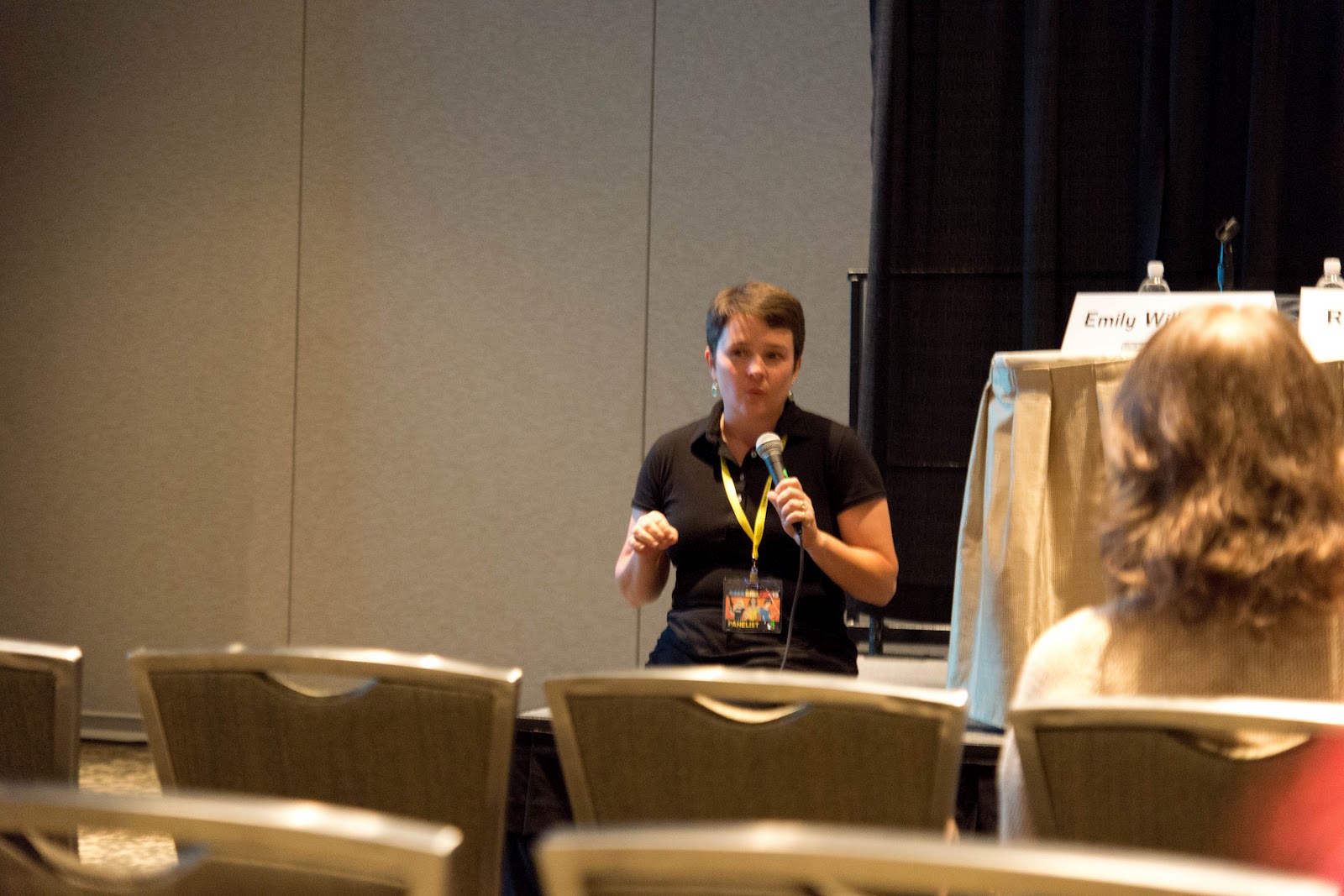
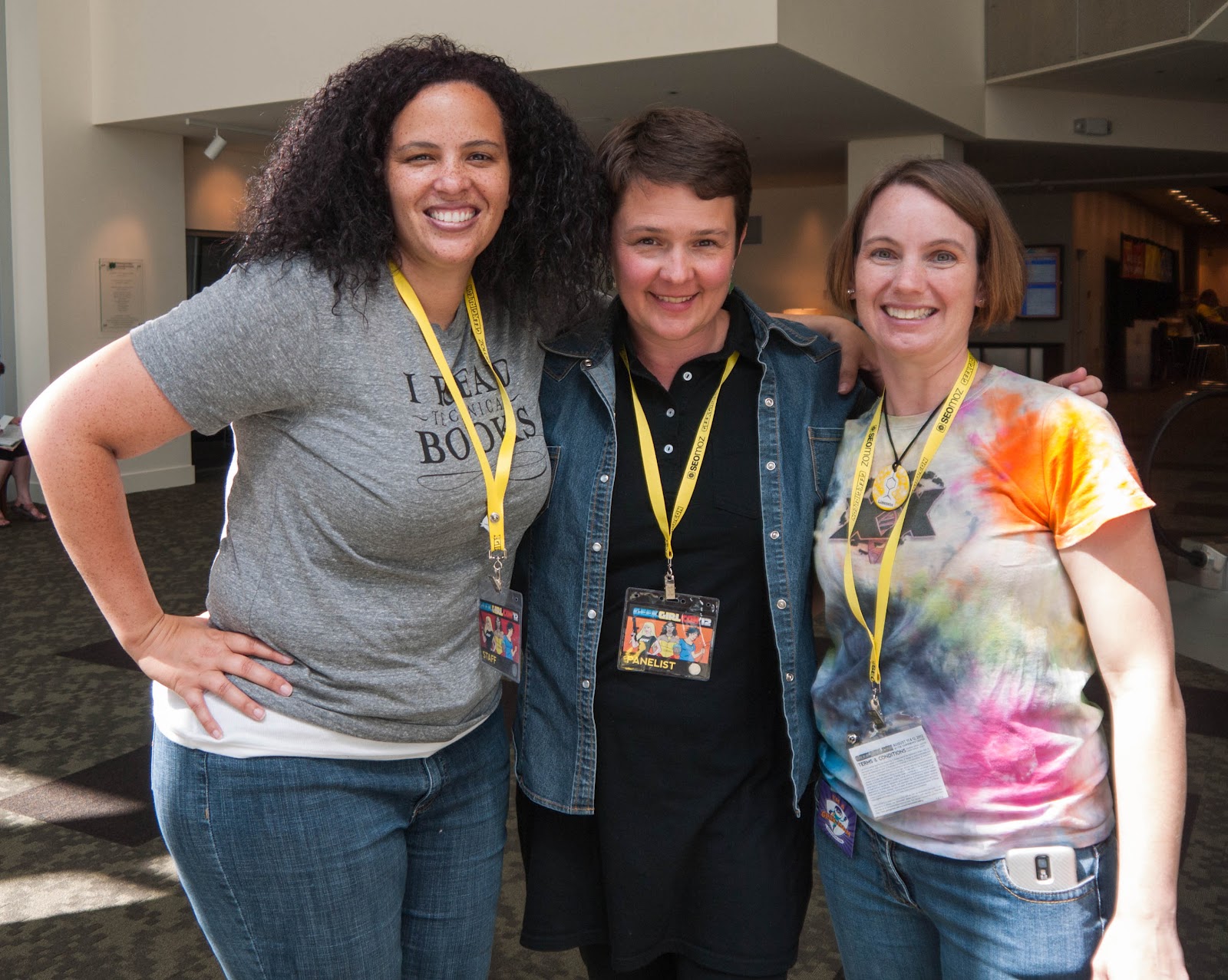
On Sunday, Aug 12, Managing Editor Emily Willingham, Chemistry Editor Adrienne Roehrich, and Contributor Raychelle Burks spoke on bringing science to you. Here’s a summary of our panel.
![]() |
| Photo by Ryan Roehrich and used with permission. |
![]() |
| Photo by Ryan Roehrich and used with permission. |
All 3 have PhDs in their respective fields – Emily is a developmental biologist, Ray is an analytical chemist, and Adrienne is a physical chemist. Emily and Ray are prolific writers. You can find their articles all over the internet and in print. Ray is a staff member for GeekGirlCon and Adrienne is a Special Agent volunteer. All 3 are active on social media and welcome live-tweeting and suggest the #DXS hashtag along with the #GGC12. And you can use the @DoubleXSci for the panel.
[<a href=”http://storify.com/fiainros/double-x-science-panel-at-geekgirlcon-2012″ target=”_blank”>View the story “Double X Science panel at GeekGirlCon 2012” on Storify</a>]
![]() |
| Photo by Adrienne Roehrich and used with permission. |
Posted by Adrienne M. Roehrich, Chemistry Editor
Today we are grateful to Athene Donald for allowing us to repost her piece on work/life balance. This post originally appeared on her blog, Athene Donald’s Blog, in July of this year.
![]() |
| (Source) |
![]() |
| Really, TV people? Again with the “male only” science hosts? Image via Wikimedia Commons, credit to Wonderlane. |
![]() |
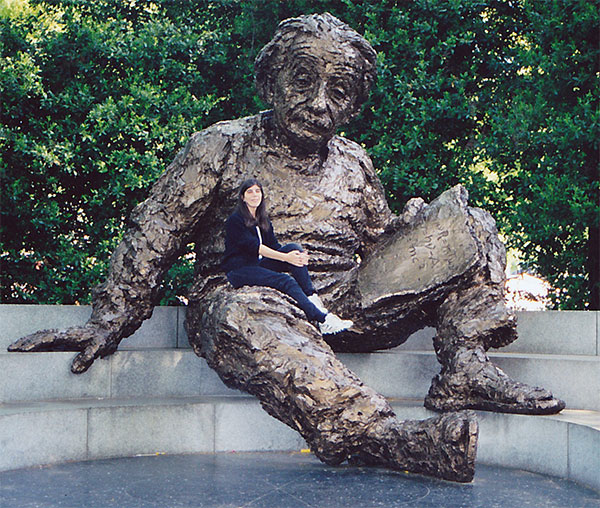
| Hanging out with Al. |
Karyn Traphagen is the Executive Director of ScienceOnline Inc., a non-profit organization representing a diverse science community that cultivates conversations both online and face-to-face. At face-to-face events, including a perennially popular signature conference in North Carolina, ScienceOnline encourages creativity, collaborations, connections, and fun. Through social media, the ScienceOnline community listens, supports, shares, recommends, and reaches out. ScienceOnline also develops tools such as ScienceSeeker news river and curates The Open Lab, an annual anthology of the best science writing on the web.
DXS: First, can you give me a quick overview of what your scientific background is and your current connection to science?
![]() |
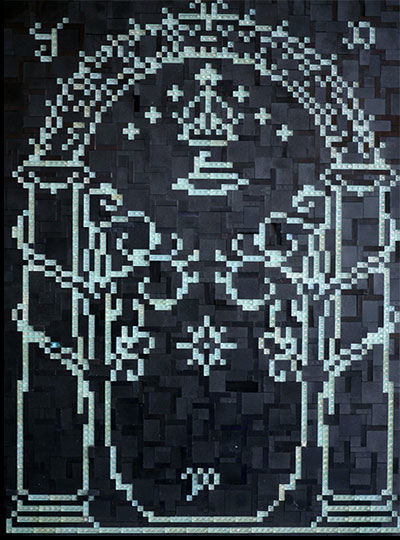
| Karyn enjoys creating art with…LEGOS! |
I remember one of my favorite childhood gifts was a chemistry set and a microscope. My mother was a great role model. She left a job as a chemist to get married and raise a family, but she always instilled in me the attitude that if I was interested in any subject, I could learn it and do it. I always accepted a challenge.
In addition to research, I have taught high school physics and physical science, undergrad physics (I especially liked the Physics for Non-Science majors!), and helped to develop a degree program in the university physics department for high school physics teachers. I’ve led sailing trips in the Bahamas for biology students and I’ve been trained by the American Meteorological Society to use live data in classrooms. I’ve even been a programmer. Obviously I’m interested in too many things for my own good.
![]() |
| Karyn has traveled to South Sudan to conduct professional development training for local teachers. |
DXS: What ways do you express yourself creatively that may not have a single thing to do with science?
On the surface, many people think these are not “science-y” but really, they are all about science. Seeing that connection is something I love to introduce people to. My science career has included research that helps create more bio-fidelic crash test dummies (I worked with cadavers-this makes for great party stories), meteorology, high school physics teacher, and university physics instructor. I used to think that people would think I was flighty or unable to commit to a project. Now I see the benefits of having been successful at so many different skills and fields of study. The key was seeing how they all tapped into my curiosity and creativity.
Definitely. Paying attention to the details of the world gives me opportunity to see beauty, symmetry, order, and chaos in unusual places. I am thrilled by the macro and the micro vision of our universe and lives (which is why I continue to study other fields of science in addition to physics). These are not only realms to explore with experiments, but to experience emotionally and to communicate creatively. I have learned to appreciate the details in science and that carries over into the art, photography, design, and construction projects that I may spend time on. Even my tattoo (snow crystals) reflects both beauty and science (and a lot of personal meaning too!)
I think that sometimes the more conventional creative side of my life makes me seem more “human” and approachable. When non-science people ask what I do, I don’t usually start with “physics” in the answer because that often is hard for people to relate to and the conversation dies. But if they get to know some things I am interested in or the diversity of things I’ve created, and THEN learn about my science background, they are more likely to perceive me as more than a physics geek. At that point they feel more comfortable asking questions about science.
On the other hand, some of my science colleagues in the physics department saw those other activities as something that took me away from time that could be spent on physics. Even if they thought my non-science activities might be amazing they minimized their value. Thinking back now, maybe this is why I keep so much of what I do to myself and it takes time to draw out of me all the things that I have had the joy of learning and doing.
![]() |
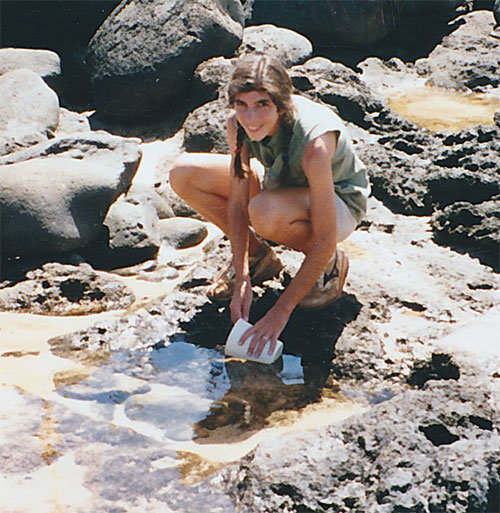
| Karyn collecting water samples in Molokai, Hawaii |
Yes, I used to focus more on the narrow aspects of my field. Now I try to see interconnectedness—not only with other fields of science, but more broadly with day-to-day life. My “non-science” expressions are really gateways into understanding the science better or being willing to think more creatively about how to solve a research problem. Bottom line: I always want to stay curious. We don’t value curiosity enough. I think curiosity undergirds creativity. Curiosity doesn’t just beget science questions. We also have to ask, “What would happen if I mixed these colors together?” or “How small can I write with this pen nib and ink?” or “What kind of effects can I create in this photograph by changing the lens?”
On the other hand, I do think that female visitors and students who dressed more feminine were definitely treated differently. I desperately wanted to be valued for my ideas and work ethic and not what I looked like or which bathroom I used, so I was probably more affected by others attitudes than I realize(d).
I think that getting the attention of whatever audience you are addressing is paramount. You may have something wonderful to share, but if you don’t have their attention, it will fall to the ground. I want to develop a relationship with people in order to get them to trust me, believe me, and be interested in what I have to say. Dispensing information is not enough.
Knowing myself, I’m not so sure that the younger me would listen to any advice I would give! In some ways, going through the experiences is what made me who I am and there are no short cuts for that. However, there are definitely things that would have been great to learn earlier on.
| Image by Nux. (Source) |
By Adrienne M Roehrich, Chemistry Editor
It’s that time of the year in the U.S. – when we blow up pretty bombs in celebration of the approval of the Declaration of Independence, declaring the independence from the Kingdom of Great Britain. Around this time of year, there is no dearth of articles about the chemistry of fireworks, but the chemistry editor here could not let her secret love of this topic pass by.
![]() |
| Source |
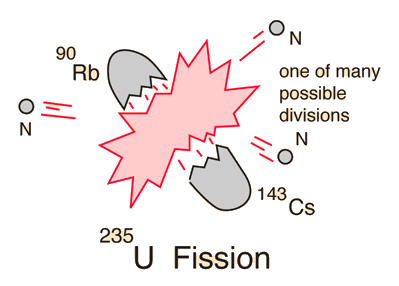
Nuclear fission is the process involved in nuclear weapons.
![]() |
| This cat also haz those two chromosomes to blame for that splotch on its face. |
![]() |
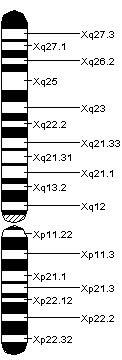
| X chromosome (Source) |
![]() |
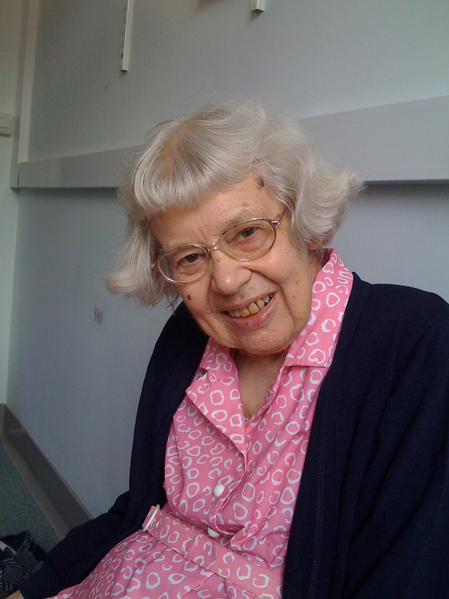
| Mary Lyon (Source) |
![]() |
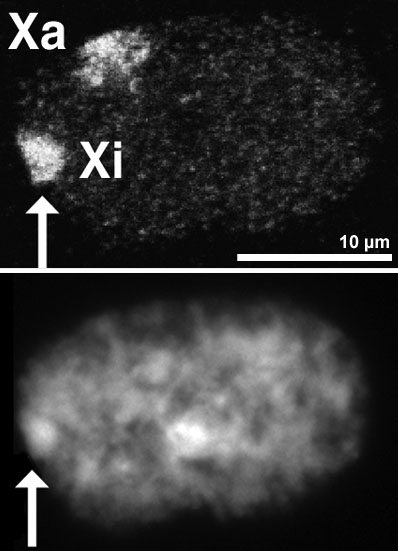
| Barr bodies (arrows). (Source) |