Painful intercourse after menopause has solutions
by Tara Haelle
Continue reading


Painful intercourse after menopause has solutions
by Tara Haelle
Continue reading

In a word, no (unless you have cancer).
by Jennifer Gunter, MD, FRCS(C), FACOG, DABPM
So, let’s take cancer out of the picture and discuss hysterectomy for non-cancerous (benign) reasons.
First of all. A hysterectomy (removing the uterus) can be done via one of these four methods:
The American Congress of OB/GYN (ACOG) recommends vaginal hysterectomy as the least invasive method (least invasive is almost always the best option) with the best outcomes. Sometimes a vaginal hysterectomy isn’t feasible for technical reasons and then a laparoscopic approach is favored. There is no study that suggests a robotic hysterectomy offers any medical advantage over a vaginal or a laparoscopic hysterectomy when cancer isn’t the reason for the surgery.
So if there is no advantage to robotic hysterectomies, why are gynecologists pushing them? And make no mistake, they are pushing them as 3 years ago 0.5% of hysterectomies were robotic and now that number has soared exponentially to 10% (JAMA, 2013)
Why this exponential increase? I can think of four reasons:
According to ACOG:
Robotic surgery is not the only or the best minimally invasive approach for hysterectomy. Nor is it the most cost-efficient. It is important to separate the marketing hype from the reality when considering the best surgical approach for hysterectomies
And
…there is no good data proving that robotic hysterectomy is even as good as—let alone better—than existing, and far less costly, minimally invasive alternatives.
A robot adds $2000 to a hysterectomy. If every non-cancer (benign) hysterectomy in the United States were performed with a robot, ACOG estimates that $960 million to $1.9 billion will be added to the health care system each year.
If your GYN is recommending robotic surgery over a vaginal or a traditional laparoscopic hysterectomy and you don’t have cancer, you need to ask, “Why?” (and take a look to see if robotic surgery is featured prominently on the web page and the practice’s marketing).
New technology isn’t always better. While a robot can lead to improved outcomes for complex cancer cases (they allow the surgeon to do the case with a laparoscopically rather than with a big incision), using a robot for a benign hysterectomy is like driving a Ferrari with the speedometer set so the car can’t exceed 15 miles an hour. It might look cooler, but it’s going to cost you a lot more up front and in maintenance and it’s not going to get you around the city any faster or safer than a Honda.
We are all stewards of the health care system. Wasting $2000 per patient on the costs to run a robot for a benign hysterectomy is simply funding the salaries of the people who sell surgical robots and increasing the cost of health care for everyone else, because we all pay when care becomes more expensive with higher premiums and co-payments.
Dr. Jennifer Gunter is an OB/GYN and a pain medicine physician who has authored the book, The Preemie Primer, a guide for parents of premature babies. In addition to her academic publications, her writing has appeared inUSA Today, the A Cup of Comfort series, KevinMD.com, EmpowHer.com, Exceptional Parent, Parents Press, Sacramento Parent, and the Marin Independent Journal.
Image source: Wikimedia Commons and Wikimedia Commons
From the editors: What does it look like when a robot does a hysterectomy? This (yes, apparently promotional) video, produced by a hospital in California, gives us a look:

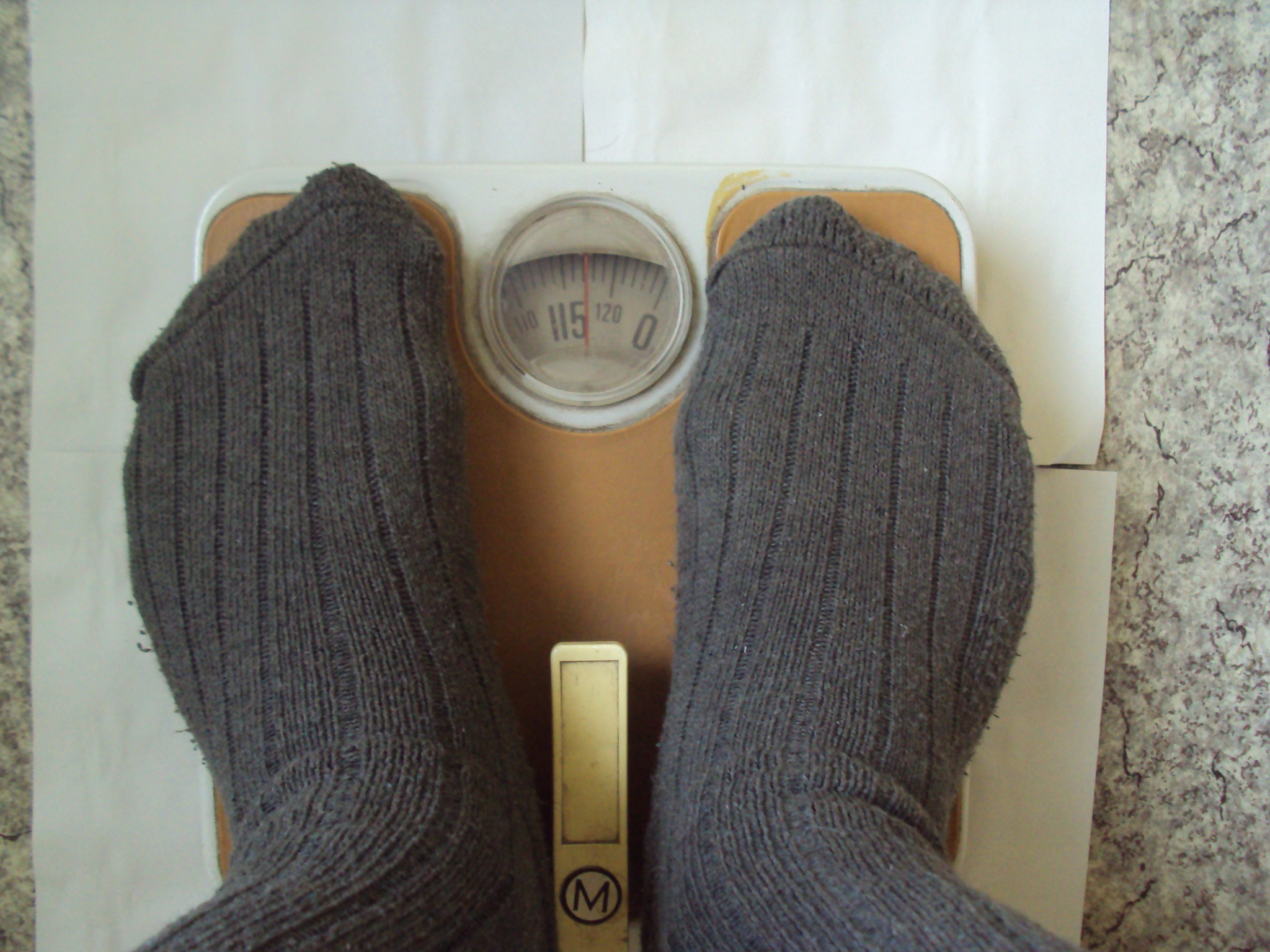
Don’t start making plans to ignore those extra pounds just yet.
by Jennifer Gunter, MD, FRCS(C), FACOG, DABPM
This post first appeared at Dr. Gunter’s blog, where she wields the lasso of truth.
A new study published in the Journal of the American Medical Association (JAMA) indicates that a body mass index or BMI of 25-29.9 (overweight) is associated with the lowest risk of death and that class 1 obesity (BMI 30-34.9) is not associated with an increased risk of mortality. As this study hit the presses January 2nd (and I’m sure no editorial thought was given by JAMA to such a study coming out at the first of the year) when many people are thinking about weight loss resolutions, it was covered widely in the press and I read several op-eds claiming vindication for obesity. One op-ed on a major news site was indignant that CT scanners couldn’t accommodate a friend (some CT scanners have difficulty accommodating patients over 300 lbs). The author’s solution? Build bigger CT scanners because obesity isn’t bad at all. This new study proves it.
First of all the study doesn’t say that being overweight is good for you and that being an ideal weight is bad. What the study does tell us is that people who have a BMI of 35 or greater are more likely to die. This is not new information. A BMI of 35 is a lot of extra weight, depending on your height it could easily mean 70 extra pounds or more.15% of Americans have a BMI of 35 or greater.Only people with a BMI over 35, way over 35, need bigger CT scanners. I’m not saying that severely obese people shouldn’t have access to imaging studies, but the answer to the epidemic of severe obesity is not to claim vindication based on the inaccurate interpretation of one study and simply build bigger equipment.
What about the lower risk of death in the overweight and class 1 obesity groups compared with the normal BMI group? Well, this can be explained by a variety of factors:
What is very important is that we don’t take erroneous messages from this study (hello, health reporters for major news outlets looking for attention-grabbing headlines). This study says nothing more than we need better tools than BMI to assess mortality risk for people who have a body mass index between 18.5 and 34.9 and that BMI doesn’t predict “ideal weight,” it only tells us that extremes are bad. This study also confirms that the 15% of Americans with a BMI of 35 are at increased risk of dying prematurely, a point sadly missed by many.
Body mass index simply doesn’t convey enough information to assess mortality risk for 85% of the population, but that fact (which isn’t new) shouldn’t stop each and every one of us from striving everyday to be the healthiest that we can be.

Dr. Jennifer Gunter is an OB/GYN and a pain medicine physician who has authored the book, The Preemie Primer a guide for parents of premature babies. In addition to her academic publications, her writing has appeared in USA Today, the A Cup of Comfort series, KevinMD.com, EmpowHer.com, Exceptional Parent, Parents Press, Sacramento Parent, and the Marin Independent Journal. Continue reading