Adrienne Roehrich

About Adrienne Roehrich

Adrienne, chemistry editor at Double X Science, is the Associate Manager of an NMR Facility at a large public university on the west coast. Her training and research can be classified under chemistry, physics, and biochemistry or biophysics. She also has experience teaching from the kindergarten through university levels since 1996. Adrienne is mother to two “tween”-age children, a daughter and son, both of whom give her great pride and joy and also consternation at times. Adrienne tweets on science, food, feminist topics, and life in general.

Raising the Profile of Women in Science

By Adrienne Roehrich, Chemistry Editor

One of the goals of Double X Science is to raise the profile of women in science. When others are doing this exact same things, we like to let our readers know. Here’s a few recent efforts to expand the public’s knowledge of women scientists:

As always, we have our Notable Women in Science series. We cover women in science who have been notable historically and currently. We also have our Double Xpression series which profiles women who are into science.
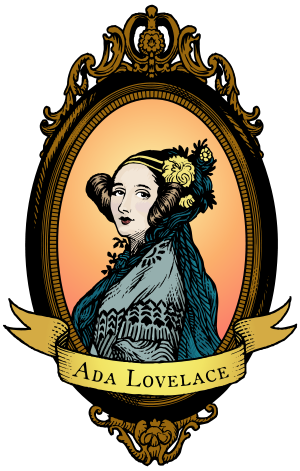

The Royal Society recently had a wikipedia push for writers to start new and expand the pages of women in science. Having visited wikipedia for writing the Notable Women in Science series, I can say that the number of pages created has definitely expanded and certainly there is much more information provided on a number of women. But there are still gaps. Look for more from Double X Science on this topic in the future.

A group in the UK is making a calendar “to showcase real women doing great science.” Learn more about ScienceGRRL by visiting their website and following thier social media. The images being used in the calendar look to be scenic or portrait-style.

SpotOn provides some tools for the female scientist to promote herself and also provides links that those interested in science might be interested in following, such as twitter lists of women in science.

When researching this post, I found several sites trying to promote women in science. This site provides resources as well as 4000 years of women in science. In addition, they link to many associations dedicated to helping women in science. Geek Feminism has Wednesday Geek Woman posts every Wednesday highlighting women in STEM. The RAISE project has an on-going blog about the issues facing women in science.

Please comment: What is your favorite site working to raise the profile of women in science and why?

These views are the opinion of the author and do not necessarily reflect or disagree with those of the DXS editorial team.

A Few Modern Physicists

by Adrienne M. Roehrich, Chemistry Editor

In this edition of Notable Women in Science, I focus on women working in physics, typically traditional physics rather than astrophysics. There is no particular reason to make this distinction other than it allows me to choose a small group of women to highlight within a parameter set. These women are listed in no particular order.


Vera E. Kistiakowsky spent much of her career as a professor at MIT. Born in 1928, she received her A.B. from Mt. Holyoke College in 1948 and her Ph.D. from the University of California – Berkeley in 1952, both degrees in chemistry. Her chosen career stemmed from advice from her father to support herself and not depend on another person to support her. Her father was a respected physical chemistry professor at Harvard and his support in her chosen activities was instrumental to her success. She entered college at the age of 15, choosing a pre-med major. She changed to chemistry due to Mt. Holyoke’s extraordinary female faculty at the time. While her degrees are in chemistry, her studies and research were physics intensive.  Graduating with her Ph.D. before her newly married husband hindered her initial job opportunities. She had several positions before eventually settling into a professorship at MIT. During her tenure at MIT, she was scientifically prolific with 86 technical publications as well as highly active in feminist activities, including organizing for the National Organization of Women (NOW), Women In Science and Engineering (WISE), the Association for Women in Science (AWIS), and an ad hoc committee in the American Physical Society (APS) on women physicists to name a few.

Helen Thom Edwards is recognized for her work with the Tevatron. She was born in 1936 and received both her B.A. and Ph.D. from Cornell University in 1957 and 1966, respectively. Her interest in science was outside that of her family’s interests, so she was used to paving her own way. Her technical and mechanical acumen served her well as a group leader at the Fermilab. Dr. Edwards is a team player and insists upon acknowledging the contributions of her colleagues in her and Fermilab’s success.

Vandana Shiva in 2008.
[Edited, 11/26/12, 14:43 ET]: Vandana Shiva was trained in physics and the philosophy of science and now works as an environmentalist, achieving considerable global prominence. She was born in 1952 and, according to most sources, earned a B.A. in physics, a master’s in philosophy of science, and a Ph.D. in physics. When she began her training as a nuclear scientist, she encountered a hostile environment, which caused her to emigrate west. Her experiences led her to become a prominent (and extremely controversial) environmentalist and into the position of Director at the Research Foundation for Science, Technology and Natural Resources Policy in Dehradun, India. She writes books and publishes articles in the area of environmentalism. [ETA: As a commenter notes below, Shiva also has been embroiled in controversy and accused of taking an anti-scientific stance over her assertions about “terminator seeds.”]
Ingrid Daubechies, 2005.

Ingrid Daubechies is a physicist and a mathematician known for her work in wavelets. 

Born in 1954, she received her B.S. and Ph.D. at Vrije University in Brussels in 1975 and 1980, respectively. Her interest in science and math was nurtured by her parents who also encouraged her independence. In 1984, she received the Louis Empain prize for physics for the work she accomplished before the age of 29. The prize was followed by tenure in her position at the Free University Brussels. She moved into a position at Rutgers and also worked at the AT&T Bell Laboratories. In 1992, she was awarded a MacArthur Foundation Fellowship followed by the Steele Prize from the American Mathematical Society in 1994. She has continued to receive honors and ovations to this day.

Janet M. Conrad researches neutrinos. She was born in 1963 and received her B.A. from Swarthmore College in 1985, her M.Sc. from Oxford University in 1987, and her Ph.D. from Harvard University in 1993. After a postdoctoral stint at Columbia University, she moved into a professor position there. In 2008, she moved to MIT. She has received many awards, including an NSF CAREER Award, an Alfred P. Sloan Research Fellow, and the Maria Goeppert-Mayer Award from the APS. She can be found involved in research and teaching at MIT, as well as communicating science to scientists and general audiences around the country.

Reka Albert blends cross and inter-disciplinary expertise. She received her B.S. and M.S. from the Babes-Bolyai University in Romania and her Ph.D. from the University of Notre Dame in 2001. After a postdoctoral position at the University of Minnesota, she joined the faculty at Pennsylvania State University, where she is currently a professor in the physics department. She has received several awards for her work, including a Sloan Research Foundation Fellowship, an NSF Career Award, and the Maria Goeppert-Mayer Award.

Louis Empain Prize is awarded every five years to a young Belgian scientists on the basis of work done before the age of 29.

MacArthur Foundation Fellowship is awarded to individuals who have shown extraordinary originality and dedication in their creative pursuits and a marked capacity for self-direction.

The Steele Prize is awarded for cumulative work of mathematical contribution to the field.

The NSF Career Award is a highly competitive grant awarded to early career scientists.

Alfred P. Sloan Fellowships are awarded to distinguished scholars with high potential for impact in their respective fields.

The Maria Goeppert-Mayer Award recognizes outstanding achievement by a woman physicist in the early years of her career.

The opinions expressed in this post do not necessarily agree or conflict with those of the DXS editorial team and contributors.

What’s on your wishlist?

Digi-bling cufflinks

It’s that time of year again, the shopping season winding through the holidays. We have prepared a plethora of gift ideas (for yourself or another science and tech connoisseur on your gift list.)
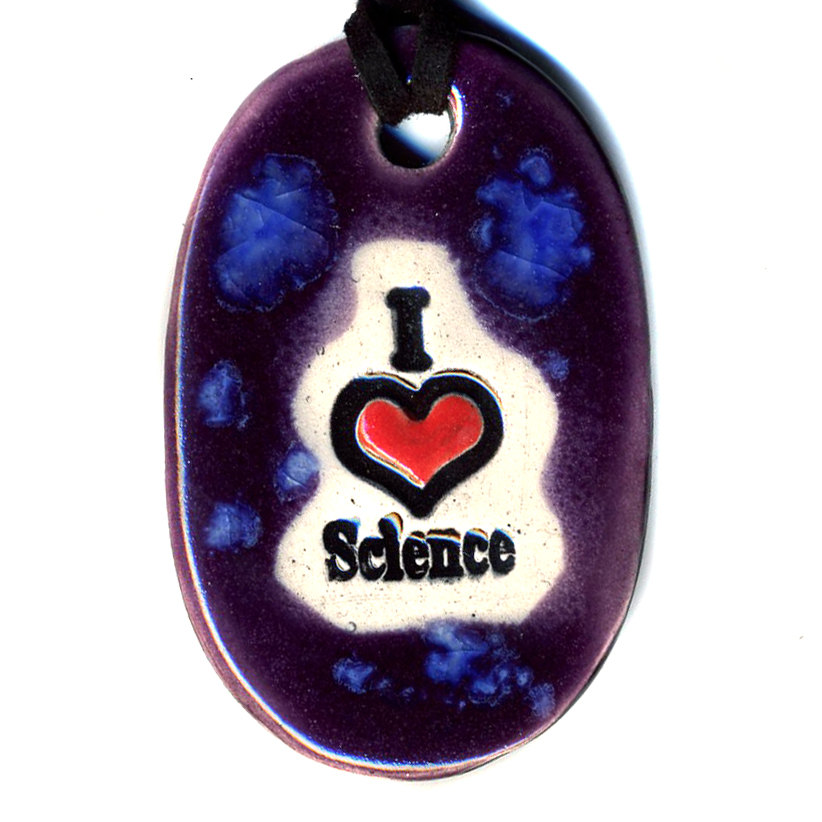
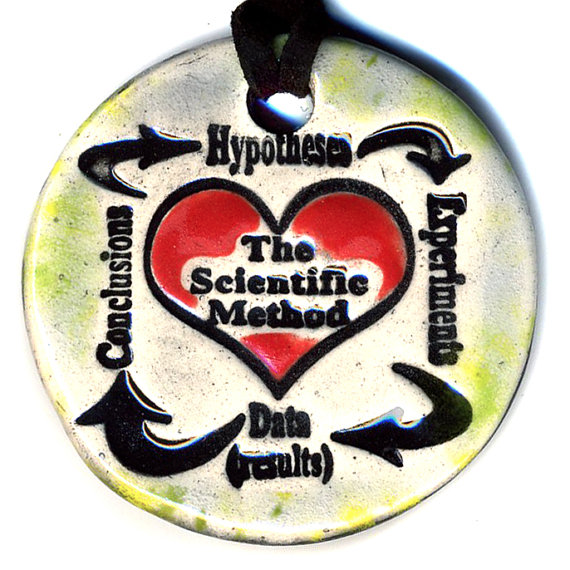
  

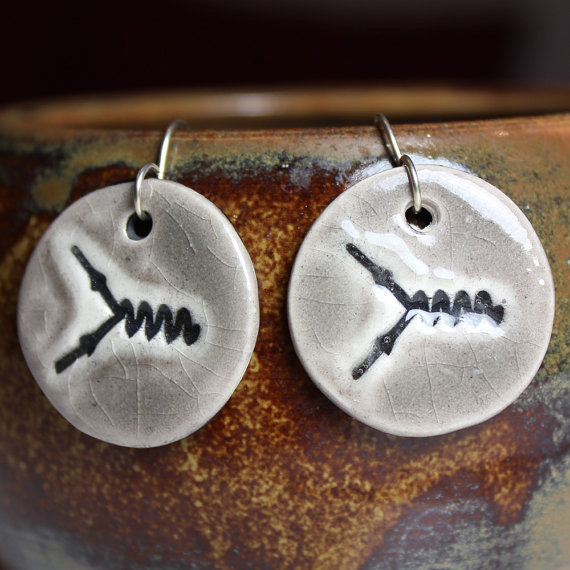
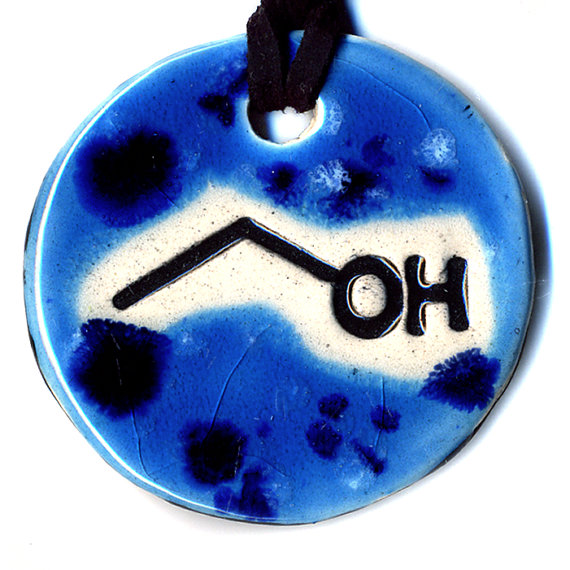
Attire yourself in science! Double X Science gear is always fashionable. Our store has infant wear, mugs, and t-shirts, all decked out with our logo and motto. Add some Helix Pantyhose and you are dressed for science success. Once dressed, add eye-catching red circuit board cufflinks ($16) from Digibling. Digibling highlights electronics components jewelry. SurlyRamics is stuff full of science necklaces and earrings. Declare your love of science ($18, pictured) or the scientific method ($18, pictured). Maybe Feynman diagrams ($22, pictured), amonites ($22, pictured), or chemical formulas are more your style ($18, pictured).


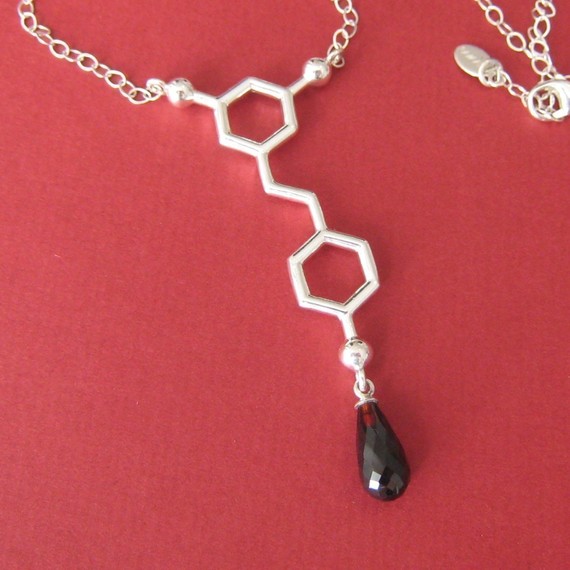
Molecular Muse Resveratrol
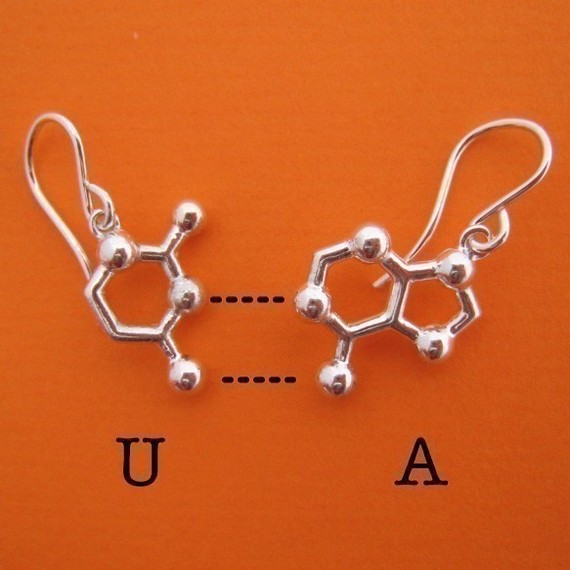
Looking for more molecules? Made with molecules by Raven Hanna has beautiful chemical compound jewelry and ornaments made of sterling silver (from $25). Resveratrol ($130, pictured) or a couple of DNA bases ($50, pictured) may be more your style.
Artologica Petri Dish Ornaments


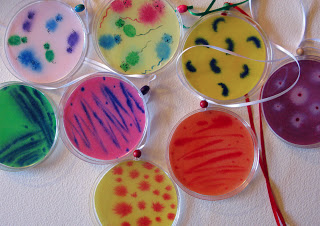
Once dressed and ready to go, dress up your home. Thinkgeek offers a periodic table shower curtain ($30). Artologica recently revealed her petri dish ornaments ($15). She is well known for her science paintings (from $35), also available in the Etsy shop.


There are many a headphone user and many nighttime music listeners. Bedphones ($30) are perfect for the sleeper who needs to listen to music that a sleeping partner may not wish to hear, and they turn off when the listener falls asleep. Nifty! To wake up the next morning, use this water powered clock ($12) available at Thinkgeek.
In the market for books? There are many science books for the scientists and science interested. Start with the Open Laboratory series (from $7.50) highlighting the best of science writing online. Maybe you have a cook who is interested in the chemistry of cooking. They might want to check out Cooking for Geeks or Modern Cuisine: The Art and Science of Cooking.

Do you love gadgets? Do you have the newest smartphone or tablet? Perhaps you’ve already checked out the Nexus 10 tablet from Google (from $399) which arrived last month. The Nexxus has arrived to generally good reviews to compete with the standard iPad (from $399) tablet size. Google and Apple have also gone “mini” with the Nexus 7 (from $199) and the iPad mini (from $329), respectively.

Looking for a small, transportable “normal” size keyboard for that iPad or iPhone? Look no further than the Cube Laser Digital Keyboard ($180).


What about other great gadgets? The DOTKLOK (from $150) is an open-source and hackable digital clock. It also consumes 2W for power! Runners and cyclists who love their gadgets may like the Garmin Forerunner 610 GPS watch ($320). Track your workouts, train like a pro, and analyze all the data this watch feeds to you for the height of fitness.


If DNA is your thing then artwork of your personal DNA is the way to go. Get a kit from DNA 11  and have your personal DNA run on a gel and transfered to a beautiful piece of art (from $199). Perhaps the ultimate in science and technology applied to a single person is having your personal genome sequenced. 23andme ($299) offers a kit to have your DNA genotyped or visit Knome ($4998) for full genome sequencing. There are a number of companies available for personal genotyping and genome sequencing for a range of cost. Another option is to join the Personal Genome Project, and for full disclosure and sharing of your genome with others for scientific purposes, you can have your genome sequenced as a donation to the organization.


Human Genome By Silky M
by Adrienne Roehrich, Chemistry Editor 

100 Years

By Adrienne M. Roehrich, Chemistry Editor
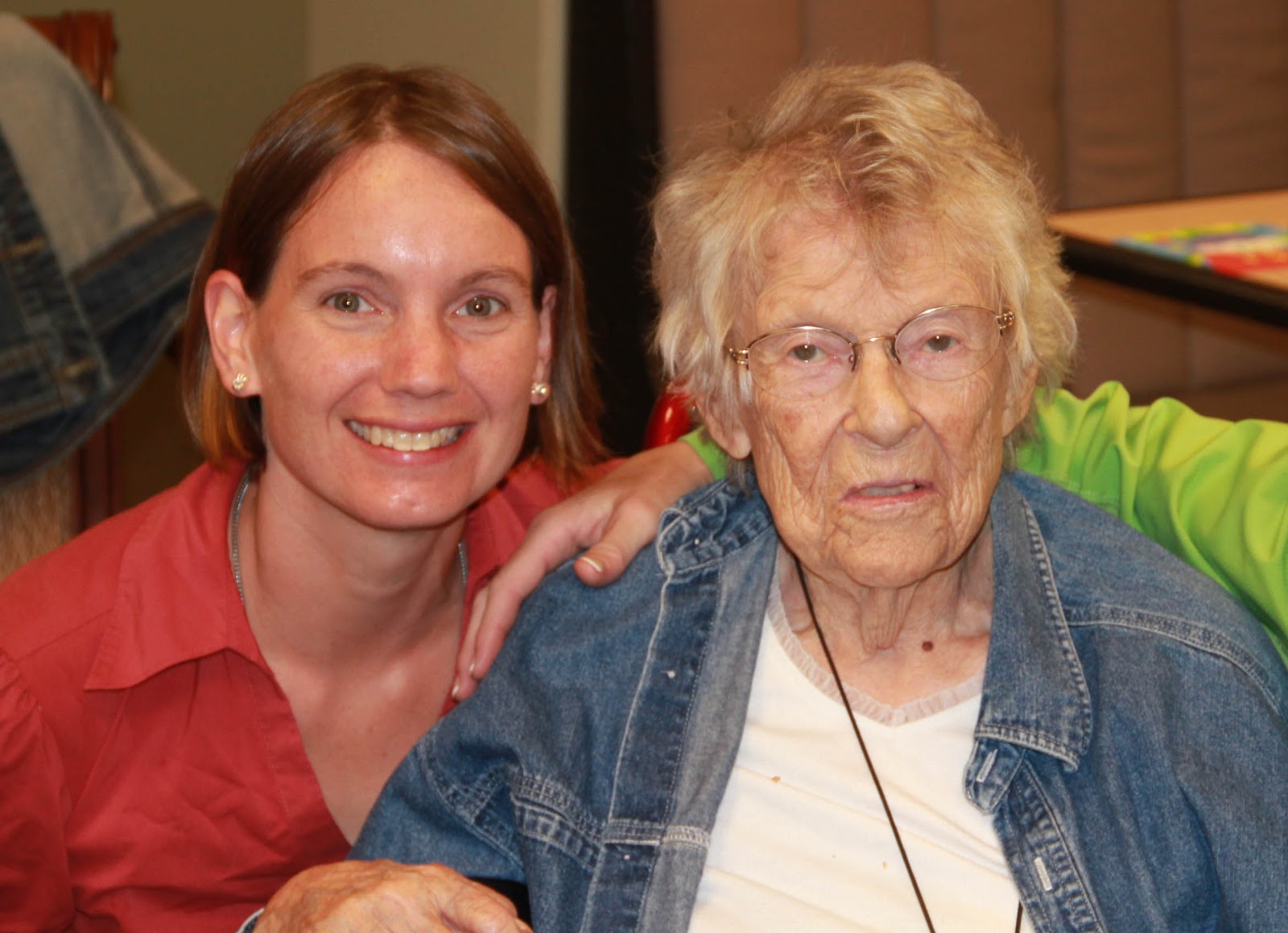
Photo of the author with her 100 year old grandmother 10-1-2012

100 is such a nice round number.

Should I start with a disclaimer? I’m a chemist, not a biologist. Perhaps I should leave a post on centenarians to the biologists, but I have a vested interest in the topic. On October 1 of this year, my grandmother turned 100, so I’ve been a little obsessed with living until 100. In the United States, an estimated 1 in 4400 people reach the age of 100 and the highest number worldwide. The next highest number of centenarians reside in Japan, with a rate of 1 in 3500 people.

The question is, why do these people live so long? This is a highly studied question. When one delves into the literature, as with most questions, there is no simple answer and often studies conflict with each other. There are different modes of study: some scientists study those who have become centenarians to try to determine what they have done to reach this rare milestone while other scientists work in theories, then animal models to study what pathways lead to longevity.

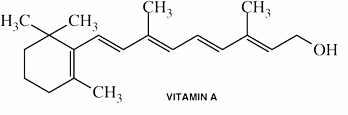
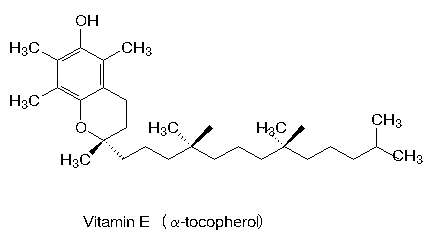
Studies have found that healthy centenarians in some areas have high levels of vitamin A and vitamin E1 and  higher red blood cell glutathione reductase and catalase activities.2,3 But the presence of higher levels of these vitamins and glutathione reductase is not present in all centenarians, and the mere presence of these high levels does not necessarily indicate longevity.

Molecules that may or may not help longevity

You may have heard exclamations about antioxidants or calorie restriction. While antioxidants (the aforementioned vitamin A and vitamin E) are known to protect the body from the harmful effects of free-radicals, which occur in the normal processes of the body, evidence does not support that simply adding more antioxidants to the diet will slow aging. There are studies also showing that calorie restriction may have beneficial effects in terms of markers of aging in some animals, but many animals that are commonly used as human models do not extend longevity under calorie restriction, and such a course of action may have deleterious effects. The safety and benefits of long-term calorie restriction is currently unknown. Scientists are working towards answering these questions.

Genetics plays an important role. The best predictor of a person reaching 100 is having a sibling live past 100. Variations in genes abound, but other than children of long-lived parents living longer, specifics are elusive. Oddly, being born in the Fall (September through November) is linked with a higher likelihood of becoming a centenarian.4 And functional independence for a longer period of time (past the age of 90) was found to be strongly correlated to centenarians. 90% of the participants in the New England Centenarian study were found to have been so.

Hormones are integral to our body function and have been studied for their potential pathways in longevity. Testosterone has been focused on, and lately a study of Korean eunuchs gave a higher rate of centenarians, 3 in 81 individuals. Due to the wide variability of the amount of testosterone produced by individuals, whether more or less testosterone exposure is beneficial or deleterious is unknown.

What causes aging? This question is so important the National Institutes of Health (NIH) has devoted National Institute on Aging, the leading research institute on aging. A summary in more detail than I have gone into here is given on the NIH NIA’s site about preventing aging.

If we look at the cellular level, scientists discovered that complete copying of DNA is dictated by telomeres and the enzyme telomerase, which earned 3 scientists the Nobel Prize in Physiology and Medicine in 2009. The unique DNA sequence in the telomeres protects chromosomes from degradation. When telomeres are shortened, cells age. Eventually, the telomeres will shorten, and cells will age and die. Unfortunately, extending telomeres or increasing the activity of telomerase enzyme does not help anti-aging, it contributes towards the growth of cancerous cells.

A conversation with Dr. Mark D Johnson on twitter gave me these neat facts: Complete natural Homo sapiens LifeSpan = 120 years! All mammals except humans, bonobos, and chimpanzees, live six times their growth cycle. We grow within 20 years. That means natural mammal lifespan of 120.

Overall, the contributing factors towards ageing and longevity are deemed to be complicated and there is no short-order anti-aging remedy.

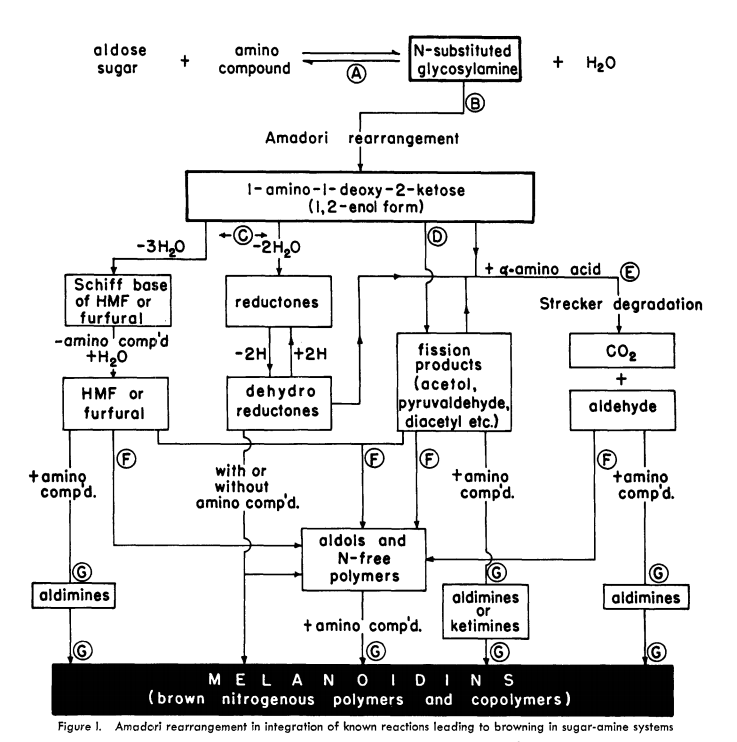
Turning more towards my own field of expertise, the Maillard Reaction, a chemical reaction that makes cooked food tasty, also turns 100. Obviously, the actual chemical reaction goes back longer than 100 years – to when amino acids began to react with sugars at elevated temperatures. However, the French chemist Louis-Camille Maillard first reported the nature of these reactions in 1912.5 Maillard chemistry not only describes the molecules in baked bread, grilled veggies, and brewing of beer, but also other molecules as products, so many that chemists did not study Maillard chemistry in detail until World War II. Nearly 60 years ago, African American chemist John E. Hodge reported a mechanism for the Maillard reaction6.

Hodge’s Flowchart of the Maillard Reaction
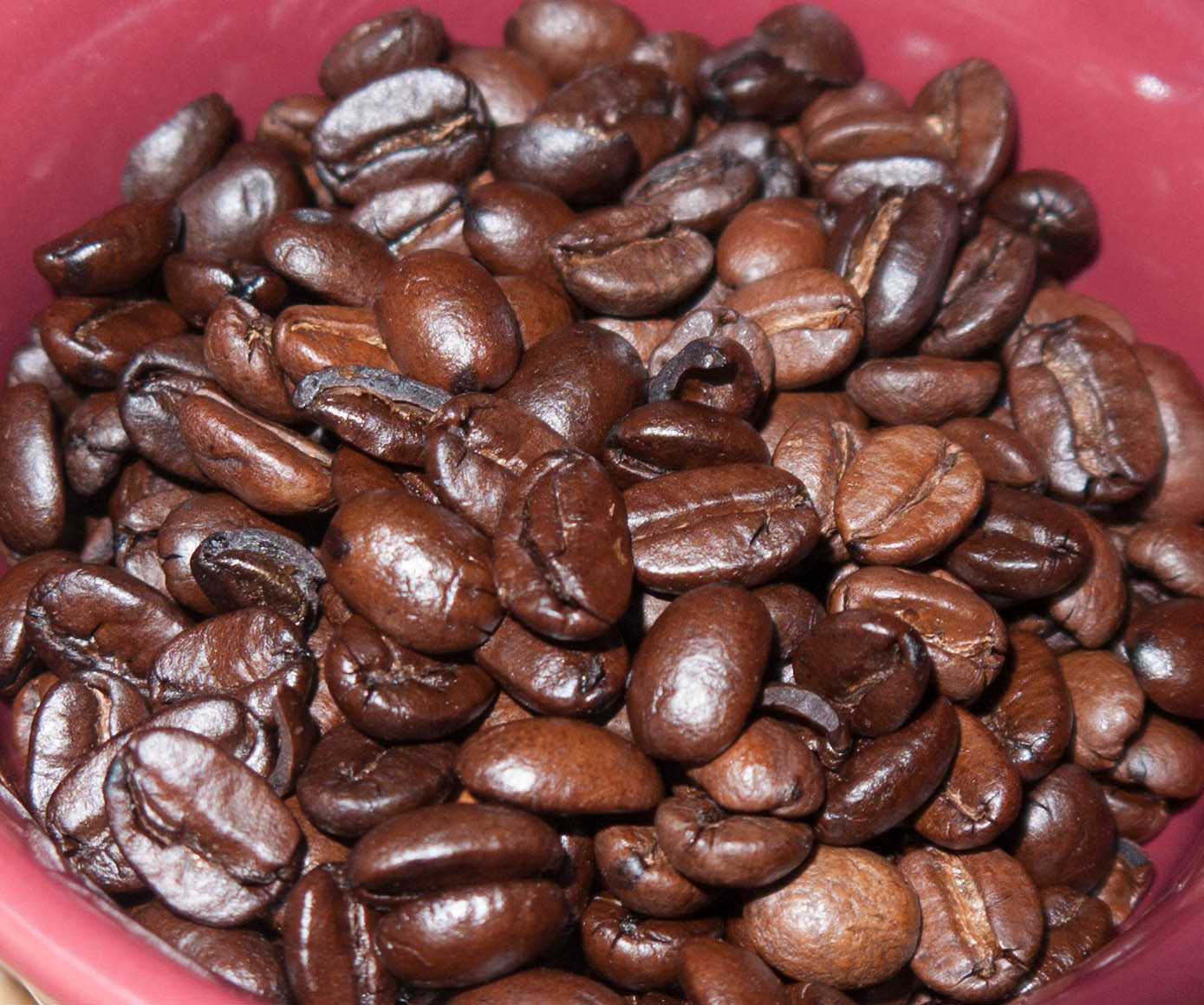
Products of the Maillard reaction range from molecules that are both welcome and abhorrent. The usually enjoyed flavor and aroma of roasted coffee is a product of the Maillard reaction, as is the char on the surface of grilled food which is considered to be carcinogenic.

Roasted Coffee Beans, photo by Adrienne Roehrich
Grilled Yams, photo by Adrienne Roehrich

Do you know someone or something that has reached the anniversary of 100 years on this earth?


References:
  (1)  Mecocci, P.; Polidori, M. C.; Troiano, L.; Cherubini, A.; Cecchetti, R.; Pini, G.; Straatman, M.; Monti, D.; Stahl, W.; Sies, H.; Franceschi, C.; Senin, U. Free Radical Biology and Medicine 2000, 28, 1243.
  (2)  Klapcinska, B.; Derejczyk, J.; Wieczorowska-Tobis, K.; Sobczak, A.; Sadowska-Krepa, E.; Danch, A. Acta Biochimica Ponoica 2000, 47, 281.
  (3)  Andersen, H. R.; Jeune, B.; Nybo, H.; Neilsen, J. B.; Andersen-Randberg, K.; Grandjean, P. Age and Ageing 1998, 27, 643.
  (4)  Journal of Aging Research 2011, 2011.
  (5)  Maillard, L.-C. Comp. Rend. 1912, 66.
  (6)  Hodge, J. E. Journal of Agricultural and Food Chemistry 1953, 1, 928.

Historical Chemists Part II

If you have been watching tweets from @DoubleXSci since early December, you’ll have noticed tweets about Notable Historical and Modern Women in Science. Nearly 100 women were presented over twitter. Those women will be presented in a series here on the blog with the original tweeted links and information as well as with some additional information not able to be presented in 140 characters. We hope you look up more on these women.


Leonora Neuffer Bilger was the 1953 Garvan Medal winner and a big influence at the University of Hawaii.
(1893-1975) Dr. Bilger received her PhD in chemistry from the University of Cinncinnati in 1916. She graduated and went straight into a position as head of the chemistry department at Sweet Briar College. A brief stint at the University of Cinncinnati gave her skills that she later used in her position as Chair of the Department of Chemistry at the University of Hawaii to design a new chemistry laboratory facility. Her post as University of Hawaii Department Head began in 1943 and lasted 11 years. Her research was on asymmetric nitrogen compounds, for which she won the Garvan Medal.

Nutritional Chemist Mary Letitia Caldwell was a role model and mentor over 6 decades.
(1890-1972) Born in Bogota, Columbia of missionaries, she arrived in the U.S. to attend high school. Dr. Caldwell was supported by her family in her pursuit of education and science. Due to gender restrictions, Caldwell attended a women’s college and stayed on there for teaching initially. This gave her the start on what she is known for: being a role model and mentor for other women for six decades. She received her A.B in 1913 from Western College for Women, her master’s degree in 1919 from Columbia, and her PhD in 1921 from Columbia, where she stayed on to teach. She entered the relatively new at the time field of nutritional chemistry, laying the groundwork for those after her. While Caldwell was well-known for the quality of research and diligence in her work, she also maintained a work-life balance, as an avid hiker, doting aunt, and gardener.

Emma Perry Carr
Photo from Wikimedia Commons

Emma Perry Carr was a pioneer in UV spectroscopy and a beloved teacher.
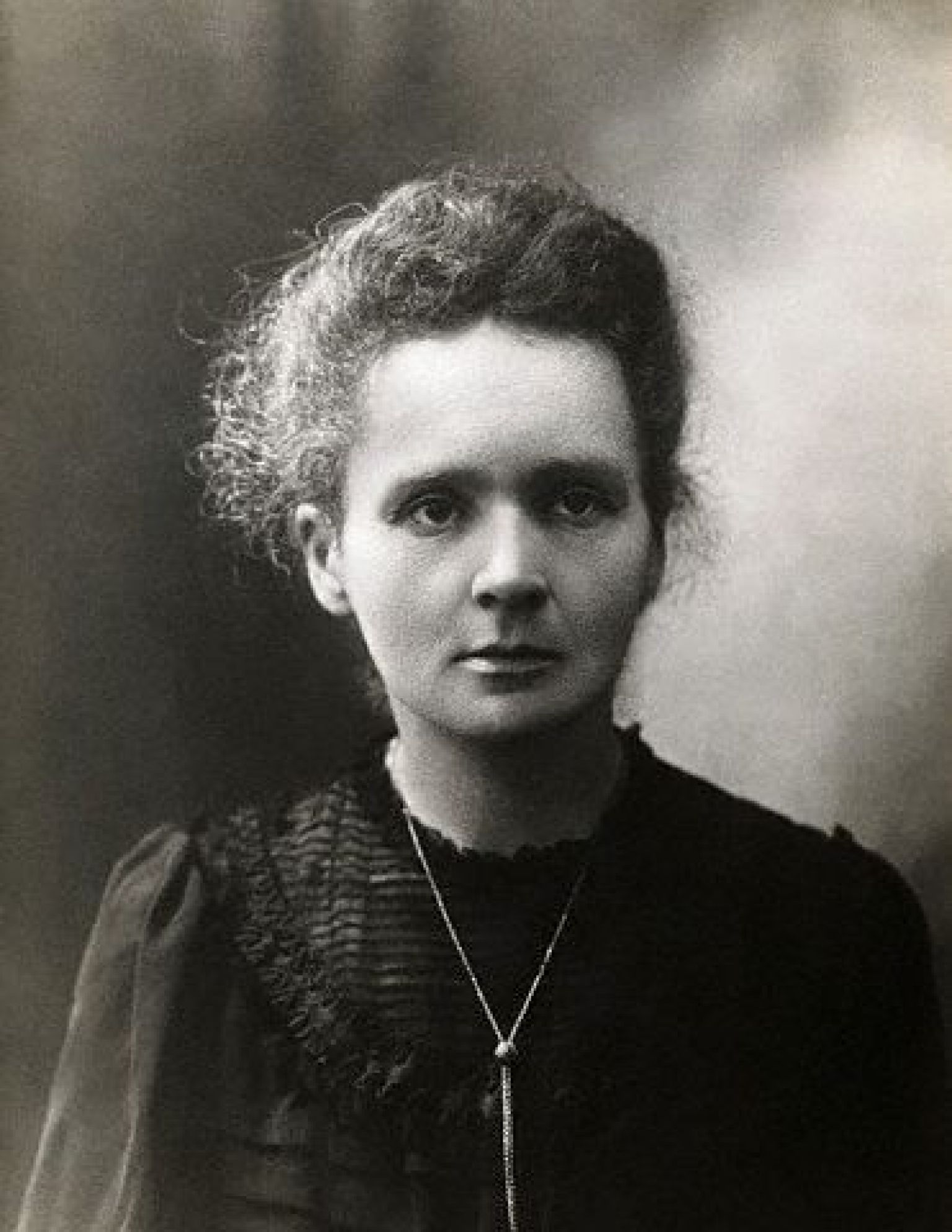
(1880-1972) Emma Perry Carr first attended Mr. Holyoke College then transferred to and received her B.S. from the University of Chicago in 1905. After a short duration as an instructor at Mt. Holyoke, Dr. Carr returned to the University of Chicago to receive her PhD in 1910. She returned to Mt. Holyoke to become a full professor and head of the department by the age of 33, a post she held for 33 years. Dr. Carr was also a devoted aunt,a fashionable dresser, and a talented storyteller. She had a relationship with Mary Sherrill, another professor at Mt. Holyoke, whom she shared a residence with for 26 years. Emma Perry Carr was the first recipient of the Garvan Medal.

Marie Sklodowska Curie
Photo from Wikimedia Commons

Physicist & Chemist Marie Sklodowska Curie was the first twice Nobel Prize laureate.

(1867-1934) Much has been written about Marie Curie. She is, perhaps, the first historical figure to come to mind when a person says “Notable Woman in Science.” She is the first person to have been a twice Nobel Laureate. Marya Sklodowska was born in Poland, and lived through the loss of her eldest sister and mother by age 11. After graduating first her in class from high school, she attended a secret university because Polish universities could not admit women. She wished to go to Paris to study, so she worked and saved her money to do so. She was the first women to receive her Licence es Sciences Physiques from the Sorbonne in 1893, graduating first in her class again. She received her Licence es Sciences Mathematiques in 1894 from the same institution. In 1903, she attained her PhD from the University of Parish, the same year she was awarded the Nobel Prize in Physics. Difficulties continued in her personal life, such as the death of her husband in 1906, her own ill health due to radiation poisoning, and her constant fight for her place in her work. She broke so many barriers, being the first woman in so many circumstances.

Mary Fieser was well-known for her contributions to organic chemistry.
(1909-1997) Mary Feiser was encouraged by her parents to excel academically. She attended Bryn Mawr and received her B.S. in chemistry in 1930. She then attended Radcliffe college and worked on her master’s thesis in the lab of Louis F. Feiser at Harvard. She received her A.M. in 1931 and married in 1932. She opted to continue to work in her husband’s lab instead of pursue a PhD because of the funding and Harvard facilities. With her help, 15 papers and 17 books were published by Feiser. However, Harvard never granted her a salary nor official title for 29 years. Even at 85 years of age, Mary Feiser continued to write and publish organic chemistry books, which were well received.

Dorothy Anna Hahn was a researcher, professor, and mentor for women in chemistry.
(1876-1950) Dorothy Hahn received her B.A. in chemistry from Bryn Mawr and went to work at Mt. Holyoke College under the auspices of Emma Perry Carr. Together, the two women were a force producing many women chemists. While Dr. Carr ran the chemistry department, it is said Dr. Hahn ran the organic chemistry department. Dr. Hahn pursued and recieved her Ph.D. from Yale University in 1916 due to a fellowship from the AAUW (American Association of University Women). Hahn also preceeded well-known scientists Gilbert Lewis and Irving Langmuir on a theory of valence electrons. Professor Hahn was a huge influence on organic chemistry, teaching, and women in chemistry.

Allene Rosalind Jeanes was a pioneering researcher with several patents.
(1906-1995) Allene Rosaland Jeanes was born and raised in Texas. She received her A.B with highest honors from Baylor University in 1928. She graduated with her M.A. from the University of California – Berkeley in 1929. She taught for awhile in a few different colleges, then decided to return to graduate school. She attained her PhD from the University of Illinois in 1938. While she wanted to go into pharmaceutical research, opportunities were limited. She took a position at the National Institute of Health. Her research took her through several government positions and had applications in the food industry. She was honored with many awards, including the Garvan Medal and Federal Women’s Award from the U.S. Civil Service Commission.

Nuclear Chemist Ellen Gleditsch was virtually unknown despite her accomplishments.
(1879-1968) The story of Ellen Gleditsch is not well known in her native Norway nor abroad, and signifies how difficult it was for women to be recognized for their work. She received her degree in pharmacology in 1902. She worked with Marie Curie for 5 years, and received her Licencee es Sciences from the Sorbonne in 1912. She went to work at Yale University despite the animosity toward her from the men at the U.S. institutions of Yale and Harvard and received her D.Sc. form Smith College in 1914. In 1929, Oslo University became embroiled in controversy over the decision to advance Ellen Gleditsch to the position of professional chair, and it took a letter from Marie Curie to help quell the public outrage. During her time in Oslo, she also provided a home for scientists fleeing Nazi Germany. She continued to be an advocate and mentor for women in the sciences until her death at age 88.

Anna Jane Harrison was the first woman president American Chemical Society.
(1912-1998) Born in Missouri, Anna Jane Harrison was raised on a farm and her childhood science education tended to be “go out and find caterpillars.” She learned about Caterpillar tractors from her father for that assignment. Her high school science teachers inspired her interest in science, so she went to the University of Missouri to earn a B.A. in chemistry in 1933, a B.S. in education in 1935, a M.A. in chemistry in 1937, and a Ph.D. in physical chemistry in 1940. She was the first woman to earn a PhD at the institution. After meeting Lucy Picket and Emma Carr at a meeting of the American Chemical Society (ACS), she went on to work at Mt. Holyoke College, carrying on the traditions established there by Emma Carr and Dorothy Hahn. She also has several more “firsts” including being the first woman to chair the Division of Chemical Education of the ACS and the first woman elected president of the ACS in the 102 year history of the organization up to then. She was honored with the honorary degree of D.Sc. from ten instutitions. She enjoyed traveling and once stated, “What I really like is to go places one isn’t supposed to go.”

Mentioned Awards
The Garvan Medal is an award from the American Chemical Society to recognize distinguished service to chemistry by women chemists.
Nobel Prize: From the site:
Every year since 1901 the Nobel Prize has been awarded for achievements in physics, chemistry, physiology or medicine, literature and for peace. The Nobel Prize is an international award administered by the Nobel Foundation in Stockholm, Sweden. In 1968, Sveriges Riksbank established The Sveriges Riksbank Prize in Economic Sciences in Memory of Alfred Nobel, founder of the Nobel Prize. Each prize consists of a medal, personal diploma, and a cash award.
Federal Women’s Award from the U.S. Civil Service Commission was awarded to a woman for a high level of scientific achievement.

Why blueberries won’t turn you blue and other blueberry facts

Blueberries. Credit.


by Adrienne Roehrich, Chemistry Editor

Blueberries in the Northwestern semisphere are the fruit of several shrubs in the genus Vaccinium L. They grow in all provinces in Canada and all but two of the United States (Nebraska and North Dakota). In the Northwestern semisphere, one can find 43 species of blueberries, depending on the region. Blueberries are found and produced in all hemispheres of the world. However, the species can vary by region.

Taxonomy:
Kingdom: Plantae (Plants)
Subkingdom: Tracheobionta (Vascular plants)
Subdivision: Spermatophyta (Seed plants)
Division: Magnoliophyta (Flowering plants)
Class: Magnoliopsida (Dictyledons)
Subclass: Dilleniidae
Order: Ericales
Family: Ericaceae
Genus: Vaccinium

There are 43 species and 46 accepted taxa overall. Some of the species include fruits we do not necessarily recognize as blueberry, including farkleberry, bilberry, ohelo, cranberry, huckleberry, whortleberry, deer berry, and lingonberry. (Source)

Blueberries are a very popular fruit in the U.S., and is consumed in fresh, frozen, and canned forms. While blueberries are a great fruit to eat to meet your suggested fruit intake, it also is one of the foods that are purported to have properties that it just does not have. This undeserved reputation results from the high levels of anti-oxidants, leading those predisposed to looking for “super foods” to classify blueberries into the anti-oxidant super food category. While eating more healthy foods is always a good idea, no food has curative effects all on its own.

Other aspects of blueberry nutrition includes it as a source of sugar. One cup (148 g) of blueberries contains about 15 g of sugar and 4 g of fiber, a single gram of protein, and half a gram of fat. If you are counting carbs, this cup has 21 g of them. That one cup of blueberries averages about 85 calories, which is approximately the same as a medium apple or orange. While almost all the vitamins and minerals nutrition gurus like to report on are present to some amount, for the 2000-calorie diet, that one cup of blueberries will provide the recommended daily value of 24% of Vitamin C, 36% of Vitamin K, and 25% of manganese. The remaining values range from 0-4%. (Values obtained from Nutrition.com and verified through multiple sources.)

The Wikipedia entry is quite good and well researched (as of August 18, 2012).

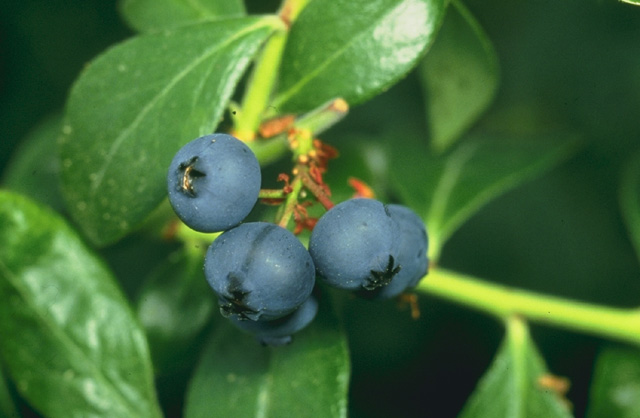
The photo above shows all of the life stages of a blueberry. Berries go from the little red nub at the end of the branch to round and juicy blueberries through fertilization of the ovary, which swells rapidly for about a month, then its growth ceases. The green berry develops with no change in size. The chemicals responsible for the blue color, anthocyanins, begin to turn the berry from green to blue as it develops over about 6 days. The volume of the berry increases during the change in color phase.

Will blueberries turn you blue? In short, no. You can achieve blue skin through the ill-advised practice of drinking silver or you can achieve orangish-yellow skin by eating a large number of carrots. This is because the chemicals causing the skin color are fat soluble and are present in a large quantity in the fat just under the skin, giving the skin those colors. Anthocyanin, the primary chemical causing the blue color in blueberries, is not fat soluble and will not reside in the fat under your skin.

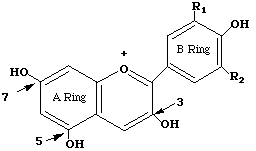
Anthocyanins is a class of over 30 compounds. The chemical structure is generally as shown below. They are polyphenolic, which indicates the 3 ring structures. The “R” indicates different functional groups that change depending on which anthocyanin the structure represents.


Interestingly, anthocyanins are also pH indicators because their color ranges from yellow to red to blue depending on the local pH. The blue color indicates a neutral pH. The wikipedia page on anthocyanins is also informative (as of August 18, 2012).

As mentioned before, blueberries are a popular fruit. Recipes abound, but here is one from my own Recipe Codex for Surprise Muffins with blueberries:

Ingredients
  • 6 Tbsp. butter
  • 3/4 cup sugar
  • 2 eggs
  • 1/2 cup milk
  • 1/2 – 1 pint blueberries, fresh or frozen (defrosted)
  • Food coloring, optional
  • 2 cups all-purpose flour
  • 1/4 tsp. salt
  • 1 Tbsp. baking powder
  • Your favorite mini-treat (Hershey’s Kisses, Hugs, Reese’s Mini Cups, strawberry jam, etc.)
Directions
  1. Preheat the oven to 350º. In a large bowl, cream the butter and sugar. You can use a wooden spoon, a potato masher or handheld electric mixer. Mix in the eggs, one at a time, and add the milk.
  2. Rinse the strawberries and cut off the green stem. Mash the berries with a potato masher or puree in a blender. Then stir the berries into the butter and milk mixture. TIP: For muffins with a more blue color, add a few drops of blue food coloring.
  3. In a separate bowl, sift the flour, salt and baking powder. Stir well. Add the flour mixture to the berry mixture. Use a wooden spoon to stir until all the white disappears.
  4. Line the muffin tin with paper liners. Drop the batter from a tablespoon to fill the cups halfway.
  5. Add a surprise: an unwrapped mini treat or 1/2 teaspoon of jam. Then spoon more batter to fill almost to the top.
  6. Bake until the muffins begin to brown and a toothpick inserted near the center (but not in the mini-treat) comes out clean, about 20-25 minutes.
  7. Remove the muffins from the tin and cool.
Or perhaps you are in less of a cooking scientist mood and more in a home lab mood. Try this at-home lab with blueberries about dyes. Adapted from the Journal of Chemical Education.

Items You Need
  • 4 microwavable/stove top staff glasses, pots, or containers at least 1/2 cup in volume
  • tablespoons or 1/4 cup measuring cup
  • water
  • spatula
  • alum (available in the grocery store spice aisle)
  • cream of tartar (available in the grocery store spice aisle)
  • hot pads and tongs
  • at least four small (1-2 in.) squares of white cotton cloth
  • yellow onion skins
  • blueberries
  • spoon
  • paper towels
  • vinegar
  • baking soda
  • a dropper
  • notebook for experimental observations
Procedure
In each step, you will want to record your observations, paying special attention to colors.
  1. Pour 4 tablespoons (1/4 cup) into container 1. Add a pea-sized scoop of alum and about half that amount of cream of tartar and stir. Bring the solution to a boil on the stove top or by microwaving for about 60 seconds. (Your microwave may vary.) Add two small squares of white cotton cloth and boil for two minutes. Set the container aside. The squares will be used in steps 4 and 6.
  2. Tear the outer, papery skin from a yellow onion into pieces no more than 1 inch square. Place enough pieces in a second container to cover its bottom with 2 or 3 layers of onion skin. Add about 4 tablespoons of water to the container. Bring the solution to a boil on the stove top, continuing to boil for 5 minutes.
  3. Wet a new square of cloth with water. Place it in container 2 so it is completely submerged and boil for 1 minute. Using tongs, remove the cloth and rinse it with water. Place the cloth square in the appropriate area on a labeled paper towel.
  4. Use tongs to remove one of the cloth squares from beaker 1. Repeat step 3 using this square. Compare to the dyed cloth square from step 3.
  5. Pour 4 tablespoons of water in a third container. Add 4-5 blueberries to the container and mash them with a spoon. Bring the solution to a boil on the stove, and continue to boil for 5 minutes.
  6. Repeat steps 3 and 4 substituting the blueberry mixture in container 3 for the onion skin mixture in container 2.
  7. Mix a small scoop of baking soda with a tsp of water in a clean container. With a dropper, place 1-2 drops of the baking soda solution in one corner of each cloth square. What happens? Rinse the dropper thoroughly, then place 1-2 drops of vinegar on the opposite corner of each square. What happens? Rinse the fabric squares under cool running water. Is there a change? Allow the squares to dry overnight. Is there any change of the cloth dries?
Optional: Try variations in the procedure such as changing the amount of dye source, the length of time the cloth spends in the dye solution, and the temperature of the dye solution.

Questions to consider
The solution in step 1 is called a mordant. Based on your observations, what is the purpose of a mordant?
Is the dye produced by blueberries really blue? Why might some people not want to wear clothes dyed with blueberries?

———————-
All in all, enjoy your blueberries. As a shrub, it is quite pretty. As a fruit, it is quite yummy. And as the tool in an experiment, it is quite fun.

These views are the opinion of the author and do not necessarily reflect or disagree with those of the DXS editorial team.