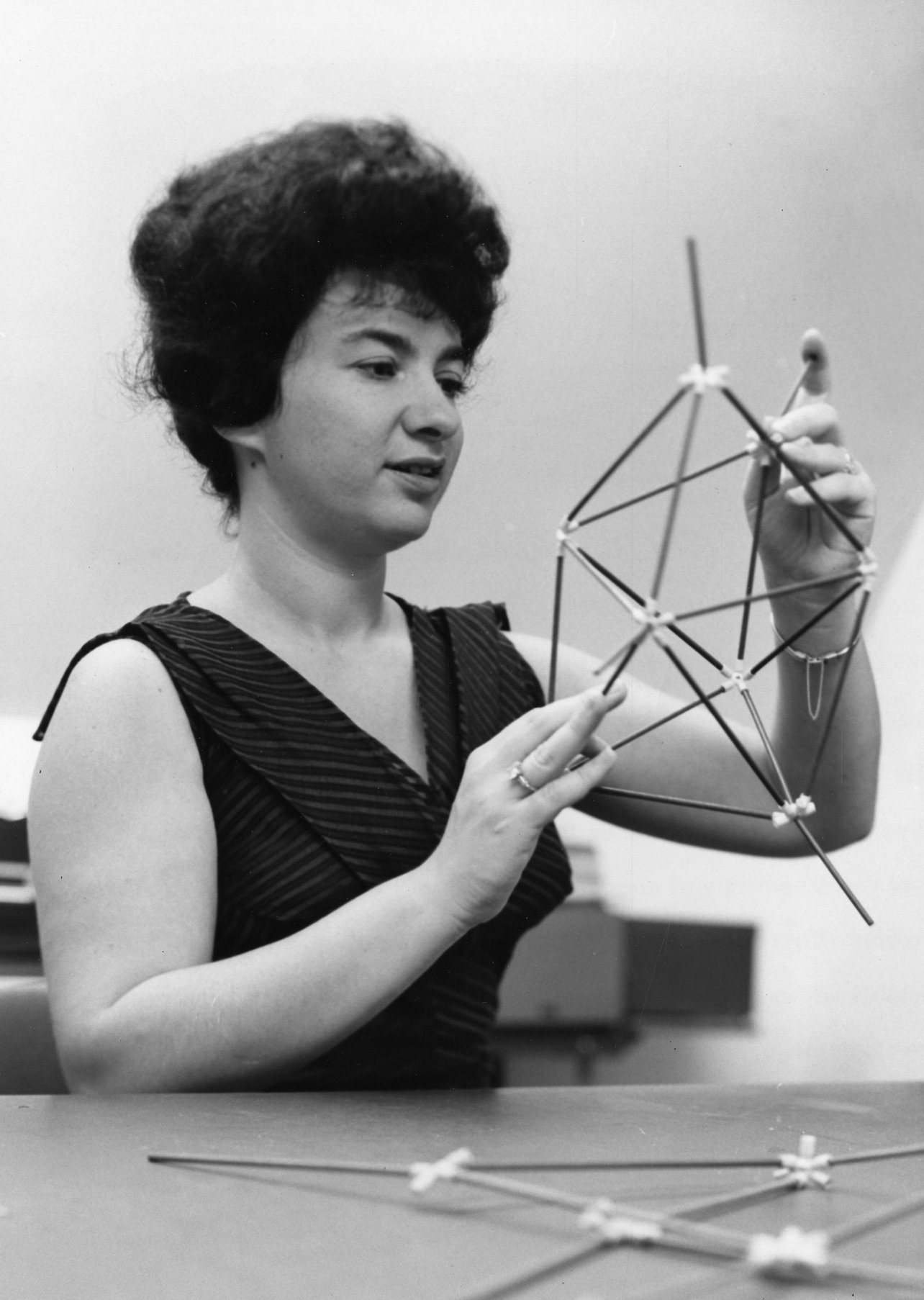
Adrienne Roehrich

About Adrienne Roehrich

Adrienne, chemistry editor at Double X Science, is the Associate Manager of an NMR Facility at a large public university on the west coast. Her training and research can be classified under chemistry, physics, and biochemistry or biophysics. She also has experience teaching from the kindergarten through university levels since 1996. Adrienne is mother to two “tween”-age children, a daughter and son, both of whom give her great pride and joy and also consternation at times. Adrienne tweets on science, food, feminist topics, and life in general.

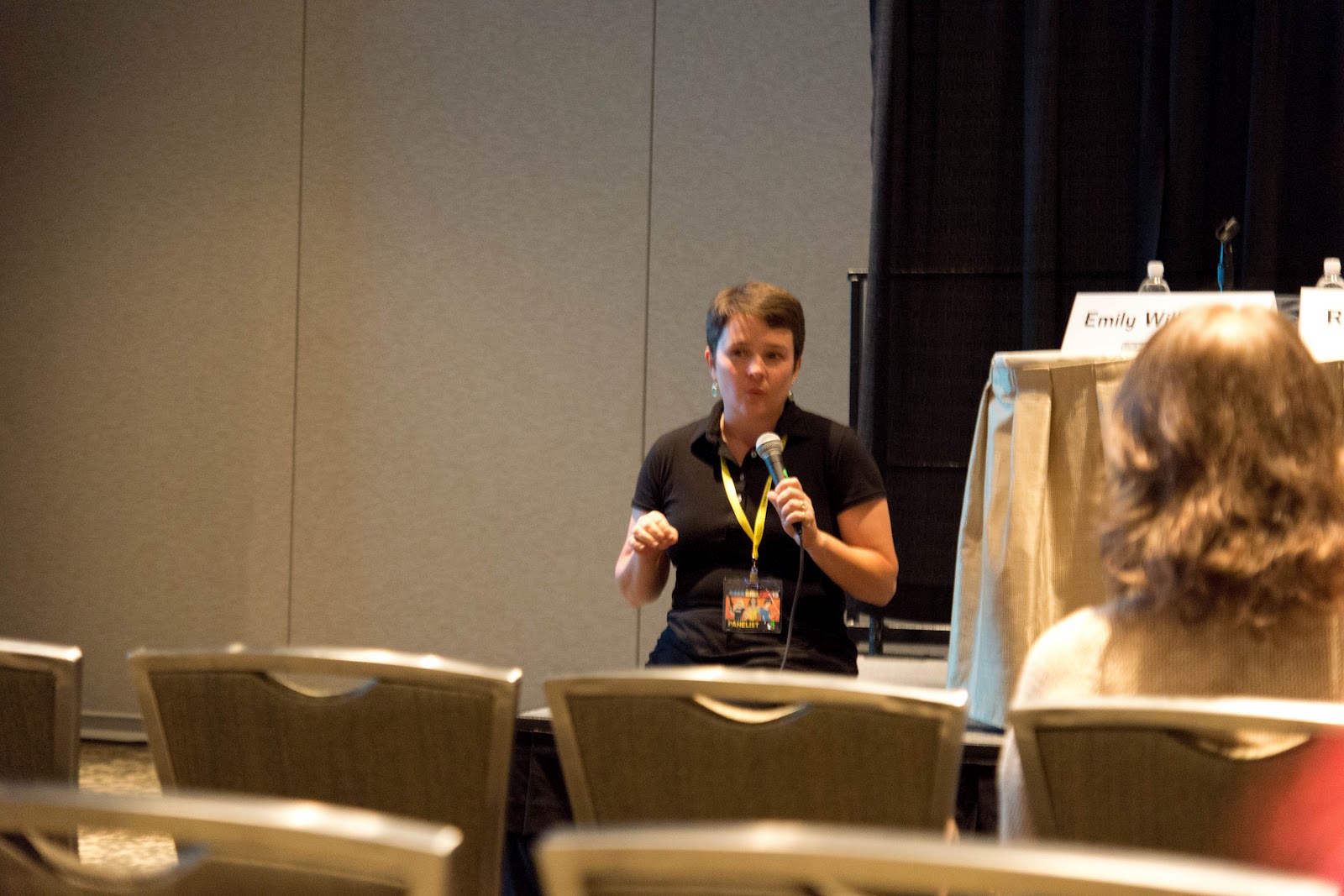
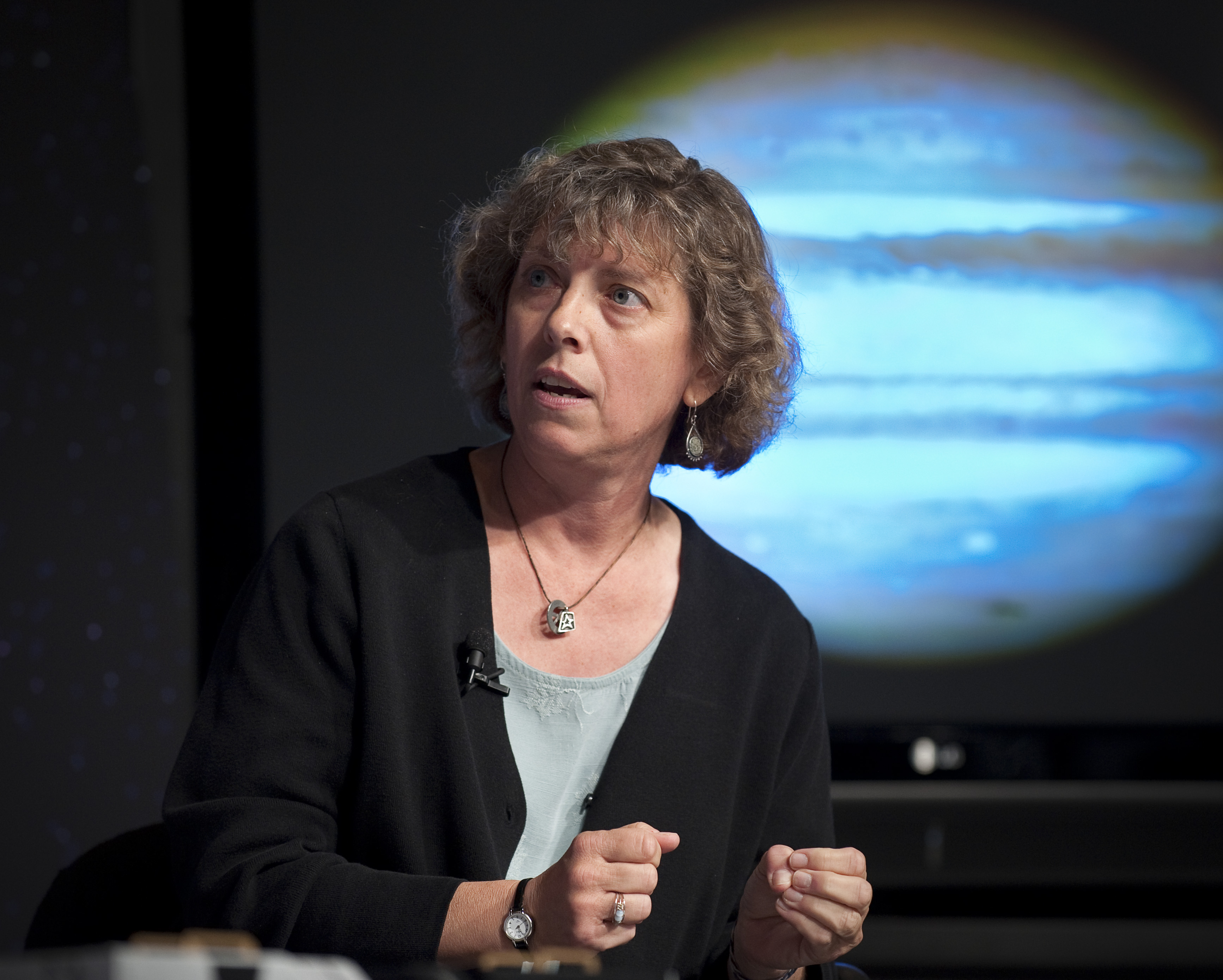
Double X Science panel at GeekGirlCon 2012

On Sunday, Aug 12, Managing Editor Emily Willingham, Chemistry Editor Adrienne Roehrich, and Contributor Raychelle Burks spoke on bringing science to you. Here’s a summary of our panel.
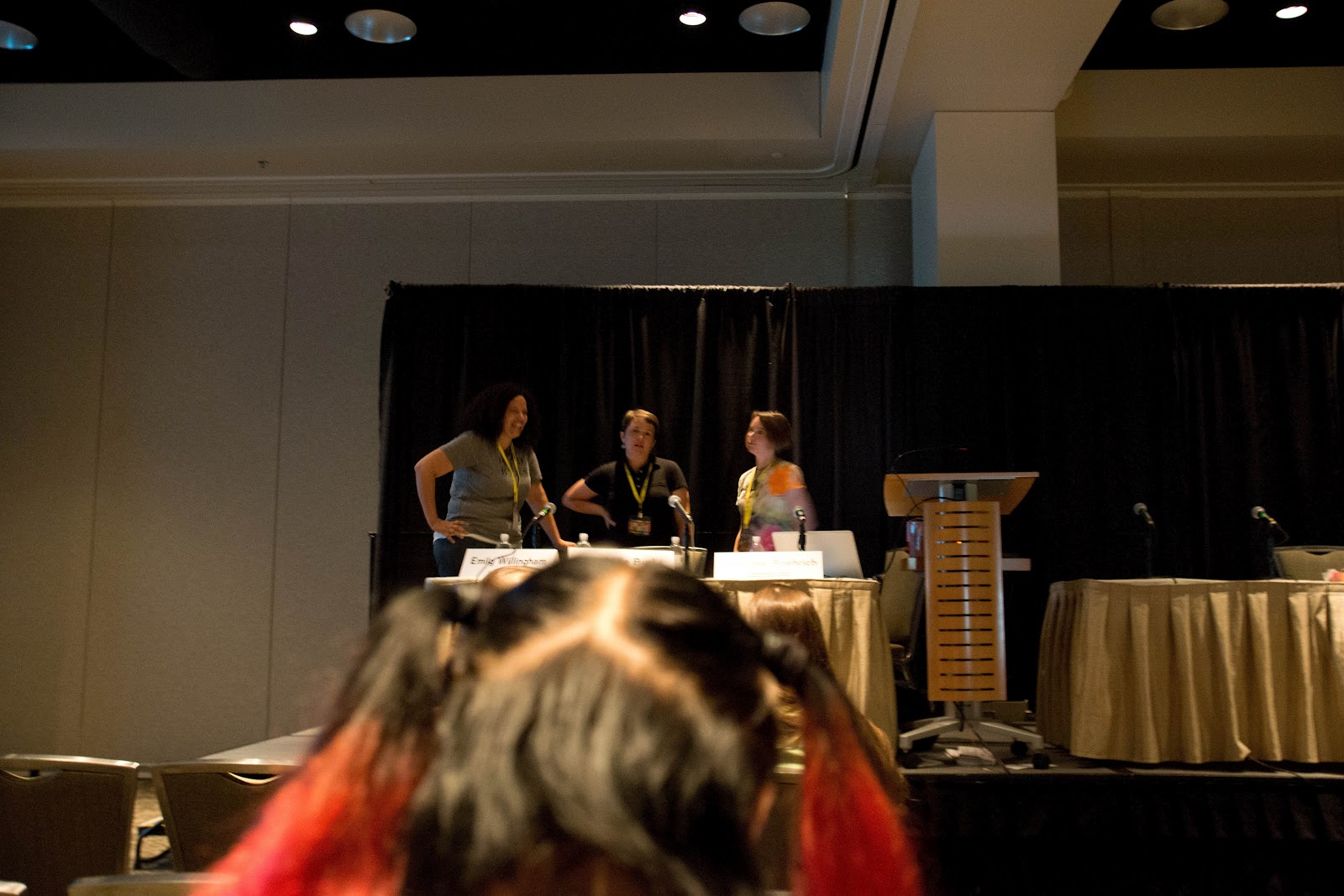
Photo by Ryan Roehrich and used with permission.

We started with a welcome and gratitude to the organizers and attendees and our tagline “Science, I am Just That Into You.” We were selected to appear with a lot of fantastic programming over the weekend.
We introduced our 3 panelists:
Adrienne Roehrich, your panel moderator and the chemistry editor at Double X Science
Emily Willingham, founder and managing editor
Ray Burks, contributor to Double X Science
Photo by Ryan Roehrich and used with permission.

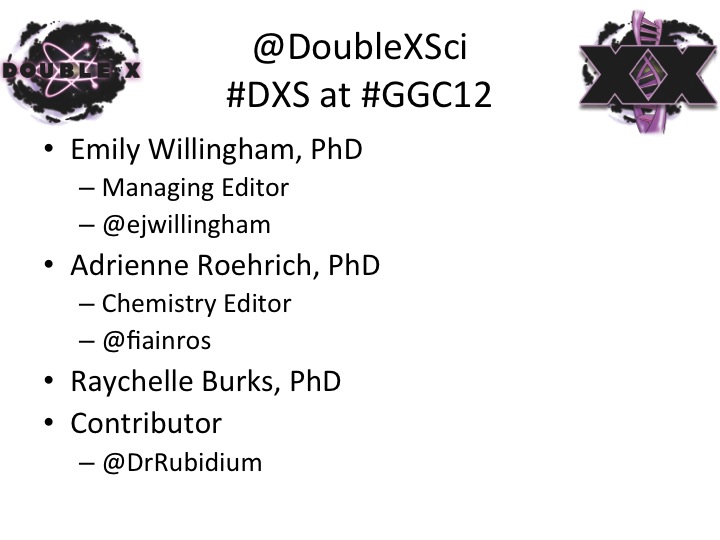
All 3 have PhDs in their respective fields – Emily is a developmental biologist, Ray is an analytical chemist, and Adrienne is a physical chemist. Emily and Ray are prolific writers. You can find their articles all over the internet and in print. Ray is a staff member for GeekGirlCon and Adrienne is a Special Agent volunteer. All 3 are active on social media and welcome live-tweeting and suggest the #DXS hashtag along with the #GGC12. And you can use the @DoubleXSci for the panel.
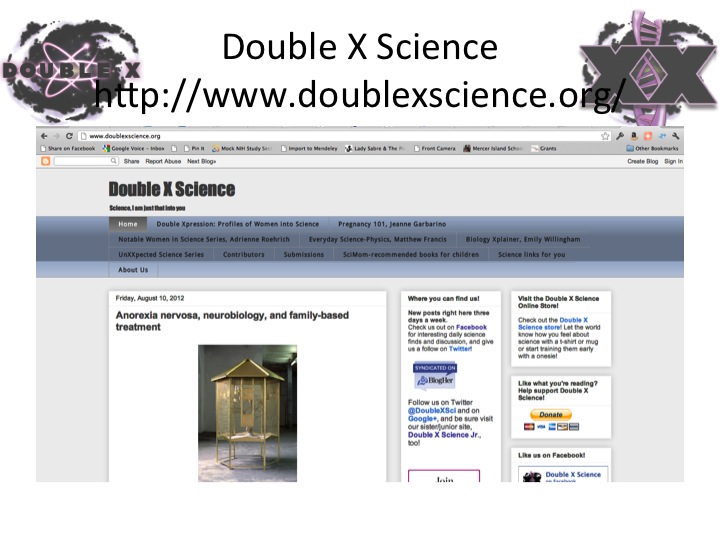
Then a poll of the room to see who had heard of the site. Only a few attendees were already familiar with the site, so we told them that DoubleXScience covers a lot of current science. For example on (the previous) Monday, Emily posted about the Mars Curiosity Rover touchdown. In July, the physics editor covered the Higgs particle announcement. We also cover timeless, yet updated science, such as pregnancy and other health issues that we editors perceive to be of interest to ourselves and our readers.
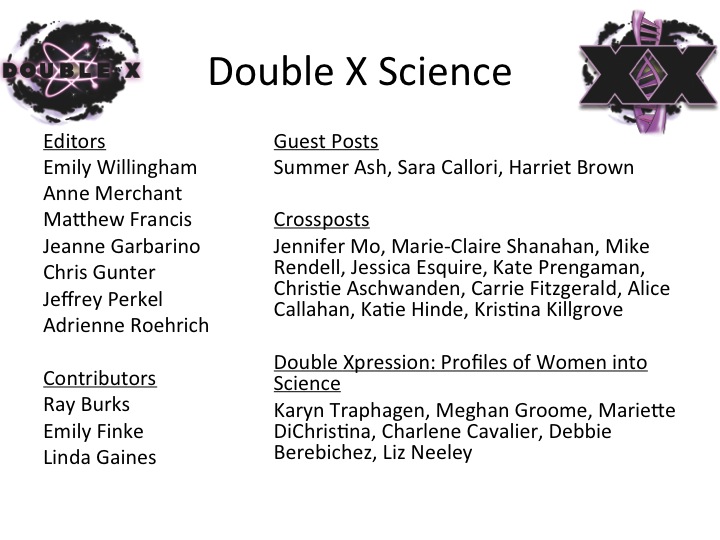
It’s hard to discuss what Double X Science is without discussing who it is.
After a review of who all the people on that particular slide are and what they have to do with Double X Science, three questions were asked by the moderator:
In November of 2011, Emily founded Double X Science, Emily what was your motivation in founding the site and what was then and is now your vision for it?
As mentioned, we have content from editors, other sites and contributors. Ray was the first contributor to the site – what attracted you to Double X Science?
What do the attendees want to know?
And then our discussion really got started. Thankfully, we had 3 great tweeters attending, so I can just point you along their tweets:

[<a href=”http://storify.com/fiainros/double-x-science-panel-at-geekgirlcon-2012″ target=”_blank”>View the story “Double X Science panel at GeekGirlCon 2012” on Storify</a>]
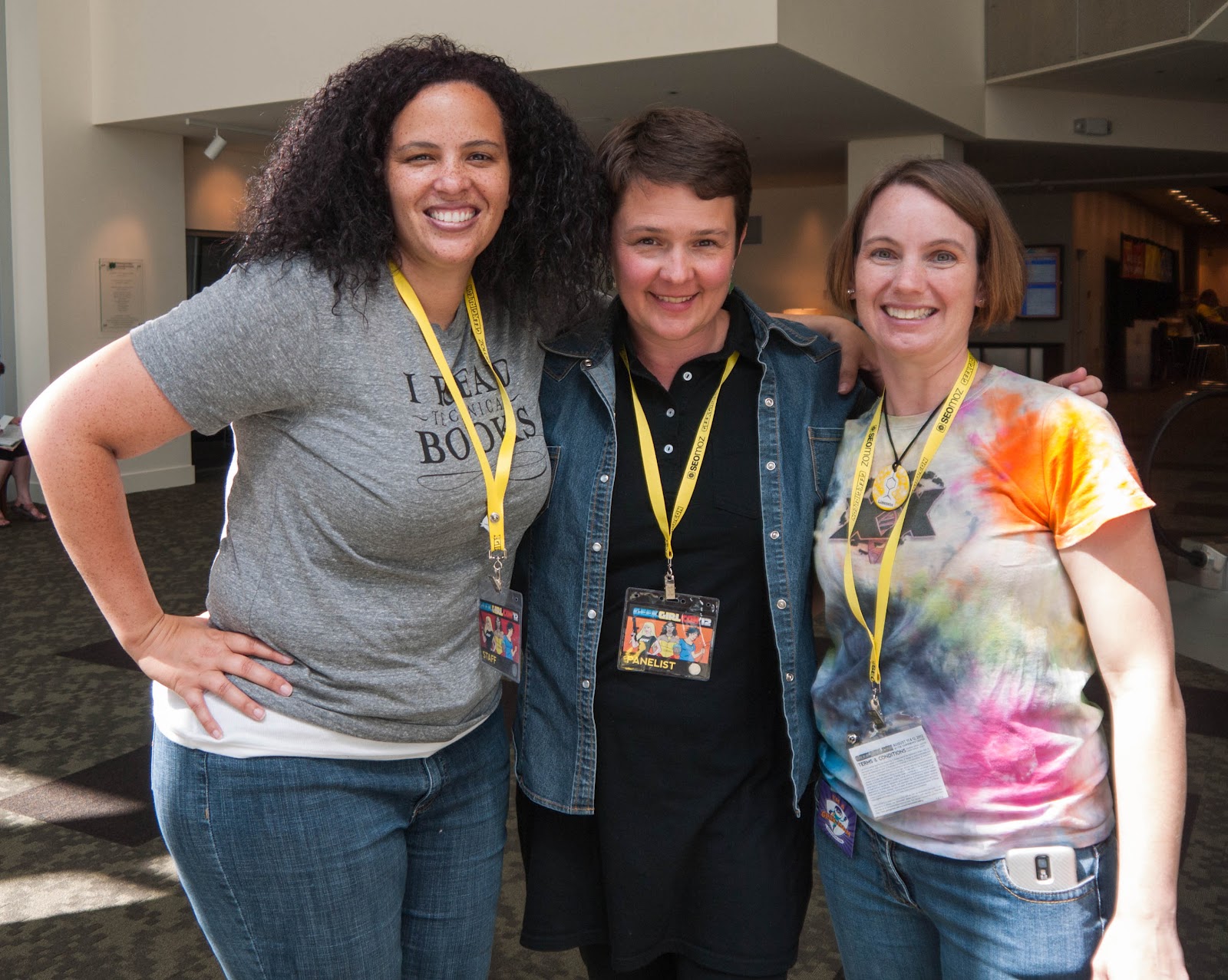
Photo by Adrienne Roehrich and used with permission.

Posted by Adrienne M. Roehrich, Chemistry Editor
Explosions, Just a Bit More Than Fireworks

Image by Nux. (Source)

By Adrienne M Roehrich, Chemistry Editor


It’s that time of the year in the U.S. – when we blow up pretty bombs in celebration of the approval of the Declaration of Independence, declaring the independence from the Kingdom of Great Britain. Around this time of year, there is no dearth of articles about the chemistry of fireworks, but the chemistry editor here could not let her secret love of this topic pass by.


What is an explosive? An explosive is a combination of materials that when reacted produce an abundance of light, sound, heat, and pressure. A firework encompasses all 4 of those: we are familiar with the light – the whole reason we view fireworks, we are familiar with the sound – the boom that follows especially large displays, we are familiar with the pressure if we are close enough – that’s the force that pushes into you and the “shock wave” pictured in movies after large explosions; and we are familiar with the heat – ever held a sparkler?


There are three main types of explosives: chemical, nuclear, and mechanical. The bulk of this post will focus on chemical explosives with a short bit about nuclear and mechanical.


If we start at the beginning – well, we’ll skip to the “accepted” first explosive – black powder. Black powder, also called gun powder and the precursor to fireworks, is coined a chemical explosive. Chemical explosions generally fall into a specific classification of chemical reactions called oxidation.


The earliest definition of oxidation was the addition of the element oxygen to a compound, also called combustion. Due to limits of this definition, it was later changed to be the loss of electrons from an element (within a compound.) The original definition can easily be shown in terms of explosives. The simple mixing of hydrogen and oxygen with the addition of just a bit of heat, will form water in an explosive display:


2H2 + O2 -> 2H2O


The little flame used to catalyze the reaction in the video is actually much more energy than is necessary to cause this reaction to occur, but it’s difficult to get an even littler source of heat and safely demonstrate this reaction. You might also note a lot more energy comes out of that reaction once started in terms of light and heat and sound. I’ve been the one lighting that reaction in a demo without both ears plugged and I couldn’t hear out of one ear for the rest of the lecture.


If we focus on the loss of electrons version of oxidation, we get specific colors. This is what the flame video by The Fabulab focused on in their entry for Alan Alda’s Flame Challenge. I direct your attention to 1:08 and the discussion of electrons.


Metals are the simplest example (and most used) example of oxidation as the loss of electrons and the color change associated. Because some electrons are lost, we now have a different set of electrons changing energy and a different color appears.


From here, it is easy to see how fireworks fall into this category of explosives. Fireworks are always being further refined to produce a specific set of light and sound. For a bit more information, this video gets fairly specific.

 
The vast majority of explosives in use today are considered chemical explosives. This covers a range of materials, including the aforementioned black powder and fireworks, nitroglycerin, dynamite, plastic explosives (C4 for Mythbusters and sci-fi television show fans), and the ones with water now restricting the amount of water one is allowed to bring onto an airplane in the U.S.


Another type of explosive is a nuclear explosive. The energy in these explosives come from a nuclear reaction. Wikipedia differentiates types of nuclear explosions into stellar and man-made. Another way to differentiate nuclear reactions is by fission and fusion. The explosions at the heart of stars fall under nuclear fusion and are called stellar nucleosynthesis.


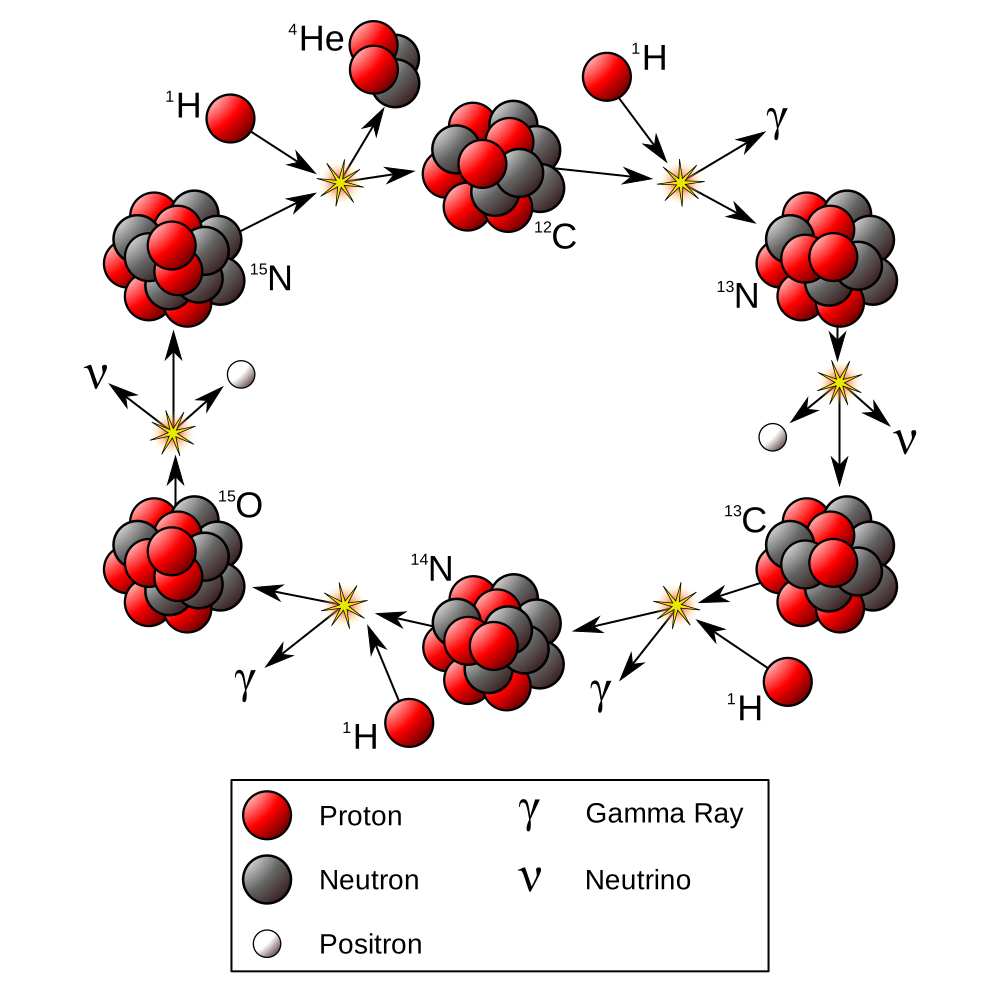
Nuclear fusion is the process of forcing 2 atoms into 1 new, larger atom. The CNO cycle, diagrammed here, is one of the nuclear fusion reactions occurring in stellar nucleosynthesis.


Source

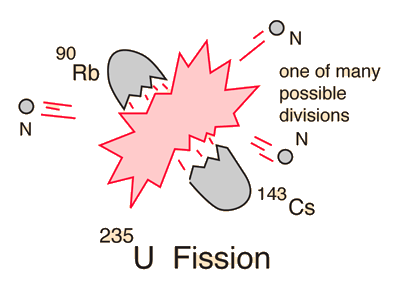
Nuclear fission is the process involved in nuclear weapons.


Nuclear fission is the process of dividing an atom into 2 or more smaller atoms. In both nuclear fusion and nuclear fission processes, specific types of radiation are emitted because the new atoms produced do not have the same energy as the starting material. The radiation emitted in these reactions is not just from a change of electrons but from a change from the nucleus of the atom. This emission of radiation is part of the light and heat from the sun and the light and heat of a nuclear bomb.


The third and last type of explosive I will cover is a mechanical explosive. These explosions occur as a purely physical process, but can then incite a chemical explosion. Mechanical explosions occur due to a sudden release of a build up of pressure. A specific kind of these explosions are under conditions where a liquid is pressurized in a vessel and a rupture brings it above its boiling point, called a boiling liquid expanding vapor explosion, BLEVE. Steam powered trains were sometimes damaged by these type of explosions. An explosion of a water heater falls into this category. Mechanical explosions are the rarest and perhaps least covered types of explosives.


Water heater explosion by the Mythbusters.


These views are the opinion of the author and do not necessarily either reflect or disagree with those of the DXS editorial team.

Excerpts from Sophie’s Diary: A Mathematical Novel

Today we enjoy a bit of math, as told in Sophie’s Diary: A Mathematical Novel. Written by Dr. Dora Musilek, this novel was inspired by the French mathematician Sophie Germain, an important contributor to number theory and mathematical physics. Her correspondence with some of history’s great mathematicians such as Lagrange, Legendre, and Gauss are known while her life prior to that is shrouded in the unknown. Dr. Musilek explored Germain’s early life and uses the concept of an adolescent’s diary to discuss how Germain may have taught herself math while dealing with the social upheaval of the French Revolution, which occurred at this time in her life. Read on for an engaging lesson in math.


Monday | January 2, 1792


I begin the new year with more determination and a renewed resolve to study prime numbers. One of my goals is to acquire the necessary mathematical background to prove theorems.


Prime numbers are exquisite. They are whole pure numbers, and I can manipulate them in myriad ways, as pieces on the chessboard. Not all moves are correct but the right ones make you win. Take, for example, the process to uncover primes from whole numbers. Starting with the realization that any whole number n belongs to one of four different categories:

The number is an exact multiple of 4 : n = 4k

The number is one more than a multiple of 4 : n = 4k + 1

The number is two more than a multiple of 4 : n = 4k + 2

The number is three more than a multiple of 4 : n = 4k + 3


It is easy to verify that the first and third categories yield only even numbers greater than 4. For example for any number such as k = 3, 5, 6, and 7, I write: n = 4(3) = 12, and n = 4(6) = 24; or n = 4(5) + 2 = 22, and n = 4(7) + 2 = 30. The resulting numbers clearly are not primes. Thus, I can categorically say that prime numbers cannot be written as n = 4k, or n = 4k + 2. That leaves the other two categories.


So, a prime number greater than 2 can be written as either n = 4k+ 1, or n = 4k + 3. For example, for k= 1 it yields n = 4(1) + 1 = 5, and n = 4(1) + 3 = 7, both are indeed primes. Does this apply for any k? Can I find primes by using this relation? Take another value such as k = 11, so n = 4(11) + 1 = 45, and n= 4(11) + 3 = 47. Are 45 and 47 prime numbers? Well, I know 47 is a prime number, but 45 is not because it is a whole number that can be written as the product of 9 and 5. So, the relation n = 4k + 1 will not produce prime numbers all the time.


Over a hundred years ago Pierre de Fermat concluded that “odd numbers of the form n = 4k + 3 cannot be written as a sum of two perfect squares.” He asserted simply that n= 4k + 3 a2 + b2. For example, for k = 6, n = 4(6) + 3 = 27, and clearly 27 cannot be written as the sum of two perfect squares. I can verify this with any other value of k. But that would not be necessary.

And now we skip ahead to another excerpt where differential calculus is described.


Wednesday | February 27, 1793


I feel strong enough to resume my studies. My mind is clear again to meet the challenges of a new topic that at first seemed insurmountable. I resumed my studies of differential calculus.


There is something magical about Infiniment petits. I went back to the basic definition: “a derivative of a function represents an infinitesimal change in the function with respect to whatever parameters it may have.” The simple derivative of a function f with respect to x is denoted by f’(x), which is the same as df/dx. Newton used fluxions notation dz/dt = ż, but it means the same, so I will use f’ or df/dx from now on. Well, I can now take the derivative of certain classes of functions because I just follow certain rules.


If my function is of the type xn, I use the fact that d/dx(xn) = nxn−1.So, if I have f(x) = x5, its derivative should be 5x4. This is easy. If Ianalyze trigonometric functions such as sin x and cos x, then I use thederivatives d/dx(sinx) = cos x, and d/dx(cosx) = − sin x.

Taking derivatives is so easy! I could spend hours deriving more complicated functions. However, I wish to learn also how to see the world through mathematics. I must find the connection between differential equations and physics. I am eager to explore this applied aspect of mathematics.


Let’s start with a differential equation, an equation involving an unknown function and its derivatives. It can be relatively easy such as

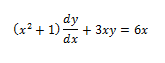
or a bit more complicated such as the linear differential equation:

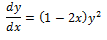
or even a nonlinear equation such as this:


A differential equation is linear if the unknown function and its derivatives appear to the power 1 (products of these are not allowed) and nonlinear otherwise. The variables and their derivatives must always appear as a simple first power. Nonlinear equations are difficult to solve and some are impossible.


First I need to master linear equations. Some mathematicians use the notation y’ for the dy/dx derivative, or y’’ for d2y/dx2, and so forth. Thus,the previous linear equation would be written as (x2 + 1)y’ + 3xy = 6x. I need to keep these differences of notation in mind, since I am studying from five different books.


I studied the properties of differential equations and learned to solve them. Now, I must learn how to apply differential equations. But how do I translate a physical phenomenon into a set of equations to describe it? It is impossible to depict nature in its totality, so one usually strives for a set of equations that describes the physical system approximately and adequately.


Say that I want to predict the growth of population in Paris. To do it, I can use an exponential model, that is, an equation that represents the rate of change of the population that is proportional to the existing population. If P(t) represents the population change in time (t), I write

where the rate k is constant. I observe that if k > 0, the equation describes growth, and if k < 0, it models decay. The exponential equation is linear with a solution P(t) = P0ekt, where P0is the initial population, i.e., P(t = 0) = P0.


Mathematically, if k> 0, then the population grows and continues to expand to infinity. On the other hand, if k < 0, then the population will shrink and tend to 0. Clearly, the first case, k > 0, is not realistic. Population growth is eventually limited by some factor, like war or disease. When a population is far from its limits of expansion, it can grow exponentially. However, when nearing its limits, the population size can fluctuate. Well, I think that the equation I use to predict the rate of change of population can be modified to include these factors to obtain a result closer to reality.


Aristotle thought that nature could not be expected to follow precise mathematical rules. But Galileo argued against this point of view. He envisioned the experimental mathematical analysis of nature to be used to understand it. Newton was inspired by Galileo and later developed the laws of motion and universal gravitation. Newton, Leibniz, Euler, and other great people then created the mathematics that help us converse with the universe.


Oh, how glorious it is to speak such a language and understand the whispers from the heavens and the world around me.


Dr. Dora Musilek is a research scientist and also lectures on the role and contributions of women scientists and mathematicians. She holds a Ph.D. in aerospace engineering. You can learn more about Dr. Musilek and her novel at sophiesdiary.net You can learn more about Dr. Musilek’s writing process at MAAA Books Blog.


These views are the opinion of the author and do not necessarily either reflect or disagree with those of the DXS editorial team. 

Modern Chemists

Our next installment of notable women in science brings us to chemists. Many of these women were born in the early part of the 20thcentury and forged their paths in tough times. All are still inspiring others today. Presented in no particular order:

Catherine Clarke Fenselau is a pioneer in mass spectrometry. Born in 1939, her interested in science was apparent before her 10th grade. She was encouraged to attend a women’s college, which at the time gave what she called “a special opportunity for serious-minded young women.” She graduated from Bryn Mawr with her A.B. in chemistry in 1961. Her graduate work at Stanford introduced her to the technology she would become known for, receiving her Ph.D. in analytical chemistry in 1965. Dr. Fenselau and her husband took positions at the Johns Hopkins University Medical School, at which time she had two sons. Johns Hopkins was under a mandate to accept female students and have female faculty at the time. Dr. Fenselau was made aware of the disparity of the treatment of male and female faculty, when in the 1970s the equal opportunity laws came into effect and she received an unexplained 25% raise. Her research resided in mass spectrometry, specifically in its use in biology. She became known as an anti-cancer researcher. Dr. Fenselau spoke often to chemists about feminism and goals, such as equal pay, opening closed career opportunities to women, and achieving the bonuses often only awarded to men. She has worked as an editor on several scientific journals. Some of her awards include the Garvan Medal, Maryland Chemist Award, and NIH Merit Award. Having proper help at work and at home, and having supportive mentors and spouse has helped her achieve her success.

Elizabeth Amy Kreiser Weisburger is considered a real-lifemedical sleuth. Born in 1924, Dr. Weisburger was one of 10 children and schooled at home for her early education. She received her B.S. in chemistry, cum laude, Phi Alpha Epsilon from Lebanon Valley College. She received her Ph.D. in organic chemistry in 1947 from the University of Cincinnati. She married and had three children. Her research has caused her to be proclaimed a pioneer in the field of chemical carcinogenesis. She balanced her busy life of working at the NCI, committee work, giving lectures, attending meetings, writing and reviewing papers while caring for children with the aid of housekeepers and nursery childcare. Some of her awards include the Garvan Medal and the HillebrandPrize. Her life philosophy is summed up with “Don’t take life so seriously; you’ll never get out of it alive.”

Helen M. Free, photo from the ACS
Helen M. Free is a major contributor to science and science education. Born in 1923, Ms. Free attended the College of Wooster, graduating with honors and a B.S. in 1944. In 1978, she earned a M.A. from Central Michigan University. In the meantime, she worked as a chemist at Miles Laboratories. She developed clinical effective and easy to use laboratory tests. She worked her way up through the company and also held an adjunct professor position at Indiana University, South Bend. Ms. Free has used her time to be active in professional societies and has served as president for the American Association for Clinical Chemistry and the American Chemical Society. Her awards include the Garvan Medal, a Distinguished Alumni Award from Wooster, and is the first recipient ofthe Public Outreach Award bearing her name.

Jeanette Grasselli Brown is an industry researcher and director. Born in 1929, she graduated summa cum laudewith her B.S. from Ohio University in 1950 and received her M.S. in 1958 from Western Reserve University. She worked at Standard Oil of Ohio (now BP of America), and became the first woman director of corporate research there. She has received numerous awards including the Garvan Medal, Ohio Women’s Hall of Fame, and the Fisher Award in Analytical Chemistry. She has published 75 papers in scientific journals, written 9 books, and received 7 honorary Doctorate of Science degrees. She is an activist for the future of women in science.

Jean’ne Marie Shreeve is an important fluorine chemist. Born in 1933, she encountered sexism through her mother’s inability to be employed despite her training as a schoolteacher. Dr. Shreeve graduated with a B.A. from Montana State University in 1953, followed by an M.S. in 1956 from the University of Minnesota, and a Ph.D. in inorganic chemistry in 1961 from the University of Washington. After graduating, she worked her way through the professorial ranks at the University of Idaho. Besides her own research, Dr. Shreeve has devoted herself to educating other chemists. Some of her awards include U.S. Ramsey Fellow, Alfred P. Sloan Fellow, and Garvan Medal.

Joyce Jacobon Kaufman by Smithsonian Institution
Joyce Jacobson Kaufman is distinguished in many fields. Born in 1929, she was reading before the age of 2 and was a voracious reader as a child. This led to her reading the biography of Marie Curie, which inspired her to be a chemist. Dr. Kaufman received her B.S., M.A., and Ph.D. in physical chemistry from Johns Hopkins University in 1949, 1959, and 1960, respectively. She married and had a daughter. Her research in the application of quantum mechanics to chemistry, biology, and medicine led to her renown in several fields. She has also spent much time in service positions. Her awards include the Martin Company Gold Medal for Outstanding Scientific Accomplishments (received 3 times), the Garvan Medal, and honored as one of ten Outstanding Women in the State of Maryland.

Madeleine M. Joullie is known for elegant research and inspirational teaching. Born in 1927, her early life in Brazil was overly-protective, so her father encouraged her to attend school in the U.S.A. She received her B.Sc. from Simmons College in 1949, and her M.Sc. and Ph.D. in chemistry in 1950 and 1953, respectively, from the University of Pennsylvania. She then worked her way through the professorial ranks at the University of Pennsylvania. Initially, only the women graduate students would work with her, and they were few and far between. She has explored many research avenues over the course of her career. Her awards include the Garvan Medal, the American Cyanamid Faculty Award, the Henry HillAward, and the Lindback Award for Distinguished Teaching.

Marjorie Caserio is a researcher, educator, author, andacademic administrator. Born in 1929, she entered university with the goal of becoming a podiatrist in order to generic income. She received several rejections from colleges due to her gender, and eventually was accepted to be the only woman in her class. She received her B.S. from Chelsea College, University of London in 1950 and an M.A. and Ph.D from Bryn Mawr in 1951 and 1956. Dr. Caserio is co-author of one of the most popular organic chemistry textbooks in the chemistry during the 1960s and 1970s. Her awards include the Garvan Medal and John S. Guggenheim Foundation Fellow.

Mary Lowe Good has won several awards and is a public servant. Born in 1931, she was supported in her aspirations by her parents. She received her B.S. in 1950 from the University of Central Arkansas, which was then the Arkansas State Teachers College. She went on to receive her M.S. and Ph.D. in inorganic and radiochemistry from the University of Arkansas in 1953 and 1955. Her career began in academic, but an appointment to the National Science Foundation by President Carter changed the course of her career. She served the International Union of Pure and Applied Chemistry, and president of the American Chemical Society and Zonta International Foundation. Some of her awards include Garvan Medal, CharlesLathrop Parsons Award, and 18 honorary doctorates.

Ruth Mary Roan Benerito is an academic and government scientist. Born in 1916, she began college at the age of 15 at Sophie Newcomb College, the women’s college of Tulane and received her B.S. in 1935. She received her M.S. from Tulane University in 1938, which she worked half-time while working another job at the same time. She taught at Tulane and its colleges before going to the University of Chicago to get her Ph.D. in 1948 in physical chemistry, again working on a part-time basis. Her career oscillated between academia and industry, earning her a large number of awards, including the Federal Women’s Award, the Southern Chemist Award, and inducted as a Fellow into the American Institute of Chemists and Iota Sigma Pi.

Awards

The Garvan Medal is an award from the American Chemical Society to recognize distinguished service to chemistry by women chemists.

The Maryland Chemist Award recognizes and honors its members for outstanding achievement in the fields of chemistry.

The NIH Merit Award is a  symbol of scientific achievement in the research community.

The Hillebrand Prize is awarded for original contributions to the science of chemistry.

The Distinguished Alumni Award from Wooster is presented annually to alumni who have distinguished themselves in one of more of the following area: professional career; service to humanity; and service to Wooster.

Helen M. Free Award recognizes outstanding achievements in the field of public outreach.

Ohio Women’s Hall of Fame provides public recognition of contributions made to the growth and progress of Ohio and the nation.
The Fisher Award in Analytical Chemistry recognizes outstanding contributions to the field of analytical chemistry.

U.S. Ramsey Fellow is no longer offered.

Alfred P. Sloan Fellow is awarded to scientists and scholars of outstanding promise.

Outstanding Women in the State of Maryland awards women under the age of 40 for their achievements already made in an early career.

The American Cyanamid Faculty Award

The Henry Hill Award recognizes distinguished service to professionalism.


John S. Guggenheim Foundation Fellow is awarded for demonstrating outstanding scholarship.

Charles Lathrop Parsons Award recognizes outstanding public service.


The Southern Chemist Award

The American Institute of Chemists  advances the chemical sciences by establishing high professional standards of practice and to emphasize the professional, ethical, economic, and social status of its members for the benefit of society as a whole.

Iota Sigma Pi is a national honor society for women in chemistry.

Much of the information for this post came from the book Notable Women in the Physical Sciences: A Biographical Dictionary edited by Benjamin F. Shearer and Barbara S. Shearer.

Adrienne M Roehrich, Double X Science Chemistry Editor

Historical Physicists

Featured today are 10 more women who broke boundaries by their presence in physics. They lived from 1711 to 2000. While I again limited information to one paragraph, I tried to highlight how they got their start, what universities, family members, and scientists were supportive of them. For these women, without the support of fathers, mothers, husbands, and mentors (all male with one exception) their life in science would not have happened. While barriers are not as difficult today as they were at the times these women made their way, it is a testament to what can be done when families and scientists support each other. These women are an inspiration and I hope you look up more information for them. In addition, I’d love to hear who your favorite women in science are in the comments.

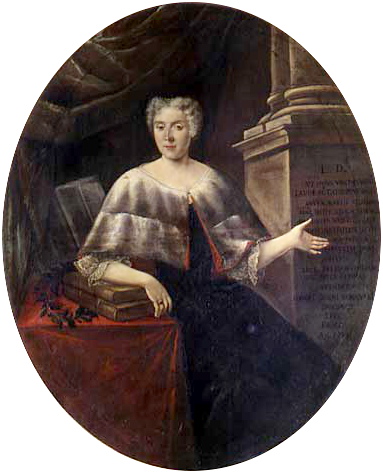
Laura Bassi by Carlo Vandi
Laura Bassi (1711-78) lectured on science until a few hoursbefore her death. An Italian scientist of international fame and one of the first women physicists in western history, Dr. Bassi earned her doctorate in philosophy and science through public debate from the University of Bologna. The University of Bologna offered Dr. Bassi a position in an effort to be known as a leader in women’s education. Unfortunately, this forward step was not acceptable to much of the rest of the world’s academic community and required stipulations to Dr. Bassi teaching. However, she countered these limitations with determination and passion. Her appointment to full membership in the Bendettini Academics also deterred some naysayers of Dr. Bassi’s involvement in research and teaching. In order to further her career, she married. A married woman could achieve more than a single woman at that time. Her death in 1778 was unexpected, especially as she had participated in an Academy of Sciences lecture on a few hours before.


If you can access the full article, I highly recommend The Desire to Contribute: AnEighteenth-Century Italian Woman of Science by Gabriella Berti Logan for more information on Laura Bassi.
Margaret Eliza Maltby (1860-1944) was a recognized scientistand advocate for women in science.  She overcame the education offered to women by taking extra courses in order to attend Oberlin College and receive a B.A. She studied with the Art Students’ League in New York City to explore her interest in art and then taught high school before enrolling as a “special student” at the Massachusetts Institute of Technology (MIT), receiving her B.S. Oberlin recognized this extra effort by awarding Dr. Maltby an M.S. She became a physics instructor at Wellesley College. She was encouraged in her graduate students by an AAUW fellowship to attend Göttingen University, which culminated in Dr. Maltby being the first American woman to receive a Ph.D. in physics from any German university. Dr. Maltby worked as an instructor, a researcher, and administrator in many universities and colleges in the U.S. and abroad. Her stature as a scientist was acknowledged with her entry in the first edition of AmericanMen of Science. She also was active in the AAUW, advocating for women to gain education and enter scientific fields. After her retirement from university life, she maintained her interest in the arts.

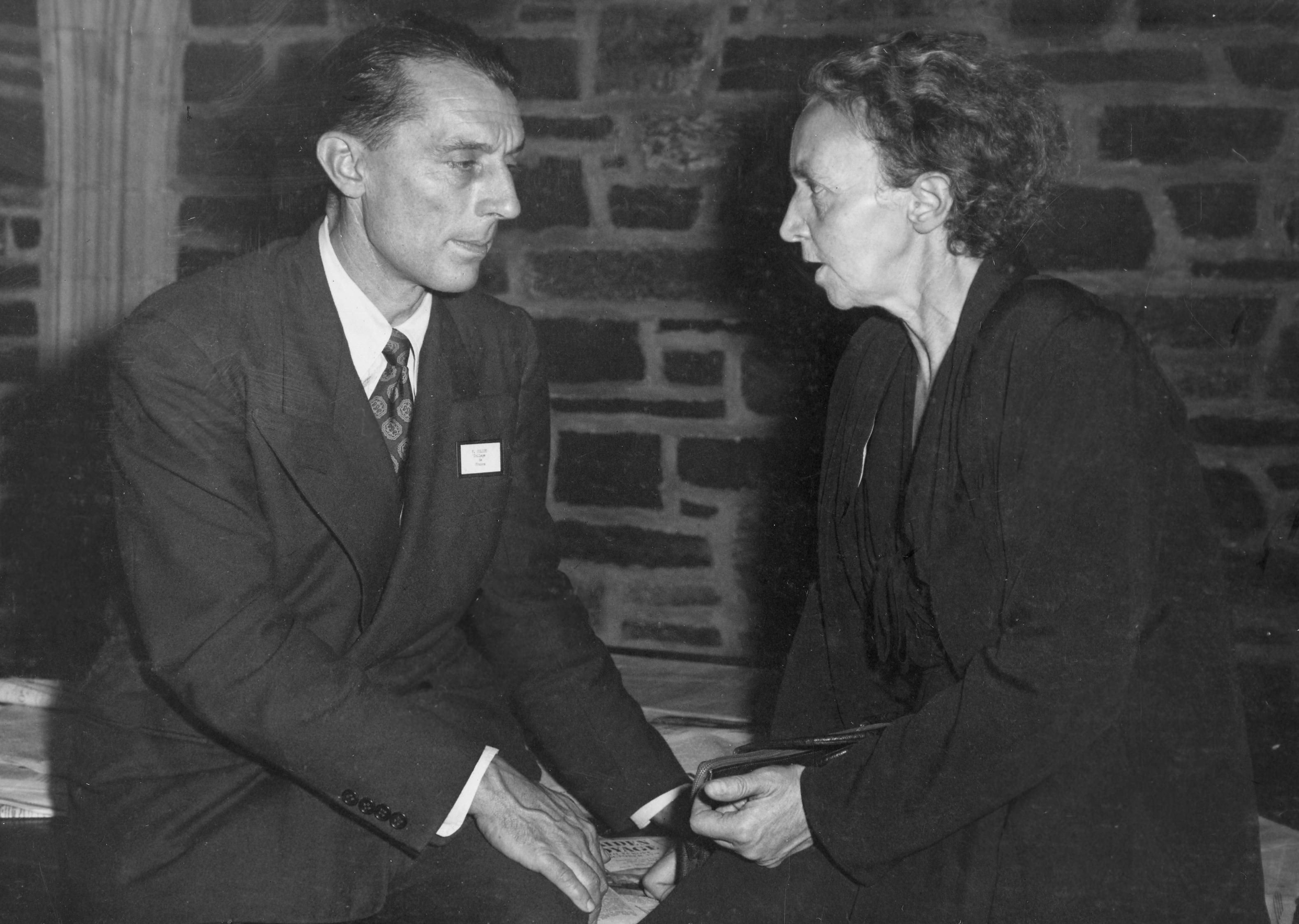
Frederic and Irene Joliot-Cure by By James Lebenthal
Irène Joliot-Curie (1897-1956) was a Nobel Prize Laureate for “artificial radioactivity.”    Born to the woman every person thinks of as the epitome of a woman in science, Marie Curie, Irène had an extremely close relationship with her paternal grandfather. Her schooling was outside of the standard schooling type, her first years at home and her latter years in a science and math heavy co-operative school of Madame Curie’s colleagues. She received her Bachelor’s degree from the Collège Sévigné and went on to study at the Sorbonne. She received her doctorate in 1925 based on work with her mother at the Radium Institute of the Sorbonne. She married Frédéric Joliot, another research assistant of Madame Curie’s. Dr. Joliot-Curie continued her research, interrupted by a stint as Undersecretary of State for Scientific Research, one of the first high government posts to be offered to a woman. She worked as a professor for the Sorbonne and director of the Radium Institute, but was not admitted to the Academy of Sciences due to discrimination despite her work. She died, like her mother, of acute leukemia. Her scientific work was complemented by her love of physical activity and motherhood.
Katharine Burr Blodgett By Smithsonian Institution, U.S.
Katharine Burr Blodgett (1898-1979) was a woman with an amazing number of firsts.   Born to a widow, she was a world citizen in her formative years, attended high school at a private school in New York City, won a scholarship to attend Bryn Mawr, and graduated second in her class there. She received her Master’s degree from the University of Chicago, then headed off to work with Nobel Laureate Irving Langmuir at General Electric (GE) and becoming the first woman research scientist there. She was able to work with Nobel Laureate Sir Ernest Rutherford and earn her Ph.D. from Cambridge University as the first woman to earn a doctorate from Cambridge. She returned to GE. During her career, she invented many applications and is credited with six patents. She achieved much when many women did not, but her work was de-valued in the media. She did earn recognition from her peers, including the ACS Garvan Medal, the Photographic Society of America Progress Medal, and a day named after her in her hometown of Schenectady, NY. In addition to her scientific life, she enjoyed gardening, civic engagement, acting, and “dart[ing] about Lake George in a fast motor boat.”
Astrophysicist Charlotte Emma Moore Sitterly (1898-1990) was an authority on sun composition. She started her career as an excellent student with extracurricular interests, attending Swarthmore College to earn her B.A. Upon graduation, she accepted a position as a mathematics computer at Princeton University Observatory, one of the few employment opportunities available to science inclined women at the time. A stint at the Mount Wilson Observatory led to results published a 1928 monograph which was considered the authoritative work on the solar spectrum for four decades. She received her Ph.D. from the University of California, Berkeley in 1931. Her work earned her the Annie J. Cannon Prize, Silver and Gold Medals from the Department of Commerce, and several honorary doctorates in the U.S. and abroad. She was the first woman elected foreign associate by the Royal Astronomical Society of London. Her enthusiasm for her work continued until her death.

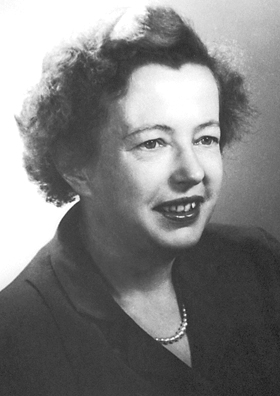
Maria Goeppert-Mayer By Nobel Foundation
Nuclear Physicist Maria Goeppert-Mayer (1906-1972) was the second woman to win the physics Nobel. Her early education was public education for girls followed by a private school founded by suffragettes. Circumstances led Dr. Goeppert-Mayer to take her exiting exams a year early, passing them she attended the University of Göttingen for her college education in mathematics. She continued to study physics at the University of Göttingen, earning her Ph.D. in 1930. She also married that year. The couple moved to America in hopes of better career trajectory for Dr. Goeppert-Mayer. Finding a position was difficult. When she had her first child, she stayed home with her for one year, then returned to research. While her positions were always part-time and not well recognized, she grew a well-respected network of collaborators. This network led to work with Hans Jensen which won her the Nobel Prize, shared with Jensen. Her network also eventually led to a full professorship position after 20 years of volunteer work. During this time, her health began to fail. She persevered with her work, publishing her last paper in 1965. The American Physical Society established an award in her honor in1985.
Gertrude Scharff Goldhaber (1911-1998) was a respected researcher.  She grew up in a time in Germany where girls were expected to become schoolteachers. She had a fascination with numbers, and eventually studied physics at the University of Munich, receiving her PhD in 1935. She fled Germany during the rise of the Nazis due to being Jewish, arriving in the United States and becoming a citizen in 1944. She had a wide involvement in the various National Laboratories studying nuclear physics. She also maintained several committee positions in the science community. She was also a strong advocate for women in the science community, forming a Women in Science group at Brookhaven National Lab and supporting other similar groups elsewhere. After her retirement from research, she continued interests in the history of science, outdoor activities, and art.
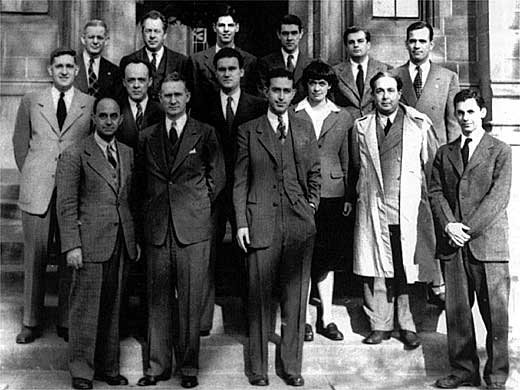
The Chicago Pile One Team
Physicist, Molecular Spectroscopist Leona Woods MarshallLibby (1919-1986)  Leona Woods grew up on a farm and was known for her inexhaustible energy. She attained her B.S. in chemistry from the University of Chicago when she was only 19 years old, and earned her PhD 5 years later. She worked as the only woman and youngest member of the Chicago Metallurgical Laboratory, a secret war group led by Enrico Fermi who built the world’s first nuclear fission reactor during her graduate work. Dr. Woods’ expertise was essential to the undertaking. She married another member of her team. She hid her first pregnancy until 2 days before her son’s birth. She took one week off before returning to work. Childcare was provided by her mother and sometimes Fermi’s bodyguard, John Baudino. Dr. Marshall was encouraged by Fermi as a female physicist. In the late 1950s, Dr. Marshall was divorced from her husband, pursuing her own career. In the early 1960s, Dr. Marshall moved to Colorado to work and married Willard Libby. Her mind was always considering any number of problems from many angles. She worked up until her death and was honored posthumously for her work, along with Lise Meitner, Marie Curie, and Irene Joliot-Curie.
Chien-Shiung Wu
Chien-Shiung Wu (1912-1997) was a foremost experimental physicist of modern era. She was encouraged as a girl to pursue her schooling as far as possible. This led her to teaching training, which lacked science so she taught herself physics, chemistry, and mathematics. She graduated high school with the highest grades in her class, earning her a place at the National Central University in Nanjing. She taught and did research upon graduation, then moved to the United States to pursue graduate studies. She earned her Ph.D. from the University of California – Berkeley in 1940, four years after leaving China. She was known for her expertise in nuclear fission and was consulted by top scientists. Despite this, her gender and nationality hindered her finding appropriate employment due to discrimination on both accounts. She married and started a teaching career, although she missed research. Upon the recommendation of Ernest Lawrence, she received offers from several Ivy League schools who were not accepting female students at the time. She became Princeton’s first woman instructor at that time. She was offered several positions, including back in China, but chose to remain in the U.S. to raise her son. She was unable to return to China until 1973. She worked at Columbia for many decades and earned accolades for her work.

Xide Xie (1921-2000) is a woman in China who needs no introduction. Her early life involved much moving due to war and ill health, during which she taught herself English, calculus, and physics. She graduated in 1942 with a degree from Xiamen University. She moved to the United States to receive her master’s degree from Smith College in 1949 and her Ph.D. in physics from M.I.T. in 1951. She married in England and returned to China, despite the political climate. She taught and did research at the prestigious Fudan University. During the Cultural Revolution of 1966-76, she was detained, publicly humiliated, and endured breast cancer. After this upheaval, she returned to Fudan University, growing the physics department and achieving more esteemed positions in the University and government. She had also remained connected to her family, caring for her husband through lengthy illness. Her achievements were internationally recognized.

Awards Mentioned

Benedettini Academics were a select group of scholars from the Academy of Sciences created and named for Pope Benedict XIV to conduct research and present it annually at Academy meetings. This appointment escalated the prestige of the scientist above that given by being a member of the Academy of Sciences.

American Association for University Women (AAUW): Margaret Maltby received the European Fellowship from the Association of Collegiate Alumnae, which became the AAUW. This fellowship was specifically intended to help American women pursue graduate studies to circumvent rules that did not allow women to enroll in coeducational universities or earn graduate degrees.

The Nobel Prize is an international award given in several fields. It is one of the most prestigious awards for scientists in the eyes of the public.

The Garvan Medal is an award from the American Chemical Society to recognize distinguished service to chemistry by women chemists.
The Photographic Society of AmericaProgress Medal recognized a person who has made an outstanding contribution to the progress of photography or an allied subject.
Annie Jump Cannon Prize is given to a North American female astronomer in the early stages of her career for her distinguished contribution to the field.
Department of Commerce Silver Medal, Gold Medal are the highest honors granted by the department for distinguished and exceptional performance.


Much of the information for this post came from the book Notable Women in the Physical Sciences: A Biographical Dictionary edited by Benjamin F. Shearer and Barbara S. Shearer.
Images for this post came from Wikimedia Commons.

Adrienne M Roehrich, Double X Science Chemistry Editor


Modern Astronomers

This edition of the Notable Women in Science series presents modern astronomers. Many of these women are currently working in fields of research or have recently retired. As before, pages could be written about each of these women, but I have limited information to a summary of their education, work, and selected achievements. Many of these blurbs have multiple links, which I encourage you to visit to read extended biographies and learn about their current research interests.

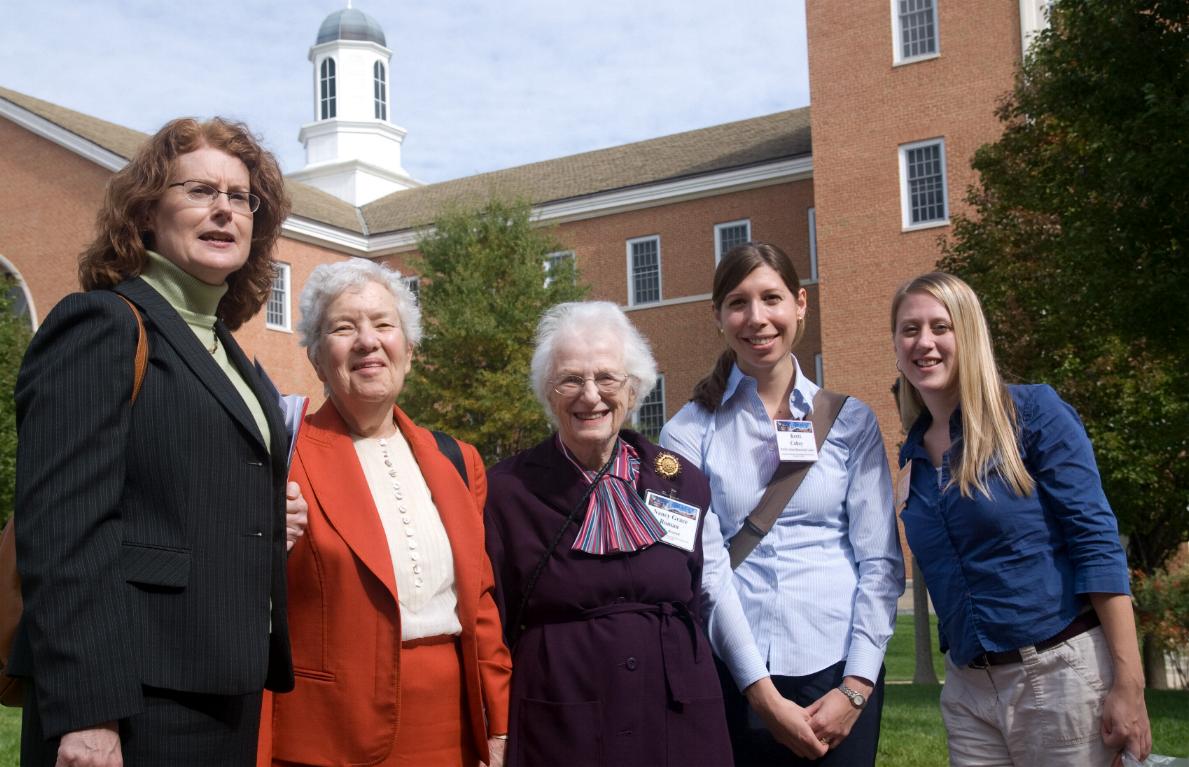
From L to R: Anne Kinney, NASA Goddard Space Flight Center, Greenbelt, Md.; Vera Rubin, Dept. of Terrestrial Magnetism, Carnegie Institute of Washington; Nancy Grace Roman Retired NASA Goddard; Kerri Cahoy, NASA Ames Research Center, Moffett Field, Calif.; Randi Ludwig. University of Texas, Austin, Texas.
Vera Cooper Rubin was making advancements decades ahead of popularity of her research topic. She received her B.A. from Vassar College, M.A. from Cornell University, and her Ph.D. from Georgetown University in the 1940s and 50s. She continued at Georgetown University as a research astronomer then assistant professor, and then moved to the Carnegie Institution. Among her honors is her election to the National Academy of Sciences and receiving the National Medal of Science, Gold Medal of the Royal Astronomical Society.  She was only the second female recipient of this medal, the first being  Caroline Herschel. She has had an asteroid and the Rubin-Ford effect named after her. She is currently enjoying her retirement.

Dr. Nancy Roman
Nancy Grace Roman has a lifetime love for astronomy. She received her B.A. from Swarthmore College and Ph.D. from the University of Chicago in the 1940s. She started her career as a research associate and instructor at Yerkes Observatory, but moved on due to a low likelihood of tenure because of her gender. She eventually moved through chief and scientist positions to Head of the Astronomical Data Center at NASA. She was the first female to hold an executive position at NASA. She has received honorary D.Sc. from several colleges and has received several awards, including the American Astronautical Society’s William Randolf Lovelace II Award and the Women in Aerospace’s LIfetime Achievement Award. She is currently continuing to inspire young girls to dream big by consulting and lecturing by invitation at venues across the U.S.

Catharine (Katy) D. Garmany researches the hottest stars. Dr. Garmany earned her B.S. from Indiana University and her M.A. and Ph.D. from the University of Virginia in the 1960s and 70s. She continued with research and teaching at several academic institutions. She has served as past president of the Astronomical Society of the Pacific and received the Annie Jump Cannon Award. She is currently associated with the National Optical Astronomy Observatory with several projects.

Dr. Elizabeth Roemer
Elizabeth Roemer is a premier recoverer of “lost” comets. She received her B.A. and Ph.D. from University of California – Berkeley in the 1950s. She spent some time as a researcher at U.S. Observatories before going to the University of Arizona and moving through the professorial ranks. She has received several awards, including Mademoiselle Merit Award, one of only four recipients of the Benjamin Apthorp Gould Prize from the National Academy of Sciences, and a NASA Special Award. She is currently Professor Emerita at the University of Arizona with research interests in comets and minor planets (“asteroids”), including positions (astrometry), motions, and physical characteristics, especially of those objects that approach the Earth’s orbit.

Margaret Joan Geller is a widely respected cosmologist.  She received her A.B. from the University of California-Berkeley, and M.A. and Ph.D. from Princeton University in the 1970s. She moved through the professorial ranks at Harvard University and is currently an astrophysicist at the Smithsonian Astrophysical Observatory. Some of her awards include the MacArthur “Genius” Award and the James Craig Watson Award from the National Academy of Sciences. She continues to provide public education in science through written, audio, and video media.

In 1995, the majestic spiral galaxy NGC 4414 was imaged by the Hubble Space Telescope as part of the HST Key Project on the Extragalactic Distance Scale. An international team of astronomers, led by Dr. Wendy Freedman of the Observatories of the Carnegie Institution of Washington, observed this galaxy on 13 different occasions over the course of two months.


Wendy Laurel Freedman is concerned with the fundamental question”How old is the universe?”    She received her B.S., M.S., and Ph.D. from the University of Toronto in the 1970s and 80s. After earning her Ph.D. she joined Observatories of the Carnegie Institution in Pasadena, California as a postdoctoral fellow and became faculty a few years later, as the first woman to join the Observatory’s permanent scientific staff. She has received several awards and honors, among them the Gruber Cosmology Prize. Her current work is focusing on the Giant Magellan Telescope and the questions it will answer.

Sandra Moore Faber researches the origin of the universe.  Dr. Faber earned her B.A. from Swarthmore College and her Ph.D. from Harvard University in the 1960s and 70s. She joined the Lick Observatory at the University of California – Santa Cruz and moved through the Astronomer and Professorial rankings. Her achievements include being elected to the National Academy of Sciences, the Heineman Prize, a NASA Group Achievement Award, Harvard Centennial Medal, and the Bower Award. She continues to research the formation and evolution of galaxies and the evolution ofstructure in the universe.


Dr. Heidi Hammel

Heidi Hammel is known as an excellent science communicator, researcher, andleader. She earned her B.S. from Massachusetts Institute of Technology and Ph.D. from the University of Hawaii in the 1980s. At NASA she led the imaging team of the Voyager 2’s encounter with Neptune and became known for her science communication for it. She returned to MIT as a scientist for nearly a decade. Among her honors, she has received Vladimir Karpetoff Award , Klumpke-Roberts Award, and the Carl Sagan Medal. She is currently at the Space Science Institute with a research focused on ground- and space-based studies of Uranus and Neptune.


Judith Sharn Young was inspired by black holes. She earned her B.A. from Harvard University and her M.S. and Ph.D. from the University of Minnesota in the 1970s. She began her academic career at the University of Massachusetts – Amherst, proceeding through the professorial ranks. She has earned several honors, including the Annie Jump Cannon Prize, the Maria Goeppert-Mayer Award, and a Sloan Research Fellowship. She is currently teaching and researching galaxies and imaging at the University of Massachusetts.


Jocelyn Bell Burnell is the discoverer of pulsars. She earned her B.Sc. from the University of Glasgow and her Ph.D. from Cambridge University in the 1960s. After her graduation, she worked at the University of Southampton in research and teaching, and continued to work in research positions at several institutions. She is well known for her discovery of pulsars, which earned her research advisor a Nobel Prize. Among her awards are the Albert A. Michelson Prize, Beatrice Tinsley Prize, Herschel Medal, Magellanic Premium, and Grote Reber Metal. She has received honorary doctorates from Williams College, Harvard University, and the University of Durham. She is currently Professor of Physics and Department Chair at the Open University, England.


Awards Mentioned:
The National Academy of Sciences is composed of select scientists who are leaders in their fields.
The National Medal of Science is a presidential award given to physical, biological, mathematical, or engineering scientists who have contributed outstanding knowledge to their field.
The Gold Medal of the Royal Astronomical Society is the society’s highest honor given in astronomy
American Astronautical Society’s William Randolf Lovelace II Award recognizes outstanding contributions to space science.
The Women in Aerospace’s Lifetime Achievement Award is given for contributions to aerospace science over a career spanning 25 years.
The Annie Jump Cannon Award is given for outstanding research a doctoral student in astronomy with promise of future excellence.
The Mademoiselle Merit Award was presented annually to young women showing the promise of great achievement.
The Benjamin Apthorp Gould Prize is given in recognition of scientific accomplishments by an American citizen.
The NASA Special Award is given for exceptional work.
The MacArthur “Genius” Award is given to those who show exception merit and promise in creative work.
The James Craig Watson Award is given for contributions in astronomy.
The Gruber Cosmology Prize is given for fundamental advances in our understanding by a scientists.
The Heineman Prize is given for outstanding work in the field of astrophysics.
The NASA Group Achievement Award is given for accomplishment that advances NASA mission.
The Harvard Centennial Medal is given to graduates of Harvard who have contributed to society upon graduation.
The Bower Award is given for achievement in science.
The Vladimir Karapetoff Award is given for outstanding technical achievement.
The Klumpke-Roberts Award is given for enhancing public understanding and appreciation of astronomy.
The Carl Sagan Medal is awarded for outstanding communication to the public about planetary science.
The Maria Goeppert-Mayer Award is given to a female physicist for outstanding achievement in her early career.
The Albert A. Michelson Prize is given for technical and professional achievement.
The Beatrice Tinsley Prize is given for outstanding research contribution to astronomy or astrophysics.
The Herschel Medal is given for investigations of outstanding merit in astrophysics.
The Magellanic Premium Medal is awarded for a discovery or invention advancing navigation or astronomy.


Much of the information for this post came from the book Notable Women in the Physical Sciences: A Biographical Dictionary edited by Benjamin F. Shearer and Barbara S. Shearer.

Adrienne M Roehrich, Double X Science Chemistry Editor

Historical Chemists


The twitter feed from @DoubleXSci since early December has featured Notable Historical and Modern Women in Science. Nearly 100 women were presented. Those women will be presented in a series here on the blog with the original tweeted links and information as well as with some additional information not able to be presented in 140 characters. Each woman could have multiple pages written on her; however, I have limited each to a paragraph. I hope you look up more on these women.

The International Year of Chemistry 2011 recently wrapped up, so I’d like to share a little more about some historical women in chemistry.

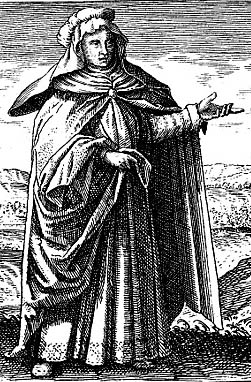
Miriam the Alchemist By Michael Maier (1566-1622)
The first historical woman in chemistry is perhaps Miriam the Alchemist, who lived in the 1st or 2nd century C.E. Her writings survived centuries. She has several aliases: Mary, Maria, and Miriam the Prophetess or Jewess. Even though she was an alchemist, which was mostly a mystical field during her time, her inventions and contributions yielded long-lived practical laboratory equipment. Miriam the Alchemist contributed major inventions and improvements to existing technology, as well as the water bath. The water bath is still in use today for many chemical experiments, as was dubbed “bain-marie” in the 14th century.

Agnes Fay Morgan (1884-1968) was a pioneer in vitamin research. She earned her B.S., M.S., and Ph.D. from the University of Chicago. She also established Iota Sigma Pi, an honor society for women chemists. Morgan received the Garvan Medal and the Borden Award and was the only one of her family to attend college. Her efforts brought both nutrition and home economics to scientific disciplines. Besides her teaching position and doing research in academia, she also was an accomplished administrator and worked with the government on many occasions. She had many firsts in her research and an enormous number of publications.

Colloid Chemist Marjorie Jean Young Vold (1913-1991) was a prolific and distinguished scientist. She earned her B.S. and Ph.D. from University of California, Berkeley. Vold balanced academic and industrial chemist careers spanning over five decades. At the age of 45, she was diagnosed with multiple sclerosis but continued her dual chemistry careers despite being confined to a wheelchair. She was the LA Times Woman of the Year and received the Garvan Medal. One month before her death, Vold submitted her final paper, which was published posthumously.

Lucy Weston Pickett (1904-1997) chose a career in chemistry over marriage. She earned her B.A. and M.A. from Mt. Holyoke College and her Ph.D. from the University of Illinois and advanced through her academic career to become department chair. She received the Garvan Medal and two honorary D.Sc. degrees. She was so influential in her career that a fund was established in her name upon her retirement, which she requested be used to bring female speakers to the department.

Mary Lura Sherrill (1888-1968) was known for synthesis of antimalarial drugs. She earned her B.A. and M.A. from Randolph-Macon College and her Ph.D. from the University of Chicago. Her academic career included becoming the chair of her department. She also received the Garvan Medal.

Ellen Swallow Richards
Chemist, Ecologist, and Home Economist Ellen Swallow Richards (1842-1911) was one of Vassar College’s first graduates, with an A.B. She earned her B.S. from MIT as its first woman graduate and her M.A. from Vassar College the same year. She had many firsts, including improving the standard of living by applying chemistry to sanitation, opening up science for women, and developing the home economics movement. Richards was also the first woman member of the American Institute of Mining and Metallurgical Engineers and first woman teacher at the MIT department of sanitary chemistry. She was awarded an honorary doctorate from Smith College.

Grace Medes (1886-1967) was a pioneer in metabolism research. She earned her B.A. and M.A. from the University of Kansas and her Ph.D. from Bryn Mawr. Her academic career progressed until she became a department head and chairman. She earned the Garvan Medal and several Distinguished Service Citations. Dr. Medes was at the forefront of cancer research and named a rare disease, tyrosinosis [PDF].

Marguerite Perey (1909-1975) was the first woman to enter the French Academy of Science in 300 years. She earned her Diplôme d’État de chimiste from École d’enseignement technique féminine and her doctorate from Sorbonne. She worked with Marie Curie and discovered the element francium. Perey received the Lavoisier Prize from the Academie des Sciences and the Silver Medal from the Societe Chimique de France.

Mary Engle Pennington
Bacteriologist and Chemist Mary Engle Pennington (1872-1952) was a food preservation pioneer. Despite completing the requirements for a B.S. degree at the University of Pennsylvania, she was granted only a Certificate of Proficiency. She earned her Ph.D. from the University of Pennsylvania. Dr. Pennington worked with the government although she hid her gender to receive her credentials. Called “ice woman” due to her advances in food preservation and refrigeration, she was known for a warm personality. Pennington was awarded numerous fellowships and was a member of many other professional organizations and honoraries, and received the Notable Service Medal and the Garvan Medal.

Pauline Beery Mack (1891-1974) was an instructor and publisher and loved chemistry. She earned her B.A. from Missouri State University, M.A. from Columbia University, Ph.D. from Pennsylvania State College, and a D.Sc. from Moravian College for Women, Western College for Women. She began the publication the Chemistry Leaflet which eventually became published by the American Chemical Society. She received the Distinguished Daughters of Pennsylvania Medal, the Garvan Medal, and the Astronauts Silver Snoopy Award. Dr. Mack also maintained a busy life outside of science, including basketball and music. She taught more than 12,000 undergraduates over her 30 years at Penn State. She was adept at securing funding for her research, no small feat for a woman in the 1930s. Mack continued into an administrative career and worked full time until she was 79.

Awards Mentioned:
The Garvan Medal is an award from the American Chemical Society to recognize distinguished service to chemistry by women chemists.

The Borden Award is given in recognition of distinctive research by investigators in the United States and Canada which has emphasized the nutritive significance of milk or any of its components.

LA Times Woman of the Year began as annual awards ceremony to honor women for individual achievement and was awarded from 1950 to 1976.

Lavoisier Prize (Lavoisier Medal) is awarded by the SCF to an individual or institution to distinguish the work or activities involving the chemistry honor.

Distinguished Daughters of Pennsylvania are those whose achievements on a national and statewide scale have been so outstanding that they have brought honor and respect to the commonwealth.

Astronauts Silver Snoopy Award candidates will have made contributions toward enhancing the probability of mission success, or made improvements in design, administrative/technical/production techniques, business systems, flight and/or systems safety or identification and correction or preventive action for errors.

Much of the information for this post came from the book Notable Women in the Physical Sciences: A Biographical Dictionary edited by Benjamin F. Shearer and Barbara S. Shearer.

Adrienne M Roehrich, Double X Science Chemistry Editor


From alchemist to chemist: What kind of chemistry is that?


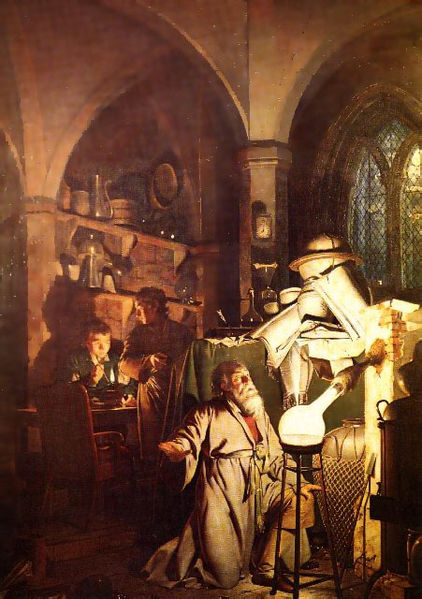
Figure 1: The Alchemist Discovering Phosphorus

What does the word chemistry mean to you? For many, it was a class in high school or college to get through. In these introductory courses, called general chemistry, one gets a mix of all the flavors of chemistry – but the flavors are very different. To those who hear the calling of chemistry, it isn’t just any chemistry that will do. Some courses are more interesting to them than others.

Many instructors start their general chemistry course with a history, introducing alchemy. Alchemy is considered to be the process by which to turn [name item of your choice] into gold. Alchemists were chemists by accident in that they performed many chemical reactions in their quests, discovering a number of elements in the process – embodied by Hennig Brandt’s discovery of phosphorus from the refinement of urine.
Alchemy relates to all the fields of chemistry. In perhaps the most famous of alchemy pictures, that by Joseph Wright of Derby entitled “The Alchemist Discovering Phosphorus,” the alchemist is kneeling by a very large round bottom flask. For many in modern chemistry, the round bottom flask signifies hours in the organic chemistrylaboratory mixing chemicals together to create something new.


Organic chemistry is the “branch of chemistry that deals with the structure, properties, and reactions of compounds that contain carbon” according to the American Chemical Association (ACS). Organic chemistry is the largest of chemistry fields in terms of number of people working in it. Organic chemists strive to make new compounds, usually to improve upon an existing one for a purpose and the field is often thought of in terms of synthesis applications.


The actual process of converting urine to phosphorus generally falls along the lines of inorganic chemical reactions. The form of phosphorus in urine is in the chemical sodium phosphate (Na3PO43-). Heating phosphates along with the organic products also in urine will form carbon monoxide (CO) and elemental phosphorus (P). The sodium phosphate, carbon monoxide, and elemental phosphate are all inorganic chemicals, falling under the field of inorganic chemistry.


Inorganic chemistry is “concerned with the properties and reactivity of all chemical elements,” according to UC-Davis chemwiki. While organic chemistry requires the presence of carbon in a specific type of bond, inorganic chemistry involves all the elements present in the periodic table. Inorganic chemistry delves into theories surrounding the bonding of metals to molecules and the shapes of molecules themselves.


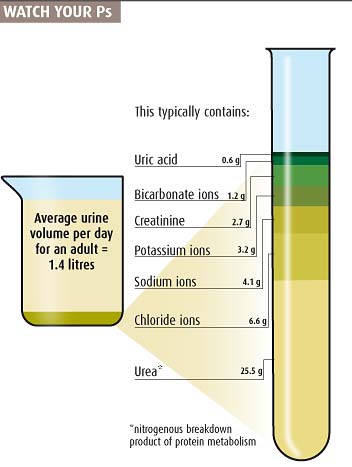
Figure 2: Components of Urine
While the process of collecting phosphorus from urine requires organic and inorganic chemical reactions, the process of making the products in urine is biochemistry. Note in figure 2 that the primary product in urine is urea.


For students of biochemistry, images of the urea cycle (aka the Krebs cycle) are well known. According to the ACS, biochemistry is “the study of the structure, composition, and chemical reactions of substances in living systems.” Besides the chemical cycles to produce and use up necessary chemicals in biology, biochemistry encompasses protein structure and function (including enzymes), nucleic acids such as DNA, and biosynthesis.


As the alchemist turned urine to phosphorus, he added heat. The addition of heat to a reaction involves thermodynamics, a subsection of physical chemistry. If heat hadn’t been added, the reaction products would have been kinetic, which is another subsection of physical chemistry.


In a suite of physical chemistry courses, a student would also take quantum mechanics, rounding out the aim of physical chemists, which is to “develop a fundamental understanding at the molecular and atomic level of how materials behave and how chemical reactions occur,” according to the ACS. Physical chemists work by applying physics and math to the problems that chemists, biologists, and engineers study.


The alchemists who took exact measurements of their reactants and products, using quantitative methods, employed analytical chemistry. Presumably, the alchemists did this because every ounce of gold was precious, and they wanted to know how much substance they started with to produce the coveted metal.


Analytical chemistry focuses on obtaining and processing information about the composition and structure of matter. There are so-called wet lab ways to determine these quantities that often been employed. However, most analytical labs consist of the precision instrumentation that you may have seen on forensic crime shows, such as a mass spec, short for mass spectrometer, a frequent player on CSI.


While the alchemists were only trying to produce a substance to enrich pockets, they ultimately led to a rich science with several subfields, each with a trail leading from the practice of alchemy.

Adrienne M Roehrich, Double X Science Chemistry Editor
References:

(1734-1797), Joseph Wright of Derby. “English: The Alchemist Discovering Phosphorus or the Alchemist in Search of the Philosophers Stone.” Derby Museum and Art Gallery, Derby, U.K., 1771.

Lawton, Graham. “Pee-Cycling.” New Scientist, 20 December 2006 2006.

Weeks, Mary Elvira. “The Discovery of the Elements. Xxi. Supplementary Note on the Discovery of Phosphorus.” Journal of Chemical Education 10, no. 5 (1933/05/01 1933): 302.