Jeanne Garbarino

About Jeanne Garbarino

Double X Science Biology Editor Jeanne Garbarino is a Bronx native, mother, and wife. She is also a metabolic biologist – turned Director of Science Outreach at The Rockefeller University (RU). In this role, she helps bridge the gap between scientists and educators, and also creates scientific programming to help engage K-12 students. Jeanne began her research career as a PhD candidate using yeast as a model system to study the molecular basis of fat metabolism, and continued her studies as a postdoc in the Laboratory of Biochemical Genetics and Metabolism at RU, where she tracked how cholesterol molecules move inside of a cell. Outside of the lab, Jeanne is involved in science communication initiatives, such as the monthly science discussion series, SpotOn NYC(#SoNYC). These events are open to anyone who is interested about how science is conducted, and are hosted at RU. She also spearheaded the creation of The Incubator – a science blog written by the RU community. Jeanne has contributed to several scientific outlets, including Scientific American, The Huffington Post, and Double X Science. You will never catch Jeanne eating meatloaf or brussel sprouts. Ever.

The Amazing Antibody and its Therapeutic Potential


NYC Campaign to alert the authorities if you see
something suspicious. Antibodies are like the citizens
that tell our body that something fishy is going down.

By Biology Editor, Jeanne Garbarino

There is a campaign sponsored by NYC’s Metropolitan Transit Authority (MTA) encouraging citizens to speak up if they see any activity or persons acting in a suspicious manner. Plastered all over buses, subways, and commuter rails are posters with the following message: If you see something, say something. This type of imagery reminds me very much of our own biological warning system programmed to, in essence, “speak up” should a suspicious character of the microscopic kind make it’s way into our bodies. It is through our immune response that our bodies “say something” in the event of infection.
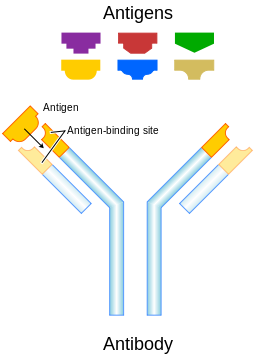
At the very crux of the immune response are tiny proteins called antibodies, which are basically like the citizens that report any suspicious activities. Antibodies often travel in the blood stream, and upon crossing paths with a foreign invader (bacteria, virus, etc.), an antibody will flag it down and alert the “local authorities” of the body (aka immune cells).

For many years, scientists have been studying antibodies and their role in the immune response, revealing many aspects surrounding their structure and function. And through these studies, we have figured out how to use antibodies in ways that go beyond the immune system. For instance, antibodies against human chorionic growth hormone, or hCG, are the essential ingredients in home pregnancy tests. More recently, scientists have, in many ways, harnessed the power of antibodies for pharmaceutical uses. A very popular example of this is the drug Remicade, which is used to treat severe autoimmune diseases like rheumatoid arthritis and Crohn’s Disease. But, what exactly are antibodies and how do they work?

Well, I am glad I asked me that question.

As I mentioned, antibodies are proteins that we make. Specifically, they are produced by specialized immune cells called B-cells, which are the main players during our humoral immune response. B-cells will either secrete an antibody, which can then float around the circulatory system, or the antibody can remain attached to the outside of the B-cell. If there is something “foreign” in our bodies, such as a virus or bacterium, antibodies will recognize and attach itself to the invader, which is scientifically referred to as an antigen. When an antibody attaches to an antigen, it signals to our body to get rid of it. Amazingly, each antibody can only recognize 1 antigen, which is why we need so many different types of antibodies!

To get a better idea of how antibodies work, it is important to learn their basic structure. Antibodies are ‘Y’ shaped proteins, and have both constant and variable regions. The constant region is the same among all antibodies within a specific class (there are several different classes), where as the variable region is the portion of the antibody that is designed to recognize a specific antigen.

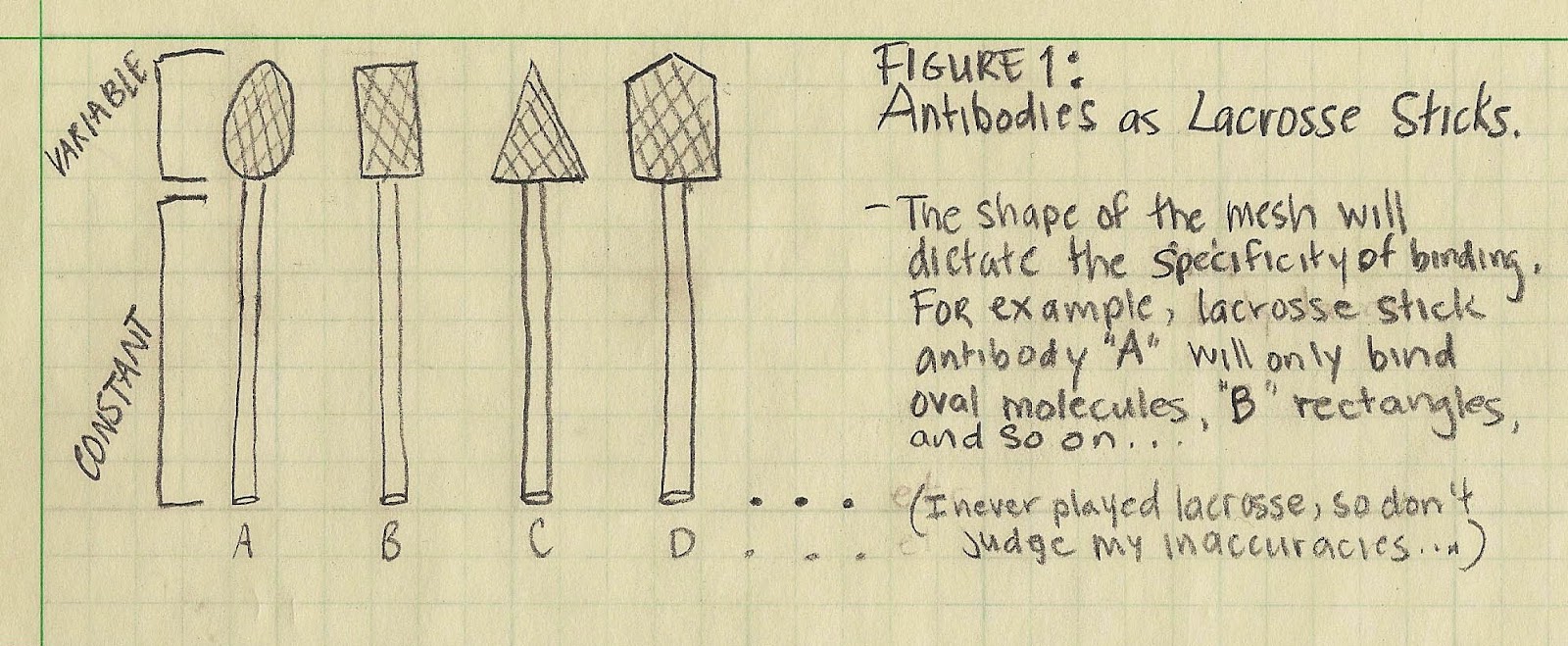
To better explain this, consider the antibody to be a lacrosse stick. The “stick” part is the constant region, and the mesh part is the variable region. Now consider the lacrosse ball to be the antigen (i.e. bacterium or virus). Only the lacrosse ball that is a triangle can fit into the lacrosse stick with the triangle-shaped mesh pocket. The same is true for the circle. And so on. Once the ball fits into the mesh, meaning, once the antibody binds the antigen, a cascade of events is set off, essentially sounding the alarm. Under normal, healthy circumstances, we take care of the antigen and the infectious agent is removed. (Note: there are different classes of antibodies and each class has it’s own “stick” part.)

A basic analology for how antibodies work.
Building off our understanding of how antibodies work, scientists have been able to develop monoclonal antibody therapy, which is the use of specific antibodies to stimulate an immune response against a disease. For instance, we now use monoclonal antibody therapy to combat a variety of cancers by injecting cancer patients with antibodies designed to recognize specific components on the surface of tumor cells. This helps signal to the body that it should turn on the immune response and get rid of the tumor cells.

The list of conditions where monoclonal antibody is a potential therapy is growing, and includes a variety of autoimmune diseases and cancers, post-organ transplant therapy, human respiratory syncytial virus (RSV) infections in children, and most recently hemophilia A. Also being explored is the use of monoclonal antibody therapy for addiction, which could essentially revolutionize how we can help people kick extremely difficult habits (i.e. cocaine or methamphetamine).

Despite the thousands of tedious and repetitive assays I’ve done using antibodies in my own laboratory, I know that I can never lose sight of how amazing these little proteins are.

———————————————-
This post is a mental appetizer for another post on monoclonal antibodies by DXS tech editor, Jeffrey Perkel. His post specifically discusses the potential use of monoclonal antibody to treat the X-linked blood disorder, hemophilia A. Read about it here.
Striking a balance between health and sustainability: a study inspired by a love for sushi


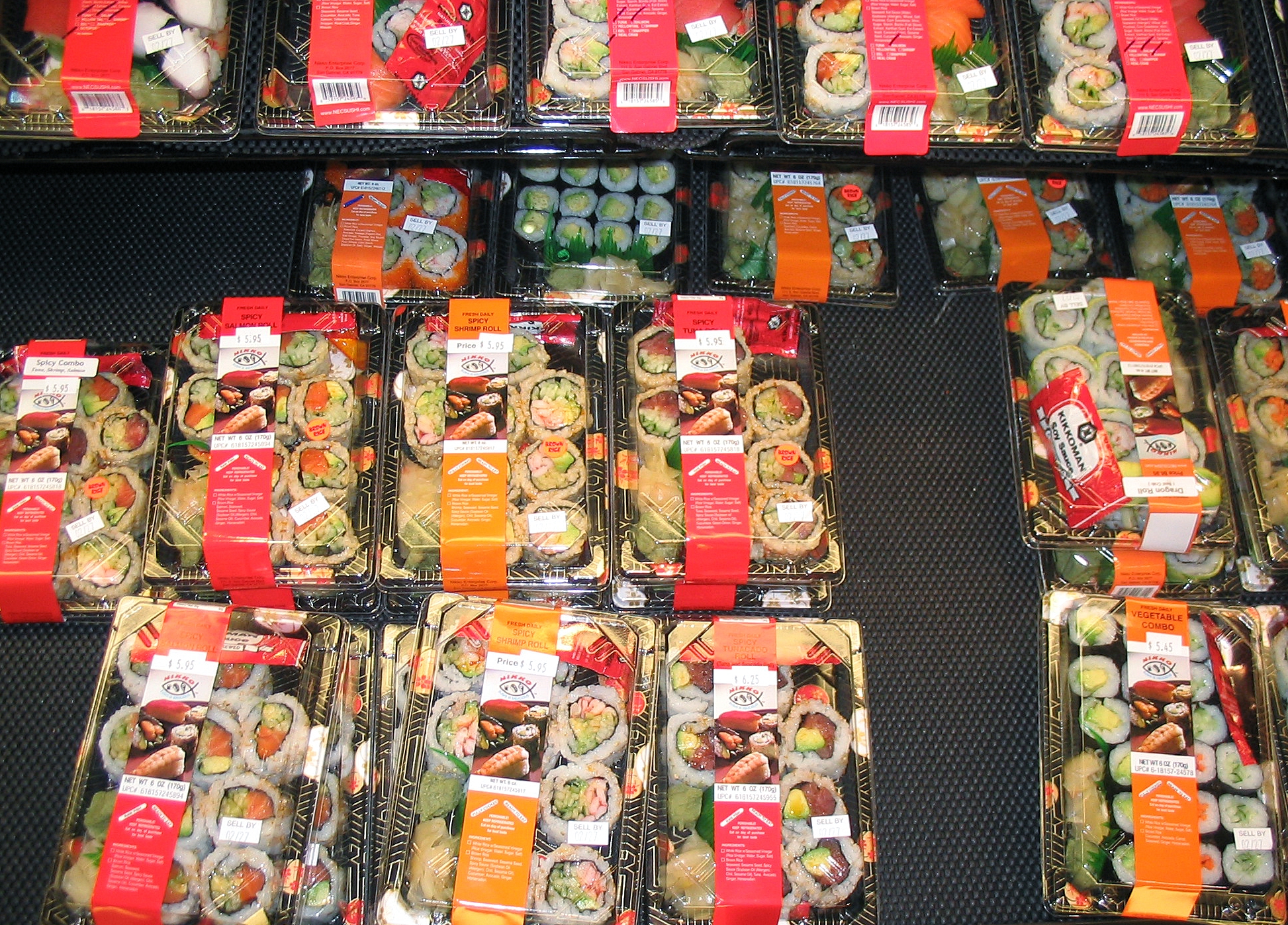
Sushi for sale (Source)
by Jeanne Garbarino, DXS biology editor

A conservation scientist walks into a [sushi] bar…

You’ve probably heard that eating a diet including fish, especially fatty fish, is good for us. Fish can be a source of high quality, lean protein, and also provide heart-healthy omega-3 fatty acids. However, there are risks associated with eating some types of fish. For instance, fish that are at the top of the food chain or have a long lifespan (or both!) can accumulate high levels of mercury or chemicals called polychlorinated biphenyls (PCBs). Exposure to high amounts of these compounds could be particularly harmful for pregnant/nursing women or young children.

On the other hand, there is the issue of sustainability. We are seeing a wide-scale collapse of many marine fish populations, which is primarily the result of overfishing. While there are conservation efforts in place to help consumers make eco-friendly choices, it is not clear if raising consumer awareness is impacting fishing or marine farming practices. Furthermore, many consumers will choose fish based on their nutritional value and safety without really considering ecological consequences.

In an attempt to better educate consumers on both nutrition andsustainability with regard to making the best seafood choices, Leah Gerber, professor of Ecology, Evolution and Environmental Science at Arizona State University, has evaluated current fish “eco-ranking” schemes. In a study recently published (PDF) in Frontiers in Ecology and the Environment, Dr. Gerber provides a model that quantifies both the health benefits and sustainability level of individual fish species.

Interestingly, her group found that fish with the highest health benefits, determined by omega-3 fatty acid content, generally had low mercury levels. Similarly, fish that are unsustainable — meaning that fishing threatens their existence — tended to have higher levels of mercury, and lower omega-3 fatty acid amounts. Basically, fish populations that are not threatened by overfishing are generally heart healthy and have low mercury. A win-win!

The novel thing about this study is that it is the first to consider multiple types of sustainability rankings as well as health impacts, and Dr. Gerber is taking her message to the streets. It is her hope that she and her colleagues will be able to develop tools so that consumers can easily make seafood choices that are both good for you and good for the environment.

But the coolest thing about this study is that Dr. Gerber is not a ‘fisheries person’, per se. However, her passion for learning about human impact on the natural environment combined with her love of sushi prompted a closer look at the fishing industries and how to make good choices when it comes to seafood.

This is an excellent example of how a scientist is applying her knowledge to promote science in one of its most relatable forms –- eating! I mean, we all have to eat, and it is particularly awesome when we can do so in the most educated way possible. Kudos to Dr. Gerber for taking this on since we all benefit from knowing.

The opinions expressed in this article neither necessarily reflect nor conflict with those of the DXS editorial team.

Leah Gerber, conservation biologist and lover of sushi


Leah Gerber and her little lovelies!
Leah Gerber is an Associate Professor of ecology at Arizona State University. Her research is motivated by a desire to connect academic pursuits in conservation science to decision tools and effective conservation solutions. This approach includes a solid grounding in natural history and primary data collection, quantitative methods and an appreciation for the interactions between humans and the environment. She is keenly aware of the need for the communication of scientific results to the public and to government and non-governmental agencies. This communication is essential for the translation of scientific results into tenable conservation solutions.
DXS: First, can you give me a quick overview of what your scientific background is and your current connection to science?

LG: I learned about ecology and environmental conservation as an undergraduate and quickly became motivated to do science that impacted the real world of conservation. Learning about the impacts of humans on nature was a wake-up call for me, and inspired me to channel my feeling of concern for the demise of nature in a positive way.

From there, I have walked the tightrope between science and policy. After getting my undergraduate degree in environmental biology, I wanted to do more than just the science. So I enrolled in a masters program at the University of Washington – an interdisciplinary program called Marine Affairs. It was a great experience, but I wanted to have more substance to my science background – I wanted to know how to do the science in addition to how to apply the science.

This compelled me to enter a PhD at the University of Washington, which was largely funded by NOAA. My thesis involved trying to figure out how to make decisions about endangered species – how to determine which were endangered and which were threatened. This was a perfect project given my interest in developing tools to solve problems. After finishing my PhD, I did a postdoc at the National Center for Ecological Analysis and Synthesis (NCEAS) and developed approaches for marine reserve design and endangered species recovery. I was at NCEAS for three years before starting on the tenure track at Arizona State University. I’ve been at ASU for about 10 years now.

A major theme in my work has remained constant – that is, how to use the information we are generating in the natural and social sciences to better manage our natural world. Pre-tenure I focused a lot more on doing the science, publishing in good journals, and hoping that it made its way into good policy. Now that I am midcareer, meaning that I have a good amount of papers and tenure, I am enjoying the opportunity to work with practitioners outside of academia. For instance, I just got off the phone with someone from National Geographic regarding my recent publicationon seafood health and sustainability. In that study, we performed an analysis regarding seafood in the context of health and sustainability, to answer simple questions like, what to order when out to sushi? How do we educate about health benefits and risks? We will be organizing a workshop to help restaurant chains, grocery stores, as well as environmental NGOs identify a path forward in informing consumers about healthy and sustainable seafood choices. As a tenured professor, I feel fortunate to have the opportunity to work at the science-policy interface and to give society some science that is truly applicable.

DXS: It is too bad that you have to wait until you are more established and have tenure to go out and engage with the public, because this type of thing is just so important!

LG: Yes, I agree. There isn’t a clear path in academia when it comes to public engagement. But in recent years I have felt optimistic – the landscape within academia is starting to change, and at ASU this change is noticeable. We have a fabulous president, Michael Crow, who has really transformed ASU from just another state institution to a leader in sustainability. Part of this is the establishment of the Global Institute for Sustainability, and one of Michael Crow’s mantras is “community embeddedness.” He is really on board with this type of thing and I have seen evidence of his commitment trickle down throughout the University. For instance, when I first arrived, I had to justify and explain why I was serving on these federal recovery teams for endangered species. Now I feel that there is no justification needed. Developing solutions is not only so important for society, but should also be a key aspect of what we do at Universities.

DXS: We were introduced by another fantastic science communicator, Liz Neeley, who you met at a communications workshop. Why is it important to take part in this type of training?

LG: I met the Fantastic and Fashionable Liz through the Leopold Leadership Program, offered through the Woods Institute for the Environment at Stanford University. The Leopold Leadership training was the best professional development experience of my career, and has made me a better translator and communicator of science to policy. Pre-Leopold, I had little training in communications, and there I was, in a teaching position where I taught hundreds students. I thought to myself, well, how do I do this? The Leopold experience has solidified my commitment to teaching students about communication and engaging in policy.

One development emerging from this training is a science communication symposium at the AAAS meeting. Elena Bennett and I are giving a talk on overcoming institutional barriers for community engagement, and we will address the issues head on. We put out a survey asking others if they faced institutional barriers, and how they might work to engage more.

DXS: What ways do you express yourself creatively that may not have a single thing to do with science?

LG: I have 2 young kids, a 3yo and a 7yo. Being a mom helps me keep it real – I love that I get to enjoy the awe of discovering the world with my girls. We just got a puppy this weekend and we are having fun dressing her up and painting her nails (only partly joking). Other things that I do that are creative – truthfully, I am uninteresting – I don’t bake bread or go to the opera. I just work and take care of my kids. I practice yoga for my own sanity and also love to work in the garden. Doing these things gives me a reason to pause and step off the treadmill of keeping up with everything.


DXS: Do you find that your scientific background informs the creativity you have with your kids or your yoga practice, even though what you do may not specifically be scientific?

LG: I think there is synergy with my science and my kids and my yoga practice in helping me to accept things and be mindful – but not in any conscious way. For instance, when doing my science, the type A person that I am, I have an inclination to keep pushing, pushing, pushing. My kids and my yoga help me to shift gears and accept that things are going to happen when they happen. I try to let the kids be kids, including the associated chaos, and accept that this is a snapshot in time that they will be little. Now I find joy in that chaos. Having kids and yoga gives me a little more perspective, and the knowledge that things aren’t lined up and neatly placed in a box. It rounds me out.

DXS: Are your kids are major influencers in your career?

LG: My first child, Gabriella, was born just after I submitted my application for tenure – so it was good timing. And I was able to slow down. I quickly realized that I wasn’t able to work a 60+hour week. Before kids, I lived to work. Now, I work to live. I absolutely love my job and I feel so lucky that I have a career that I believe in and that I am actually paid to do it – it’s not just a hobby. But having kids made me chill out a little. If I get a paper rejected, I can let it go instead of lamenting about it for weeks. It has made me healthier. I don’t necessarily know if it has had positive impact on my career – time will tell. While my publication rate may be slightly smaller, I think my work now has different dimensions, and greater depth.

I am still pretty passionate about my work, and my kids know what I do and are proud of it. They share it with their classmates, and take every opportunity to wax poetic about how their mom saves animals in the ocean. They also have a built in conservation effort – my 7YO gets irritated when she can’t find a compost bin, and her new thing is to only fill her cup half way because she will only drink a little bit of water.

DXS: When you decided to have children, did your colleagues view you differently? Did they consider that you were sending your career down the tubes or was it a supportive environment?

LG: I honestly had a really positive experience. I can’t think of any negative sentiments from my colleagues, and they were actually really supportive. For instance, when I was pregnant with my first daughter, ASU did not have a maternity leave policy. Before that, you would have to take sick leave. So my colleague worked within the parameters of the unit to give me maternity leave. And then with my second daughter, our new president had established a maternity policy.

The support of my colleagues at ASU has made me feel loyal to my institution. Normally, I am loyal to people and not institutions, but overall, the support has been fabulous. Of course, with having the kids in each case, I did decline a lot of invitations – some pretty significant ones – but I did not have a desire to drag a newborn to give a talk, especially when I was nursing. And it was hard for me to do this at times, especially given my career driven nature, and I had to learn to accept that there would be other opportunities.

I had to shift it down a notch and realize that the world wasn’t going to freeze over, and that I could shift it back to high gear later. With “mommy brain”, I knew I wasn’t going to be at the top of my game at that point in my life. But I have incredible role models. Most notable is Jane Lubchenco, currently the Director of the National Oceanic and Atmospheric Administration. During the first part of her career, she shared a position with her husband – each did 50% – and they did that on purpose so they’d be able to enjoy having children and effectively take care of them. Now, she is in the National Academy, is having major scientific impacts, and she did it all despite having kids. If she can do it, why cant the rest of us?

DXS: Given your experiences as a researcher, as a mother, and now as a major science communicator, do you feel that your ability to talk to people has evolved?

LG: Absolutely. I think that the Leopold Training Program, which selects 20 academics from North America to participate in retreats to learn how to be better communicate and lead, has re-inspired all who attended. It has recharged our batteries and allowed us to make realizations that doing good science and putting it out there via scientific publication is just not enough. We also have to push it out there and make it available to a broader, more diverse population. As part of the training, we also learned about different thinking styles – super analytical or super emotional – and after I returned, I had my lab group participate in this type of exercise. And now I feel like I can better assess a persons thinking style and adjust the way I communicate accordingly.

DXS: Did you always have the ability to talk to the general public or does having kids help you to better understand some of the nuances associated with science communication?

LG: I think so. In fact, I am thinking back to when I had a paper in Sciencecome out around the time that I had my first child. It got a lot of news coverage and was featured in Time magazine. I thought it was so cool at the time, but looking back on it I realized that have come a long way. I said something to a journalist, who then asked me to translate it into “plain English.” It was a little bit of a jab.

Now, with kids, I can tell you a lot more about my research and can better see the broader impact. Talking to them helps me to do that. Here is a conversation about my research with my daughter:

L: Mama is working on figuring out how to help the whales that people like to eat. It’s a big problem because some people like to eat whales and some like to see them swimming in the ocean.

G: What we have to do is let the people eat the whales in the ocean, and buy some whales from the pet store to put back in the ocean. How much do whales cost?

L: Good idea. But you can’t buy whales at the store. They are too big. And if we take them all out of the ocean there will be none left.

G: Well instead we should ask the people to eat bad things like sharks.

L: Another good idea. But if we take sharks out there will be no predators to eat the big fish. And the whole ecosystem would collapse.=

G: Well then the people should eat other things like fish instead of whales. They should buy a fishing pole and catch a fish and eat those instead of whales.

L: What about chicken, shouldn’t people just eat chicken?

G: Mama, we can’t kill chickens. Chickens are nicer than fish, so that’s why we have to eat fish.

L: What about just eating vegetables?

G: Oh mama, some people are meat-eaters. And there are no more dinosaurs. They all got extinct. They should have saved some of the dinosaur meat in the freezer for the meat-eaters. When the dinosaurs come back, there will be enough meat to eat and people won’t want to eat whales.

The simplicity of taking myself out of my research bubble and engaging with a creative (and nonlinear?) 7YO has taught me how to be a better communicator – with the media, with my students, and with the general population.

DXS: Do you think these efforts in science communication are helping to shift other peoples perspectives about who a scientist actually is? For instance, are we changing the old crazy haired white guy stereotype?

LG: Well, I hope so. A couple of examples – again, as a mom, one of my daughters a Girl Scout and I get to help with the troop. One of the themes was to teach about environmental and conservations awareness. We did this Crayola molding experiment where we put our fingers into cold water. We then did the same thing except we put modeling clay over our fingers before putting them into the cold water and to learn about adaptations to extreme environments. Also, we play games where they simulate fishing – what if there is plastic? What happens to you if you eat that? My hope is that this shows these young girls that science is both interesting and fun.

Another thing that just happened today is that I was contacted by Martha Stewart’s office, and it seems that some of my research results will be featured in the October issue of Martha Stewart Living. The message here is that I happen to care about the ocean, but I also love sushi. I also I care about health. I am not just a nerd in a lab coat. I am a mom, I do yoga, I have wonderful friends, and here is the kind of science that I do. It seems to me that it is better to connect with others when I can give them something that is relevant to their lives instead of a more abstract ecological theory.

DXS: If you had something you could say to the younger you about getting on your chosen career path, what would you say?

LG: I feel like I have been very effective at figuring out how to get from point A to point B, but less successful at savoring the process. I think that I’d tell myself to make time to celebrate the small victories. I have also learned to identify what kind of research is most exciting, and I would tell myself to say “no” to everything that is only moderately interesting. I tell my grad students that if you don’t dive in head first, you won’t ever know. So why just not give it a try! And if it doesn’t work, move on. Also, if something isn’t making you happy, change! Academia isn’t for everyone, and there is a lot more to life than science.


LEGO those gender stereotypes


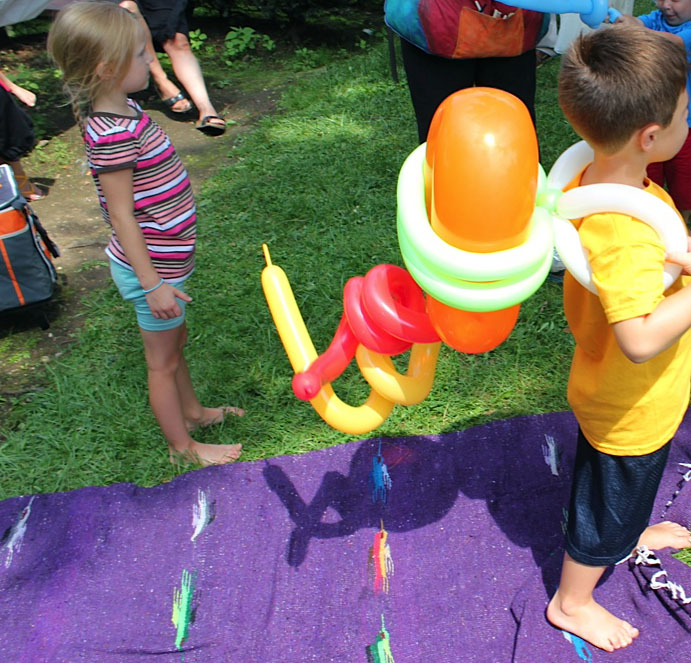
My daughter, patiently waiting to get her own balloon jetpack.
Photo credit: Phil Blake
Why can’t you understand that my daughter wants a damn jetpack?

Last weekend, I took my daughters to a birthday party that featured a magician/balloon artist. He was really fantastic with the kids, and kept their attention for close to 1 hour (ONE HOUR!!!). At the end of his magic show, he began to furiously twist and tie balloons into these amazing shapes, promoting energetic and imaginative play. Of these shapes was his own, very intricate invention: a jetpack.

When he completed the first jetpack, I watched as the eyes of my five-year-old daughter, who happens to be a very sporty kid, light up with wonder. She looked at me and smiled, indicating through her facial expression alone that she wanted the same balloon toy. But, alas, when it was her turn for a balloon, her requests were met with opposition. Here was the conversation:

Magician: How about a great butterfly balloon?

Daughter: No thanks, I’d like a jetpack please.

Magician: I think you should get a butterfly.

Daughter: I’d prefer a jetpack.

Magician: But you’re a girl. Girls get butterflies.

Daughter (giving me a desperate look): But I really want a jetpack!

Realizing that my daughter was becoming unnecessarily upset, especially given the fact that there were 3 boys already engaging in play with their totally awesome jetpacks, myself and the hostess mother intervened. We kindly reiterated my daughter’s requests for a jetpack. And, so she was given a jetpack.

Later that evening, my daughter asked me why the magician insisted that she get a butterfly balloon when she explicitly asked for a jetpack. Not wanting to reveal the realities of gender stereotype at that very point in time, I simply stated that sometimes we (a gender neutral “we”) might have to repeat ourselves so that others understand what we want. Then she asked, “but why are butterflies only for girls?”

I was able to more or less able smooth it over with her, but it was clear to me that a very archaic reality was still in play, and my daughters were about to inherit it. While I have nothing against typically female role-playing or dolls or princesses, I do not like when they are assumed to be the preferred activities. I also do not like the idea that some toys, based on years of “market research,” are designed to basically pigeonhole girls into a June Cleaveresque state of being, especially without alternative play options.

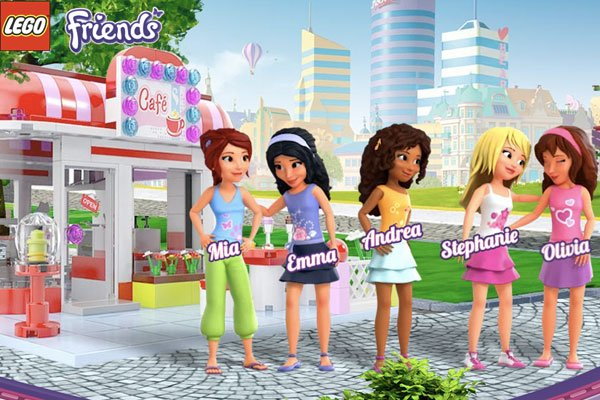
The five LEGO Friends
For instance, LEGO has recently launched a “for-girls-only” campaign, exemplified by the new “Friends” LEGO kit. Slathered in pink and purple, this kit is designed around a narrative involving five friends and a pretend city named Heartlake. Like nearly all cities, Heartlake boasts a bakery, a beauty salon, a cafe, and a veterinarian’s office to take care of sick animals. However, unlike every city, Heartlake lacks things like a hospital, a fire department, a police station, and a local airport (thought they do have a flying club). In essence, this toy is facilitating pretend play that centers ONLY on domestication, which absolutely limits both experiences and expectations for girls playing with this toy. In essence, LEGO is assuming that all girls want the butterfly balloon instead of the jetpack.

Some might think, “jeeze, it’s just a toy!” and dismiss my objection to all that the Friends kit encompasses. And perhaps when the Friends kit is offered in addition to a variety of toy types – gender neutral, masculine, and feminine – it may not have a significant effect on the mindset of its young, impressionable owner. But what if that’s not the case?

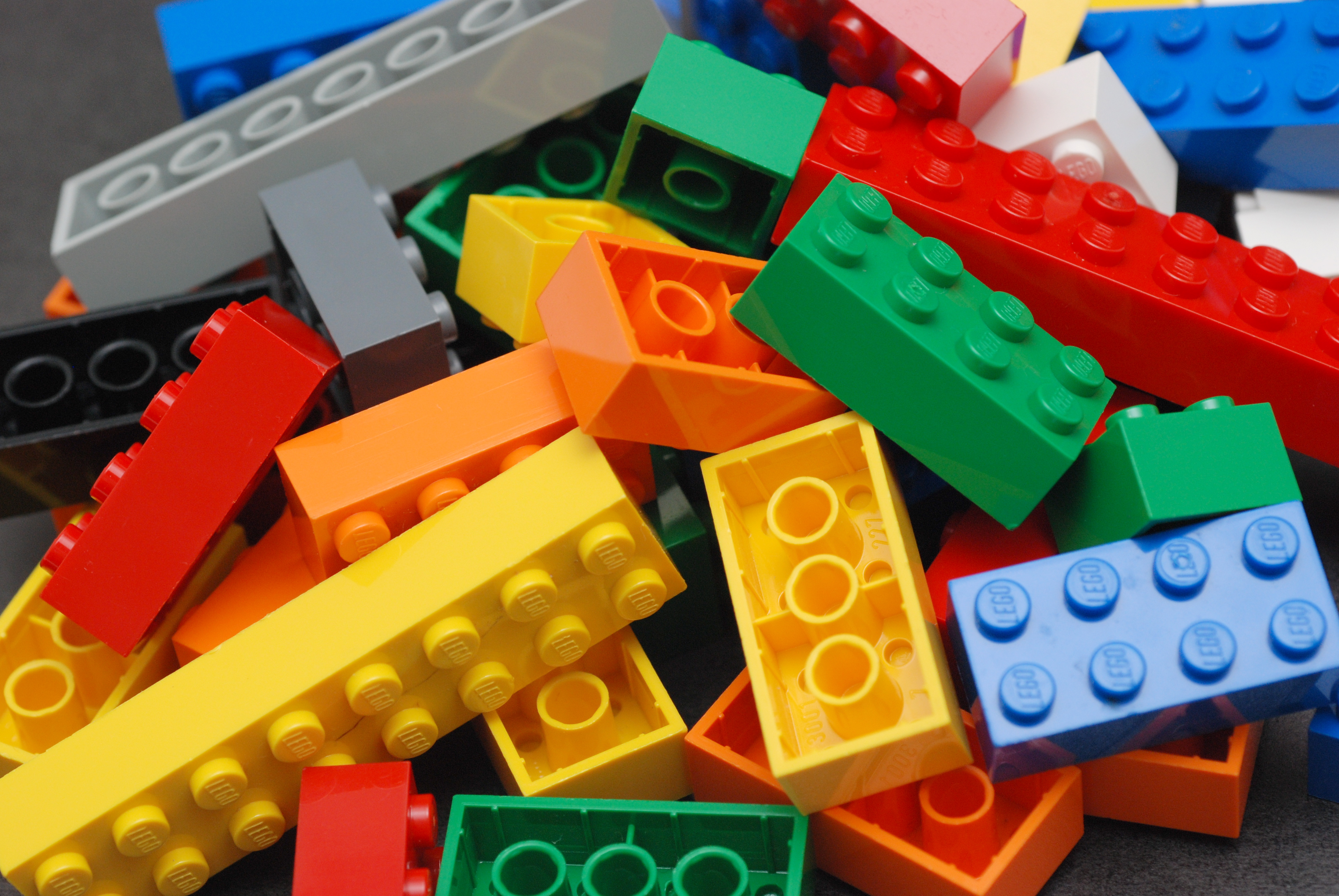
Traditional LEGO bricks: For boys AND girls, goshdarnit!
LEGO has also gotten it wrong when it comes to the assumption that girls are not into the traditional LEGO blocks. In fact, just last night, my daughter (the very one who wanted a jetpack) saw a commercial for a LEGO City product – I forgot which one – and asked that we put it on her ever expanding Christmas list. Furthermore, both of my daughters are huge fans of the LEGO produced show on the Cartoon Network, Ninjago: Masters of Spinjitzu, which is based on the traditional LEGO figures and game. My oldest daughter is arguably very sporty and may be more inclined to like “boy” things, but my younger daughter is chock-full of sugar and spice and yada yada yada. She prefers to wear dresses, LOVES shoes, and demands to have her nails painted at all times. And she still gets down with regular LEGOs and monster trucks and basketball and karate (all her own choices). So why is LEGO shoving pastel bricks down girls’ throats?

Gender and play

Play is an important part of cognitive development. When children engage in play, they learn through discovery, become familiar with their own limitations, gain a better understanding of spatial relationships, become introduced to cause and effect, and, most relevant to this discussion, play exposes children to societal and cultural norms, as well as family values. Placing limits on play can affect how a child sees him or herself in the world, which can impact both career and lifestyle choices.

Research (and experience) has shown that the toys kids choose are shaped by societal expectations; however, these expectations are often dictated by marketing teams and their assumptions of what they think their customers want to see, perpetuating a toy culture that has changed little since the 1950s. Furthermore, parents may impose toys that are gender “appropriate,” or even punish play that does not align with traditional gender expectations. But what toys do kids actually want to play with?

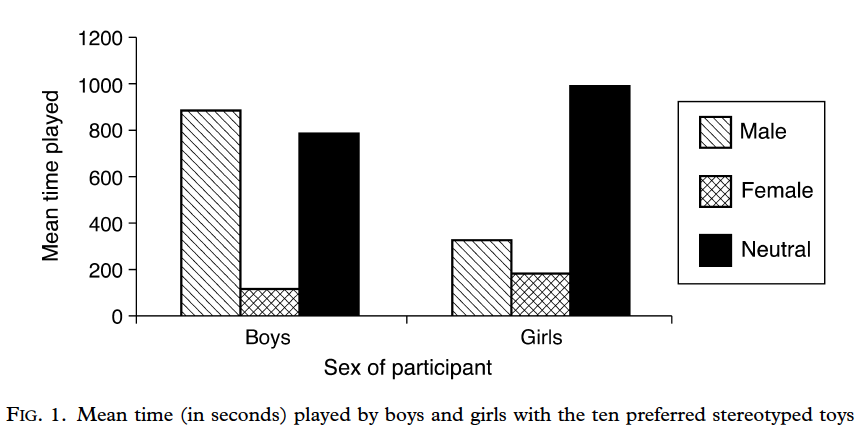
In 2003, researchers at the University of Nebraska conducted a study to, in part, identify the impact that stereotyped toys have on play in young children. There were 30 children who participated in this study, ranging in age from 18-47 months. They were observed for 30 minutes in a room full of toys, with each toy defined as being traditionally masculine, feminine, or gender neutral. Interestingly, when assessing the toy preferences of the children, boys tended to play with toys that were either masculine or gender neutral, whereas girls played with toys that were largely gender neutral. These findings were consistent with previous studies showing that girls tend to play with toys that are not traditionally gendered (i.e. blocks, crayons, puzzles, bears, etc).
Cherney, et al, 2003
Why is there a disconnect between the natural tendencies of toy choice among female children and what marketing executives deem as appropriate toys for girls? While fantasy play based on domestic scenarios does have its place during normal development, restricting children to certain types of gendered toys can promote a stereotypical mindset that extends into adulthood, possibly adding to the gender inequity seen in the workplace. Furthermore, assigning and marketing toys to a specific gender may also contribute to the gendering of household duties and/or recreational activities (i.e. only boys can play hockey or only girls do laundry).

This is obviously problematic for females, especially given the disproportionately low number of women executives and STEM professionals (just to name a few). However, a conclusion from this study that I hadn’t even considered is the idea that overly feminized toys are not good for boys.

How “girls only” is disadvantageous to boys

When looking at “masculine” versus “feminine” play, one would see that there is some non-overlap when it comes to learned skills. For instance, “masculine” play often translates into being able to build something imaginative (like a spaceship or other cool technology) whereas “feminine” toys tend to encourage fantasy play surrounding taking care of the home (like putting the baby to sleep or ironing clothes).

Both types of learning experiences are useful in today’s world, especially given that more women enter the work force and there is growing trend to more or less split household duties. So when a kid is being offered toys that encourage play that has both masculine and feminine qualities, there is enhanced development of a variety of skills that ultimately translate into real, modern world scenarios.

However, the issue lies in the willingness to provide and play with strongly cross-gender-stereotyped toys. Because of the number of toys having this quality, there is a huge gender divide when it comes to play, and boys are much less likely to cross gender lines, especially when toys are overtly “girly” (see figure above). This is most often because of parents and caregivers who discourage play with “girl” toys, usually citing things like “they will make fun of you.” Toys heavily marketed to match the stereotypical likes of girls, such as the Friends LEGO kit, clearly excludes boys from engaging in play that develops domestic skills (in addition to pigeonholing girls into thinking that girls can only do domestic things).

Just yesterday, I came across an article on CNN discussing this issue, and it contained anecdotes similar to the one I described above. The author described how a little girl was scoffed for having a Star-Wars thermos as well as how a little boy was told (by another little girl) that he could not have the mermaid doll he wanted. My arguments thus far have been centered on developing a variety of skills through play, but I’d also like to add that limiting self-expression could be disastrous for the future wellbeing of an individual.

There is some progress being made with regard to how toys are being presented in stores. For instance, the same article described the new Toy Kingdom at Harrod’s, which does not conform to the traditionally separated “boy” and “girl” sections. Instead, it has “worlds,” such as The Big Top(with circus acts and fairies) or Odyssey(with space crafts and gadgets). This type of organization allows any child, regardless of gender, to engage in play that facilitates imagination and cognition.

Hey Toys’R Us, are you listening?

Final thoughts

Please don’t misinterpret this as being anti-pink, anti-princess, or anti-feminine. I embrace my own femininity with vigor and pride. I like to wear dresses and makeup and get my hair did. Give me a pair of Manolo Blahniks and I will wear the shit out of them. But I will do so while elbow deep in a biochemical analysis of intracellular cholesterol transport.

My point is that if you are going to make a toy more appealing to girls by painting it pink, don’t forget to include facets that allow girls to be comfortable with their femininity while providing an experience that promotes empowerment and an unlimited imagination. Furthermore, don’t exclude boys from getting an experience that helps them acquire skills that are applicable (and desirable) in the modern world. As it stands right now, toys like the Friends LEGO kit does neither of these and I believe that they major fails, both of the Double X and the XY variety.

For more, check out Feminist Frequency’s takedown of LEGO:


References:
Judith E. Owen Blakemore and Renee E. Centers, Characteristics of Boys’ and Girls’ Toys, Sex Roles, Vol. 53, Nos. 9/10, November 2005 [PDF, paywall]

Gerianne M. Alexander, Ph.D., An Evolutionary Perspective of Sex-Typed Toy Preferences: Pink, Blue, and the Brain, Archives of Sexual Behavior, Vol. 32, No. 1, , pp. 7–14, February 2003 [PDF, paywall]

Isabelle D. Cherney, Lisa Kelly-Vance, Katrina Gill Glover, Amy Ruane, and Brigette Oliver Ryalls, The Effects of Stereotyped Toys and Gender on Play Assessment in Children Aged 18-47 Months, Educational Psychology: An International Journal of Experimental Educational Psychology, 23:1, 95-106, 2003

Carol J. Auster and Claire S. Mansbach, The Gender Marketing of Toys: An Analysis of Color and Type of Toy on the Disney Store Website, Sex Roles, 2012 [abstract link]

Isabelle D. Cherney and Kamala London, Gender-linked Differences in the Toys, Television Shows, Computer Games, and Outdoor Activities of 5- to 13-year-old Children, Sex Roles, 2006 [PDF]

Isabelle D. Cherney and Bridget Oliver Ryalls, Gender-linked differences in the incidental memory of children and adults, J Exp Child Psychol, 1999 Apr;72(4):305-28 [abstract link]

Anorexia nervosa, neurobiology, and family-based treatment

Via Wikimedia Commons
Photo credit: Sandra Mann
By Harriet Brown, DXS contributor

Back in 1978, psychoanalyst Hilde Bruch published the first popular book on anorexia nervosa. In The Golden Cage, she described anorexia as a psychological illness caused by environmental factors: sexual abuse, over-controlling parents, fears about growing up, and/or other psychodynamic factors. Bruch believed young patients needed to be separated from their families (a concept that became known as a “parentectomy”) so therapists could help them work through the root issues underlying the illness. Then, and only then, patients would choose to resume eating. If they were still alive.

Bruch’s observations dictated eating-disorders treatments for decades, treatments that led to spectacularly ineffective results. Only about 35% of people with anorexia recovered; another 20% died, of starvation or suicide; and the rest lived with some level of chronic illness for the rest of their lives.

Not a great track record, overall, and especially devastating for women, who suffer from anorexia at a rate of 10 times that of men. Luckily, we know a lot more about anorexia and other eating disorders now than we did in 1978.

“It’s Not About the Food”

In Bruch’s day, anorexia wasn’t the only illness attributed to faulty parenting and/or trauma. Therapists saw depression, anxiety, schizophrenia, eating disorders, and homosexuality (long considered a psychiatric “illness”) as ailments of the mind alone. Thanks to the rising field of behavioral neuroscience, we’ve begun to untangle the ways brain circuitry, neural architecture, and other biological processes contribute to these disorders. Most experts now agree that depression and anxiety can be caused by, say, neurotransmitter imbalances as much as unresolved emotional conflicts, and treat them accordingly. But the field of eating-disorders treatment has been slow to jump on the neurobiology bandwagon. When my daughter was diagnosed with anorexia in 2005, for instance, we were told to find her a therapist and try to get our daughter to eat “without being the food police,” because, as one therapist informed us, “It’s not about the food.”

Actually, it is about the food. Especially when you’re starving.

Ancel Keys’ 1950 Semi-Starvation Study tracked the effects of starvation and subsequent re-feeding on 36 healthy young men, all conscientious objectors who volunteered for the experiment. Keys was drawn to the subject during World War II, when millions in war-torn Europe – especially those in concentration camps – starved for years. One of Keys’ most interesting findings was that starvation itself, followed by re-feeding after a period of prolonged starvation, produced both physical and psychological symptoms, including depression, preoccupation with weight and body image, anxiety, and obsessions with food, eating, and cooking—all symptoms we now associate with anorexia. Re-feeding the volunteers eventuallyreversed most of the symptoms. However, this approach proved to be difficult on a psychological level, and in some ways more difficult than the starvation period. These results were a clear illustration of just how profound the effects of months of starvation were on the body and mind.

Alas, Keys’ findings were pretty much ignored by the field of eating-disorders treatment for 40-some years, until new technologies like functional magnetic resonance imaging (fMRI) and research gave new context to his work. We now know there is no single root cause for eating disorders. They’re what researchers call multi-factorial, triggered by a perfect storm of factors that probably differs for each person who develops an eating disorder. “Personality characteristics, the environment you live in, your genetic makeup—it’s like a cake recipe,” says Daniel le Grange, Ph.D., director of the Eating Disorders Program at the University of Chicago. “All the ingredients have to be there for that person to develop anorexia.”

One of those ingredients is genetics. Twenty years ago, the Price Foundation sponsored a project that collected DNA samples from thousands of people with eating disorders, their families, and control participants. That data, along with information from the 2006 Swedish Twin Study, suggests that anorexia is highly heritable. “Genes play a substantial role in liability to this illness,” says Cindy Bulik, Ph.D., a professor of psychiatry and director of the University of North Carolina’s Eating Disorders Program. And while no one has yet found a specific anorexia gene, researchers are focusing on an area of chromosome 1 that shows important gene linkages.

Certain personality traits associated with anorexia are probably heritable as well. “Anxiety, inhibition, obsessionality, and perfectionism seem to be present in families of people with an eating disorder,” explains Walter Kaye, M.D., who directs the Eating Disorders Treatment and Research Program at the University of California-San Diego. Another ingredient is neurobiology—literally, the way your brain is structured and how it works. Dr. Kaye’s team at UCSD uses fMRI technology to map blood flow in people’s brains as they think of or perform a task. In one study, Kaye and his colleagues looked at the brains of people with anorexia, people recovered from anorexia, and people who’d never had an eating disorder as they played a gambling game. Participants were asked to guess a number and were rewarded for correct guesses with money or “punished” for incorrect or no guesses by losing money.

Participants in the control group responded to wins and losses by “living in the moment,” wrote researchers: “That is, they made a guess and then moved on to the next task.” But people with anorexia, as well as people who’d recovered from anorexia, showed greater blood flow to the dorsal caudate, an area of the brain that helps link actions and their outcomes, as well as differences in their brains’ dopamine pathways. “People with anorexia nervosa do not live in the moment,” concluded Kaye. “They tend to have exaggerated and obsessive worry about the consequences of their behaviors, looking for rules when there are none, and they are overly concerned about making mistakes.” This study was the first to show altered pathways in the brain even in those recovered from anorexia, suggesting that inherent differences in the brain’s architecture and signaling systems help trigger the illness in the first place.

Food Is Medicine

Some of the best news to come out of research on anorexia is a new therapy aimed at kids and teens. Family-based treatment (FBT), also known as the Maudsley approach, was developed at the Maudsley Hospital in London by Ivan Eisler and Christopher Dare, family therapists who watched nurses on the inpatient eating-disorders unit get patients to eat by sitting with them, talking to them, rubbing their backs, and supporting them. Eisler and Dare wondered how that kind of effective encouragement could be used outside the hospital.

Their observations led them to develop family-based treatment, or FBT, a three-phase treatment for teens and young adults that sidesteps the debate on etiology and focuses instead on recovery. “FBT is agnostic on cause,” says Dr. Le Grange. During phase one, families (usually parents) take charge of a child’s eating, with a goal of fully restoring weight (rather than get to the “90 percent of ideal body weight” many programs use as a benchmark). In phase two, families gradually transfer responsibility for eating back to the teen. Phase three addresses other problems or issues related to normal adolescent development, if there are any.

FBT is a pragmatic approach that recognizes that while people with anorexia are in the throes of acute malnourishment, they can’t choose to eat. And that represents one of the biggest shifts in thinking about eating disorders. The DSM-IV, the most recent “bible” of psychiatric treatment, lists as the first symptom of anorexia “a refusal to maintain body weight at or above a minimally normal weight for age and height.” That notion of refusal is key to how anorexia has been seen, and treated, in the past: as a refusal to eat or gain weight. An acting out. A choice. Which makes sense within the psychodynamic model of cause.

But it doesn’t jibe with the research, which suggests that anorexia is more of an inability to eat than a refusal. Forty-five years ago, Aryeh Routtenberg, then (and still) a professor of psychology at Northwestern University, discovered that when he gave rats only brief daily access to food but let them run as much as they wanted on wheels, they would gradually eat less and less, and run more and more. In fact, they would run without eating until they died, a paradigm Routtenberg called activity-based anorexia (ABA). Rats with ABA seemed to be in the grip of a profound physiological imbalance, one that overrode the normal biological imperatives of hunger and self-preservation. ABA in rats suggests that however it starts, once the cycle of restricting and/or compulsive exercising passes a certain threshold, it takes on a life of its own. Self-starvation is no longer (if it ever was) a choice, but a compulsion to the death.

That’s part of the thinking in FBT. Food is the best medicine for people with anorexia, but they can’t choose to eat. They need someone else to make that choice for them. Therapists don’t sit at the table with patients, but parents do. And parents love and know their children. Like the nurses at the Maudsley Hospital, they find ways to get kids to eat. In a sense, what parents do is outshout the anorexia “voice” many sufferers report hearing, a voice in their heads that tells them not to eat and berates them when they do. Parents take the responsibility for making the choice to eat away from the sufferer, who may insist she’s choosing not to eat but who, underneath the illness, is terrified and hungry.

The best aspect of FBT is that it works. Not for everyone, but for the majority of kids and teens. Several randomized controlled studies of FBT and “treatment as usual” (talk therapy without pressure to eat) show recovery rates of 80 to 90 percent with FBT—a huge improvement over previous recovery rates. A study at the University of Chicago is looking at adapting the treatment for young adults; early results are promising.

The most challenging aspect of FBT is that it’s hard to find. Relatively few therapists in the U.S. are trained in the approach. When our daughter got sick, my husband and I couldn’t find a local FBT therapist. So we cobbled together a team that included our pediatrician, a therapist, and lots of friends who supported our family through the grueling work of re-feeding our daughter. Today she’s a healthy college student with friends, a boyfriend, career goals, and a good relationship with us.

A few years ago, Dr. Le Grange and his research partner, Dr. James Lock of Stanford, created a training institute that certifies a handful of FBT therapists each year. (For a list of FBT providers, visit the Maudsley Parents website.) It’s a start. But therapists are notoriously slow to adopt new treatments, and FBT is no exception. Some therapists find FBT controversial because it upends the conventional view of eating disorders and treatments. Some cling to the psychodynamic view of eating disorders despite the lack of evidence. Still, many in the field have at least heard of FBT and Kaye’s neurobiological findings, even if they don’t believe in them yet.

Change comes slowly. But it comes.

* * *

Harriet Brown teaches magazine journalism at the S.I. Newhouse School of Public Communications in Syracuse, New York. Her latest book is Brave Girl Eating: A Family’s Struggle with Anorexia (William Morrow, 2010).

be there for that person to develop anorexia.”

One of those ingredients is genetics. Twenty years ago, the Price Foundation sponsored a project that collected DNA samples from thousands of people with eating disorders, their families, and control participants. That data, along with information from the 2006 Swedish Twin Study, suggests that anorexia is highly heritable. “Genes play a substantial role in liability to this illness,” says Cindy Bulik, Ph.D., a professor of psychiatry and director of the University of North Carolina’s Eating Disorders Program. And while no one has yet found a specific anorexia gene, researchers are focusing on an area of chromosome 1 that shows important gene linkages.
Certain personality traits associated with anorexia are probably heritable as well. “Anxiety, inhibition, obsessionality, and perfectionism seem to be present in families of people with an eating disorder,” explains Walter Kaye, M.D., who directs the Eating Disorders Treatment and Research Program at the University of California-San Diego. Another ingredient is neurobiology—literally, the way your brain is structured and how it works. Dr. Kaye’s team at UCSD uses fMRI technology to map blood flow in people’s brains as they think of or perform a task. In one study, Kaye and his colleagues looked at the brains of people with anorexia, people recovered from anorexia, and people who’d never had an eating disorder as they played a gambling game. Participants were asked to guess a number and were rewarded for correct guesses with money or “punished” for incorrect or no guesses by losing money.
Participants in the control group responded to wins and losses by “living in the moment,” wrote researchers: “That is, they made a guess and then moved on to the next task.” But people with anorexia, as well as people who’d recovered from anorexia, showed greater blood flow to the dorsal caudate, an area of the brain that helps link actions and their outcomes, as well as differences in their brains’ dopamine pathways. “People with anorexia nervosa do not live in the moment,” concluded Kaye. “They tend to have exaggerated and obsessive worry about the consequences of their behaviors, looking for rules when there are none, and they are overly concerned about making mistakes.” This study was the first to show altered pathways in the brain even in those recovered from anorexia, suggesting that inherent differences in the brain’s architecture and signaling systems help trigger the illness in the first place.
Food Is Medicine
Some of the best news to come out of research on anorexia is a new therapy aimed at kids and teens. Family-based treatment (FBT), also known as the Maudsley approach, was developed at the Maudsley Hospital in London by Ivan Eisler and Christopher Dare, family therapists who watched nurses on the inpatient eating-disorders unit get patients to eat by sitting with them, talking to them, rubbing their backs, and supporting them. Eisler and Dare wondered how that kind of effective encouragement could be used outside the hospital.
Their observations led them to develop family-based treatment, or FBT, a three-phase treatment for teens and young adults that sidesteps the debate on etiology and focuses instead on recovery. “FBT is agnostic on cause,” says Dr. Le Grange. During phase one, families (usually parents) take charge of a child’s eating, with a goal of fully restoring weight (rather than get to the “90 percent of ideal body weight” many programs use as a benchmark). In phase two, families gradually transfer responsibility for eating back to the teen. Phase three addresses other problems or issues related to normal adolescent development, if there are any.
FBT is a pragmatic approach that recognizes that while people with anorexia are in the throes of acute malnourishment, they can’t choose to eat. And that represents one of the biggest shifts in thinking about eating disorders. The DSM-IV, the most recent “bible” of psychiatric treatment, lists as the first symptom of anorexia “a refusal to maintain body weight at or above a minimally normal weight for age and height.” That notion of refusal is key to how anorexia has been seen, and treated, in the past: as a refusal to eat or gain weight. An acting out. A choice. Which makes sense within the psychodynamic model of cause.
But it doesn’t jibe with the research, which suggests that anorexia is more of an inability to eat than a refusal. Forty-five years ago, Aryeh Routtenberg, then (and still) a professor of psychology at Northwestern University, discovered that when he gave rats only brief daily access to food but let them run as much as they wanted on wheels, they would gradually eat less and less, and run more and more. In fact, they would run without eating until they died, a paradigm Routtenberg called activity-based anorexia (ABA). Rats with ABA seemed to be in the grip of a profound physiological imbalance, one that overrode the normal biological imperatives of hunger and self-preservation. ABA in rats suggests that however it starts, once the cycle of restricting and/or compulsive exercising passes a certain threshold, it takes on a life of its own. Self-starvation is no longer (if it ever was) a choice, but a compulsion to the death.
That’s part of the thinking in FBT. Food is the best medicine for people with anorexia, but they can’t choose to eat. They need someone else to make that choice for them. Therapists don’t sit at the table with patients, but parents do. And parents love and know their children. Like the nurses at the Maudsley Hospital, they find ways to get kids to eat. In a sense, what parents do is outshout the anorexia “voice” many sufferers report hearing, a voice in their heads that tells them not to eat and berates them when they do. Parents take the responsibility for making the choice to eat away from the sufferer, who may insist she’s choosing not to eat but who, underneath the illness, is terrified and hungry.
The best aspect of FBT is that it works. Not for everyone, but for the majority of kids and teens. Several randomized controlled studies of FBT and “treatment as usual” (talk therapy without pressure to eat) show recovery rates of 80 to 90 percent with FBT—a huge improvement over previous recovery rates. A study at the University of Chicago is looking at adapting the treatment for young adults; early results are promising.
The most challenging aspect of FBT is that it’s hard to find. Relatively few therapists in the U.S. are trained in the approach. When our daughter got sick, my husband and I couldn’t find a local FBT therapist. So we cobbled together a team that included our pediatrician, a therapist, and lots of friends who supported our family through the grueling work of re-feeding our daughter. Today she’s a healthy college student with friends, a boyfriend, career goals, and a good relationship with us.
A few years ago, Dr. Le Grange and his research partner, Dr. James Lock of Stanford, created a training institute that certifies a handful of FBT therapists each year. (For a list of FBT providers, visit the Maudsley Parents website.) It’s a start. But therapists are notoriously slow to adopt new treatments, and FBT is no exception. Some therapists find FBT controversial because it upends the conventional view of eating disorders and treatments. Some cling to the psychodynamic view of eating disorders despite the lack of evidence. Still, many in the field have at least heard of FBT and Kaye’s neurobiological findings, even if they don’t believe in them yet.
Change comes slowly. But it comes.
* * *
Harriet Brown teaches magazine journalism at the S.I. Newhouse School of Public Communications in Syracuse, New York. Her latest book is Brave Girl Eating: A Family’s Struggle with Anorexia (William Morrow, 2010).

Work-Life Balance for Whom?

Today we are grateful to Athene Donald for allowing us to repost her piece on work/life balance. This post originally appeared on her blog, Athene Donald’s Blog, in July of this year.

Professor Athene Donald is Professor of Experimental Physics at the University of Cambridge. She has spent most of her professional career at Cambridge, apart from 4 years at Cornell University. She is a soft matter physicist, currently mainly researching physics at the interface with biology. Within her University she is the Gender Equality Champion, and also nationally chairs the Athena Forum, which aims to disseminate best practice with regard to gender within Higher Education. She was elected a Fellow of the Royal Society in 1999, and is chair of their Education Committee. She was awarded the L’Oreal/UNESCO For Women in Science Laureate for Europe in 2009, and appointed a Dame Commander of the British Empire for services to Physics in 2010. She is mother to 2 adult children. For more information, you can follow Athene Donald on Twitter.
(Source)


Can women ‘have it all’ (i.e. have a family as well as a career) is a question frequently asked, and one Sally Feldman referred to in her article in last week’s Times Higher Education. Although the sub-title for her article said ‘despair not’ – despite the growth of presenteeism, the high-profile women who have dropped out of pressured jobs because of the call of family and the growth of out-of-hours communication via Blackberry and their look-alikes – despair not, she says, because ….well to be honest I’m not sure why she feels that way. It wasn’t at all clear to me from what she wrote. At the end of the article she referred to various utopian solutions and tossed out a final solution, she attributed to Sheryl Sandberg, namely ‘find a supportive husband Continue reading

On Parenting, Science, and Trust

The following was originally posted over at The Mother Geek (RIP) in January of this year. The guest author is Alice Callahan, who is a research scientist turned stay-at-home mom. She lives in Eugene, Oregon, with her husband and 14-month-old daughter. Alice writes about the science of parenting, as well as her adventures in mothering, at scienceofmom.com. You can also find Alice on Twitter.
Via Creative Commons

Having a PhD in science makes my job as a mother easier – but maybe not in the ways that you might expect.

My PhD is in Nutrition, so you would think that getting my kid to eat well would come easy for me. Unfortunately, that has not been the case. I’ve logged more than two years of postdoc research on fetal programming – how the uterine environment affects outcomes in babies. You might think that this helped me to do everything right during my pregnancy. Instead, I think it just led to more worry about all of the ways I might be damaging my unborn child. Stress! Sugar! BPA! Lab chemical exposure! OMG! More stress!
Sure, I have more knowledge than the average mother. Sometimes that is helpful. And sometimes it is not. And knowing how to do a literature search to try to answer my parenting questions often leads to further sleep deprivation as I slog through Pubmed hits and come out on the other side with more confusion. Sometimes my drive to find scientific answers for my parenting questions just distracts me from my instinct – not that my maternal instinct is all that amazing, but I do know my baby better than anyone else in the world.
So how does being a scientist make parenting easier for me? As a scientist mother, I trust other scientists. And I trust doctors. I even trust government agencies, which bring together the best scientists and doctors in a field to review the research and make recommendations for the good of public health.
I trust scientists and doctors, because I have worked side-by-side with them for a decade, andI know that they are not only knowledgeable,but by and large, they are overwhelmingly good people. At some point, you have to trust someone.


I trust scientists and doctors.

I trust scientists, because I know that the vast majority of them are just underpaid nerds who are really passionate about what they do. They are driven by the desire to find the truth about a question and they work, day in and day out, in that pursuit. In addition, I know that scientists don’t always agree, so when there is a general consensus among the majority of scientists about something, such as vaccine safety or global warming, I feel confident in that conclusion.
Contrary to many claims on the Internet, scientists are not in bed with Big Pharma, conspiring make millions at the expense of your child’s health. They are in bed with their husbands and wives, probably chatting about their latest failed cell culture experiment.
I also trust science because I understand the peer review process all too well. Although it has its flaws and as maddening as it is when I am the one being reviewed, I have confidence that the peer review process is highly effective at weeding out the kooks and pseudoscientists and the conflicts of interest. (Unfortunately, there are a few kooky psuedoscientists out there with serious conflicts of interest, and it just so happens that one of them managed to publish fraudulent research linking the MMR vaccine and autism. Many studies have since shown that such a link does not exist, but it took 12 years for Andrew Wakefield’s Lancet paper to be retracted. How many dollars have been spent and how many people made sick or worse in the continuing fallout and confusion about this public health scare? When the peer review system fails, it can be truly devastating.)
I trust doctors because I know that most of them are, first and foremost, humanitarians at heart, especially those that have chosen to work in primary care. I know how hard doctors work to become competent in the vast ocean of information about pathologies of the human body. I know how seriously they take their responsibility of our health.
I especially trust pediatricians. They have chosen one of the lowest-paid specialties simply because they love working with kids. I know that every pediatrician, at some point during her training or career, has likely cared for a child who was dying of a disease that could have been prevented by vaccination, and that memory haunts her as she faces parents afraid of vaccinating their children. Doctors are not conspiring against us. They want to help us make the best choices for our children, more than anything in the world.
Because I trust scientists and doctors, I didn’t question the CDC’s vaccination schedule. I didn’t pore over vaccine research or agonize about the decision to vaccinate my child. Instead, I trusted that the committees of experts at the CDC and AAP carefully make the best recommendations possible based on the data available.
Maybe that is naïve. Maybe I am a lazy mother for not trying to become a vaccine expert before I allowed those first needles to enter my daughter’s thigh. Maybe. But I also think it would be naïve for me to think that I could become an expert on vaccinations, that I could know and understand the field better than the committees of scientists and doctors who have made this their life’s work.
I know how much work it took me to become an expert on one or two corners of nutrition and fetal physiology. It took thousands of hours of reading textbooks and journal articles, sitting in lectures, attending conferences, and struggling at the lab bench before I started to feel even a little bit comfortable calling myself an expert in any field. So I think it is naïve for a parent to think that she can become an expert on vaccines by spending some time on the Internet, reading questionable sources, almost all of which have some agenda. I accept that I can’t know everything, and I have enough faith in humanity that I trust others who know more than me.

It is not that I don’t question scientists and doctors. I do. For example, I recognize that government agencies and medical organizations often have a lag time for adopting the latest science into their recommendations. I recognize that tradition, culture, politics, and economics all influence those recommendations, and they are not without fault.
I certainly question my doctors, because I know they are each fallible human beings, and they can’t know everything. I brought a stack of journal articles to my OB to convince her to delay cord clamping at my delivery. I did so much research on infant iron nutrition and came to my daughter’s 9-month checkup with so many questions that my pediatrician looked me in the eye and said, “You’re worried enough for both of us about BabyC’s iron.” Although I question my doctors, I also trust that they are adept at discerning fake science from real science. If I bring my doctor the sources I am using to inform my questions or concerns, she should be able to judge whether or not they are trustworthy and have a real discussion with me about factors that I may not have considered.
In truth, I do follow the vaccine debate closely, but not because I wonder if I am doing the right thing by vaccinating my child. I follow the vaccine debate out of interest for how misinformation can explode in a way that creates a public health crisis. I find myself increasingly concerned about the low rate of vaccination in my own community. I worry for the newborns in our town who have not yet had a chance to be vaccinated and for the individuals who cannot be vaccinated due to health conditions. I am starting to feel like I have a responsibility to share accurate information with mothers and fathers struggling with the decision of whether or not to vaccinate, because misinformation is doing real harm.

It is good to question our parenting decisions and in doing so, become more educated about them. However, as a scientist, I’m happy to defer to other scientists about some of the biggest parenting decisions I have faced. I am grateful for their decades of research forming the foundation of our understanding of child health and for the good-hearted doctors who care for my family. They have made my job as a mother a lot easier. I can spend less time worrying and more time playing with my daughter and soaking up the time with her as she grows up way too fast.

Thanks, science, for making it easier to be a mom.


These views are the opinion of the author and do not necessarily reflect or disagree with those of the DXS editorial team.

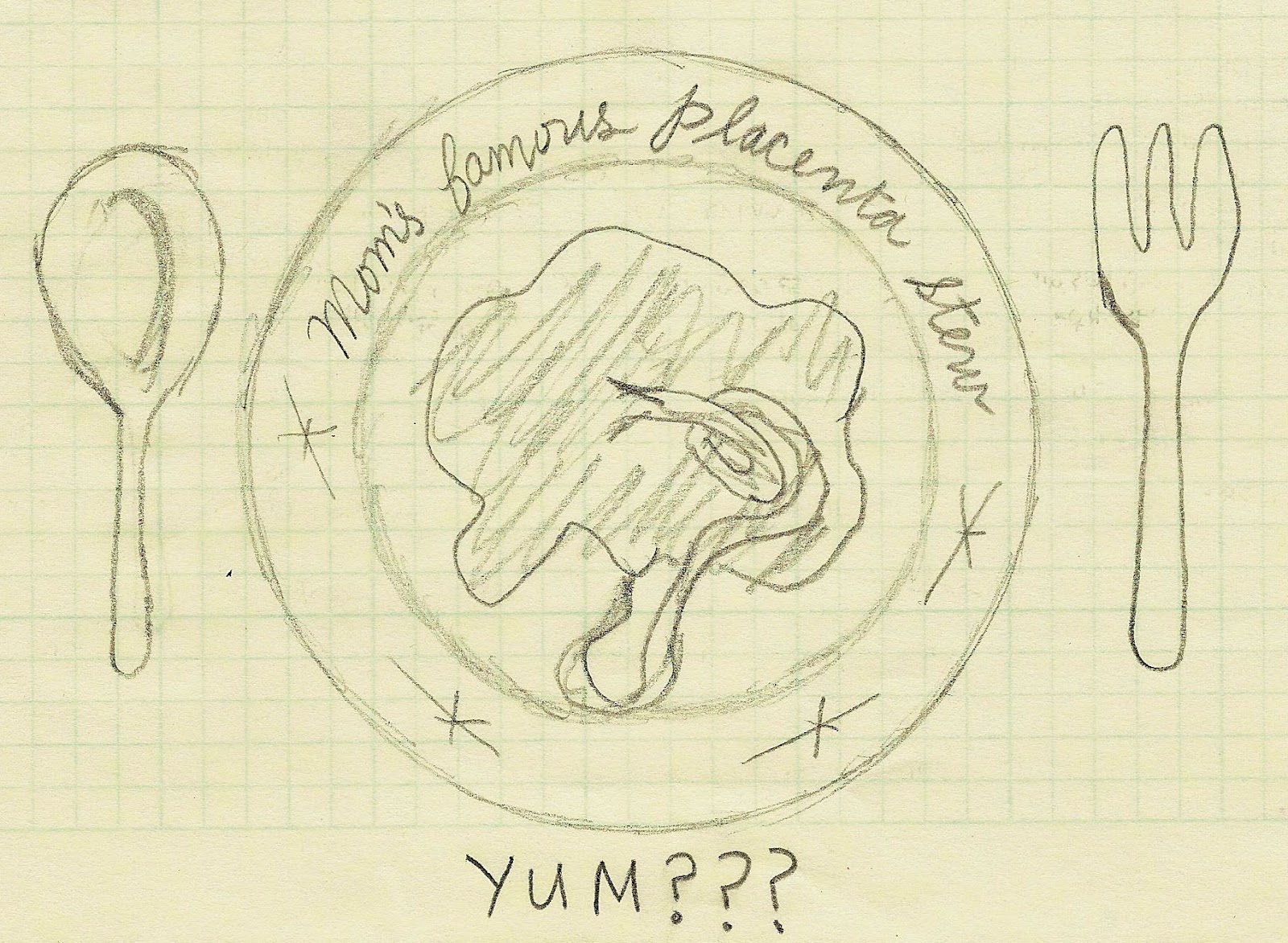
Pregnancy 101: My placenta looked like meatloaf, but I wasn’t about to eat it.

By Jeanne Garbarino, Biology Editor
An historic view interpretation of the placenta (source).

She gave me a few minutes to meet my daughter before she reeled me back into a state that was my new reality. “You’re not finished Jeanne. You still need to birth your placenta.” What?!?! More pushing? But I was lucky and the efforts required to bring my placenta ex vivo were minimal.

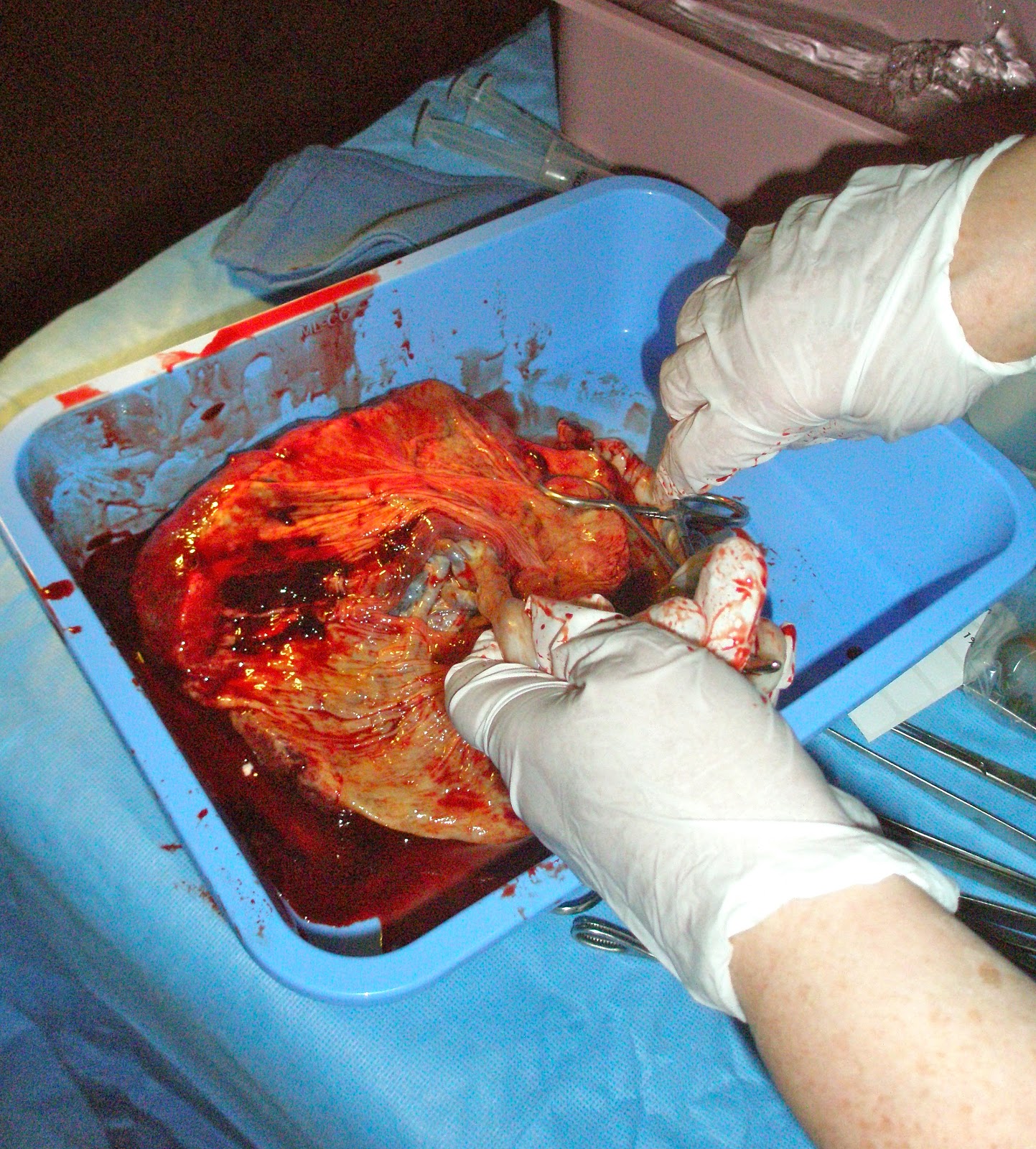
This is the second placenta my body helped make. OK,
so it doesn’t EXACTLY look like meatloaf…

The idea of a placenta, which is the only human organ to completely and temporarily develop after birth, was fascinating. That thing sitting in a rectangular periwinkle bucket was what allowed me to grow another human.. inside of my body! There was no way I was not going to check it out, as well as create a permanent record of its relatively short-lived existence.

My first impression was that it looked like “meatloaf.” Not necessarily a well made meatloaf, but perhaps one that is made by my mother (sorry mom). But, alas, chaos reigned and I wasn’t able to really take a good look. However, for my second birth and hence second placenta, my midwife indulged me with a more detailed look and a mini-lesson.

Baby’s eye view:
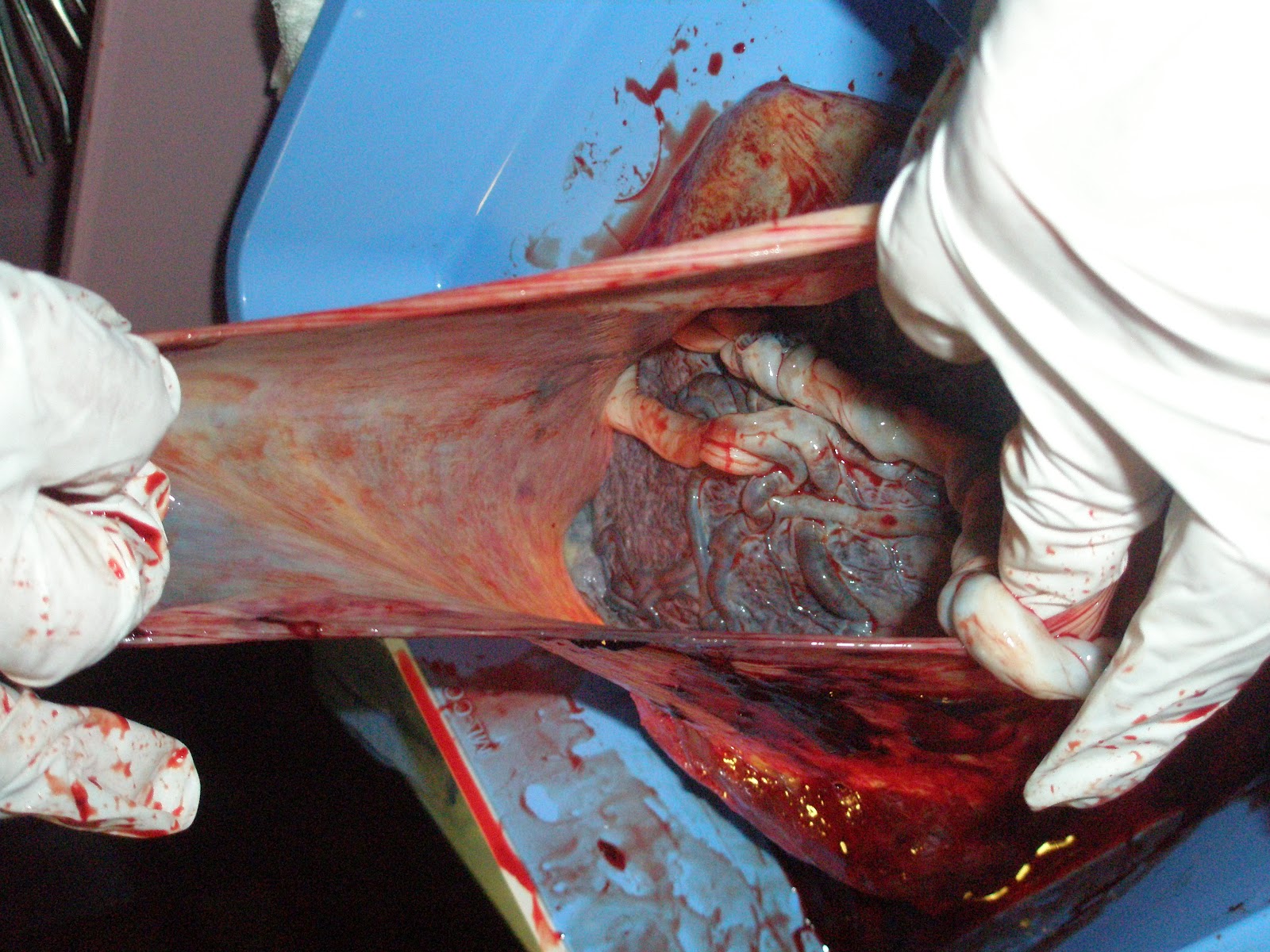
Where geekling deux spent 39 weeks and 4 days.

Her gloved hands, still wet with my blood and amniotic fluid, slid into the opening that was artificially created with a tool resembling a crocheting needle. She opened the amniotic sac wide so I could get a baby’s eye view of the crimson organ that served as a nutritional trading post between me and my new bundle of joy.

She explained that the word “placenta” comes from from the Greek word plakoeis, which translates to “flat cake” (however, I’m sure if my mom’s meatloaf was more common in ancient Greece, the placenta would be named differently). “It’s one of the defining features of being a mammal,” she explained as I was working on another mammalian trait – getting my baby to nurse for the first time.

That was about all I could mentally digest at the time, but still, more than three years later, the placenta continues to fascinate me, mostly due to the fact that it is responsible for growing new life. It’s a natural topic for this long overdue Pregnancy101post, so let’s dive in!
Development of the placenta
It all starts when a fertilized egg implants itself into the wall of the uterus. But, in order to fully understand how it works, we should start with an overview of the newly formed embryo.

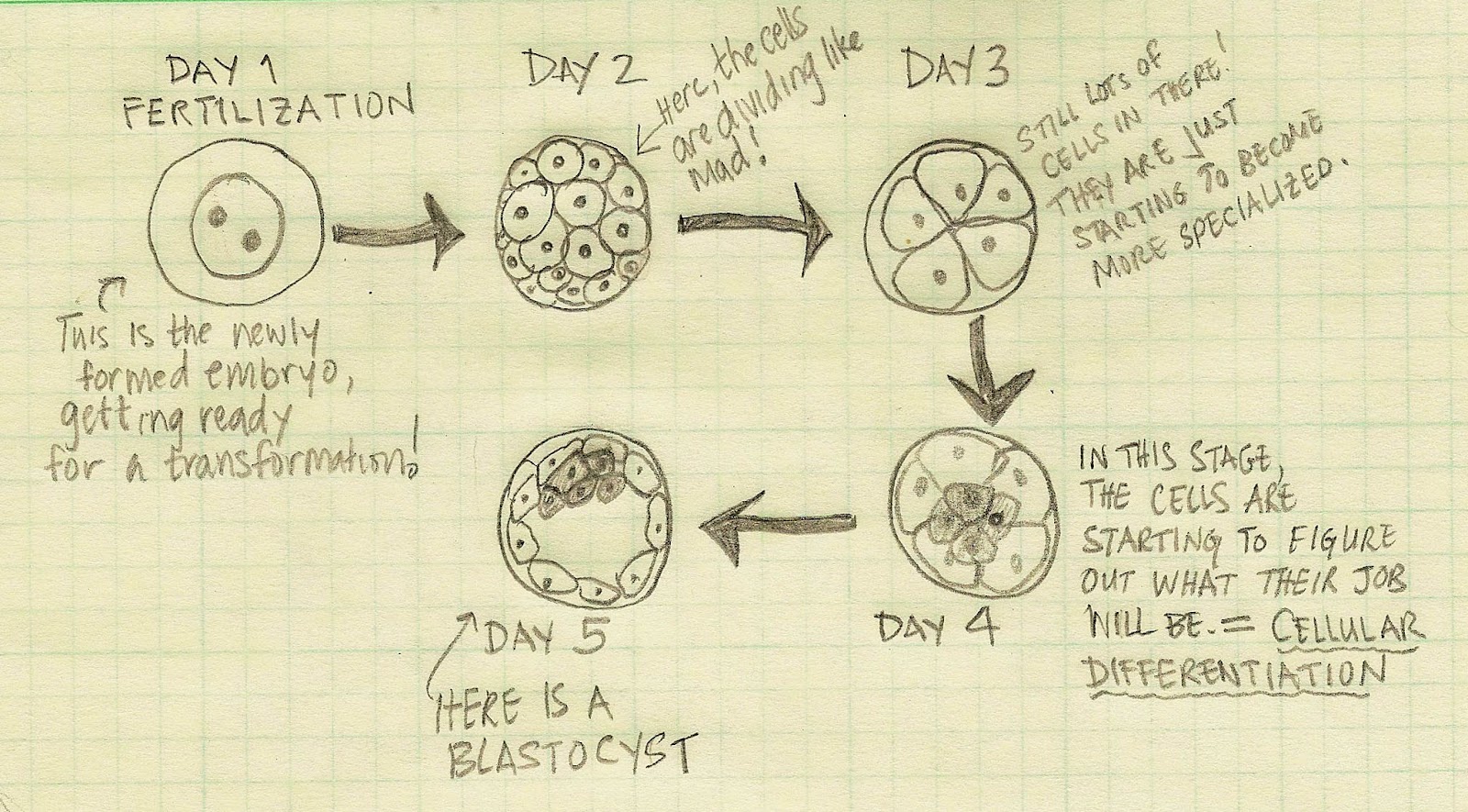
The very early stages of us (and many other things that are alive).
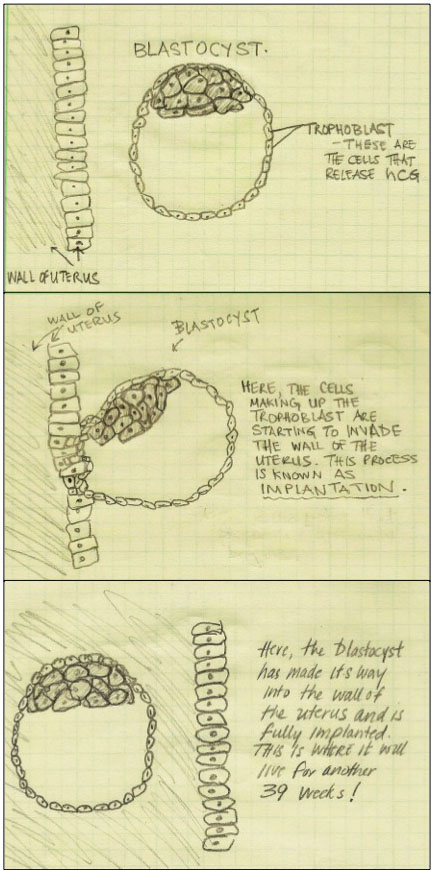
The trophoblast invades the uterus,
leading to implantation of the blastocyst.

As soon as a male sperm cell fuses with a female egg cell, fertilization occurs and the cells begin to multiply. But, they remain contained within a tiny sphere. As the cells continue to divide, they are given precise instructions depending on their location within that sphere, and begin to transform into specific cell types. This process, which is called cellular differentiation, actually seals the fate every cell in our body, sort of like how we all have different jobs – some of us are transport things, some of us are involved in policing the neighborhoods, some of us build structures, some of us communicate information, some of us deal with food, some of us get rid of waste, etc. Every cell gets a job (it’s the only example of 100% employment rates!).

Now back to the cells in the fertilized egg. As they start to learn what their specific job will be, the cells within the sphere will start to organize themselves. After about 5 days after fertilization, the sphere of cells becomes something called a blastocyst, which readies itself for implantationinto the wall of the uterus.

The act of implantation is largely due to the cells found on the perimeter of the blastocyst sphere. These cells, collectively known as the trophoblast, release a very important hormone – human chorionic gonadotropin (hCG) – that tells the uterus to prepare for it’s new tenant. (If you recall, hCG is the hormone picked up by pregnancy tests.) Around day 7, the trophoblast cells start to invade the lining of the uterus, and begin to form the placenta. It is at this point that pregnancy officially begins. (Here is a cool video, created by the UNSW Embryology Department, showing the process of implantation.)

Structure of the placenta

Eventually the trophoblast becomes the recognizable organ that is the placenta. Consider the “flat cake” analogy, with the top of the cake being the fetal side (the side that is in contact with the baby), and the bottom of the cake being the maternal side (the side that is in contact with the mother).

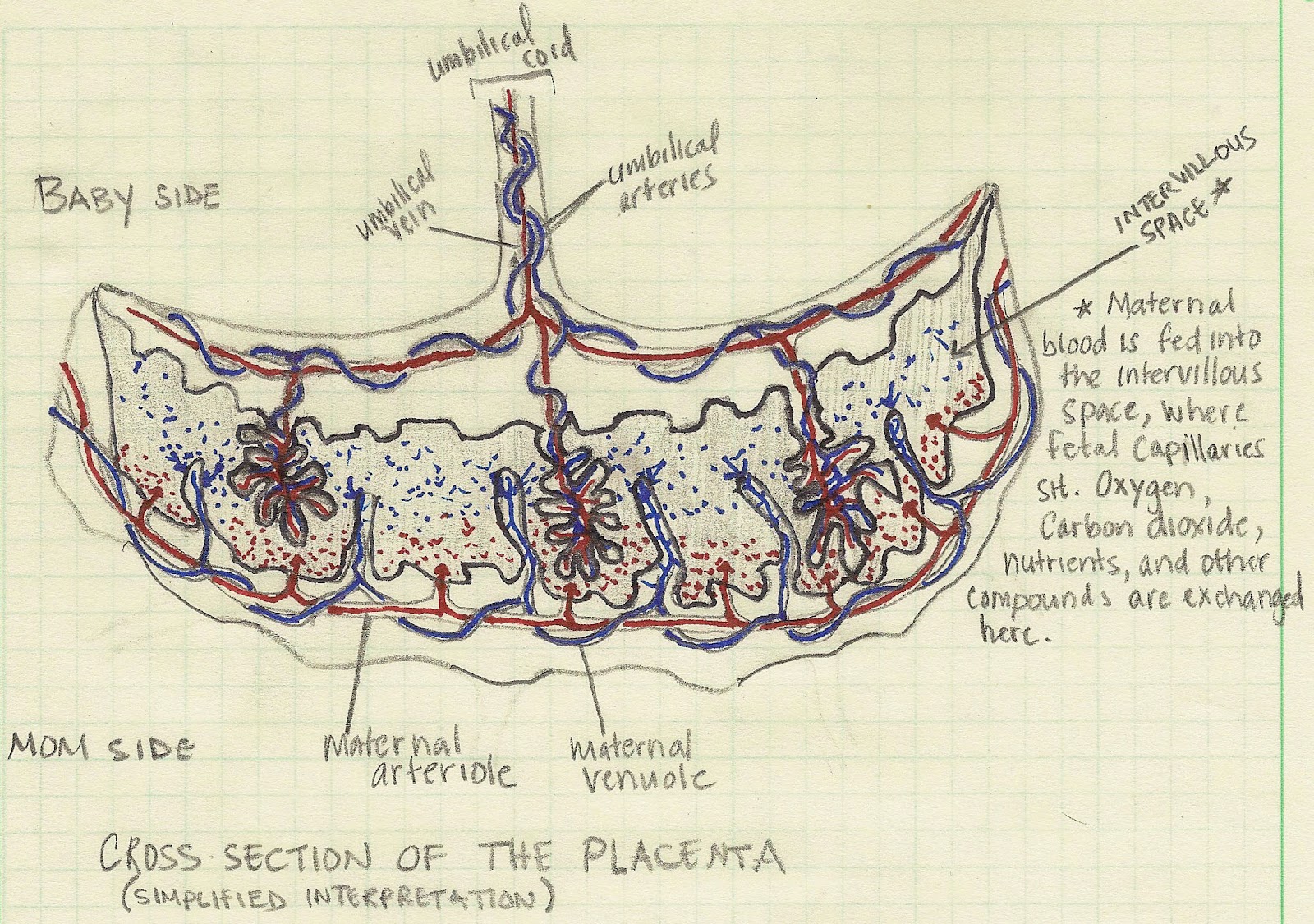
Cross section of the placenta: Blood vessels originating from the fetus sit in a pool
of maternal blood, which is constantly replenished my maternal arteries and veins.
The red represents oxygenated blood, and the blue represents de-oxygenated blood.

Projecting from the center of the fetal side of the placenta are two arteries and one vein, coiled together in a long, rubbery rope, often bluish-grey in color. This umbilical cord serves as the tunnel through which nutrients and waste are shuttled, and essentially serves to plug the baby into the mother’s metabolic processes. At the umbilical cord-placenta nexus, the umbilical cord arteries and vein branch out into a network of blood vessels, which further divide into a tree-like mass of vessels within the placenta.

These tree-like masses originating from the umbilical cord (and thus fetus) sit in a cavity called the intervillous space, and are bathed in nutrient-rich maternal blood. This maternal blood, which provides the fetus with a means for both nutrient delivery and waste elimination, is continually replenished via a network of maternal arteries and veins that feed into the intervillous space. Furthermore, these arteries and veins help to anchor the placenta into the uterine wall. One of the most interesting aspects about the mother-feus relationship is that the blood vessel connection is indirect. This helps to prevent a detrimental immune response, which could lead to immunological rejection of the fetus (sort of like how a transplanted organ can become rejected by the recipient).
Functions of the placenta

Just like a plant needs sunlight, oxygen, and water to grow, a baby needs all sorts of nutrients to develop. And since a baby also produces waste, by nature of it being alive and all, there is an absolute requirement for waste removal. However, because we can’t just give a developing fetus food or a bottle, nor are we able to change diapers in utero, the onus lies completely on the biological mother.

This is where the placenta comes in. Because the fetus is plugged into the circulatory system of the mother via the umbilical cord and placenta, the fetus is provided with necessary nutrients and a mechanism to get rid of all the byproducts of metabolism. Essentially, the placenta acts as a waitress of sorts – providing the food, and cleaning it all up when the fetus is done eating.

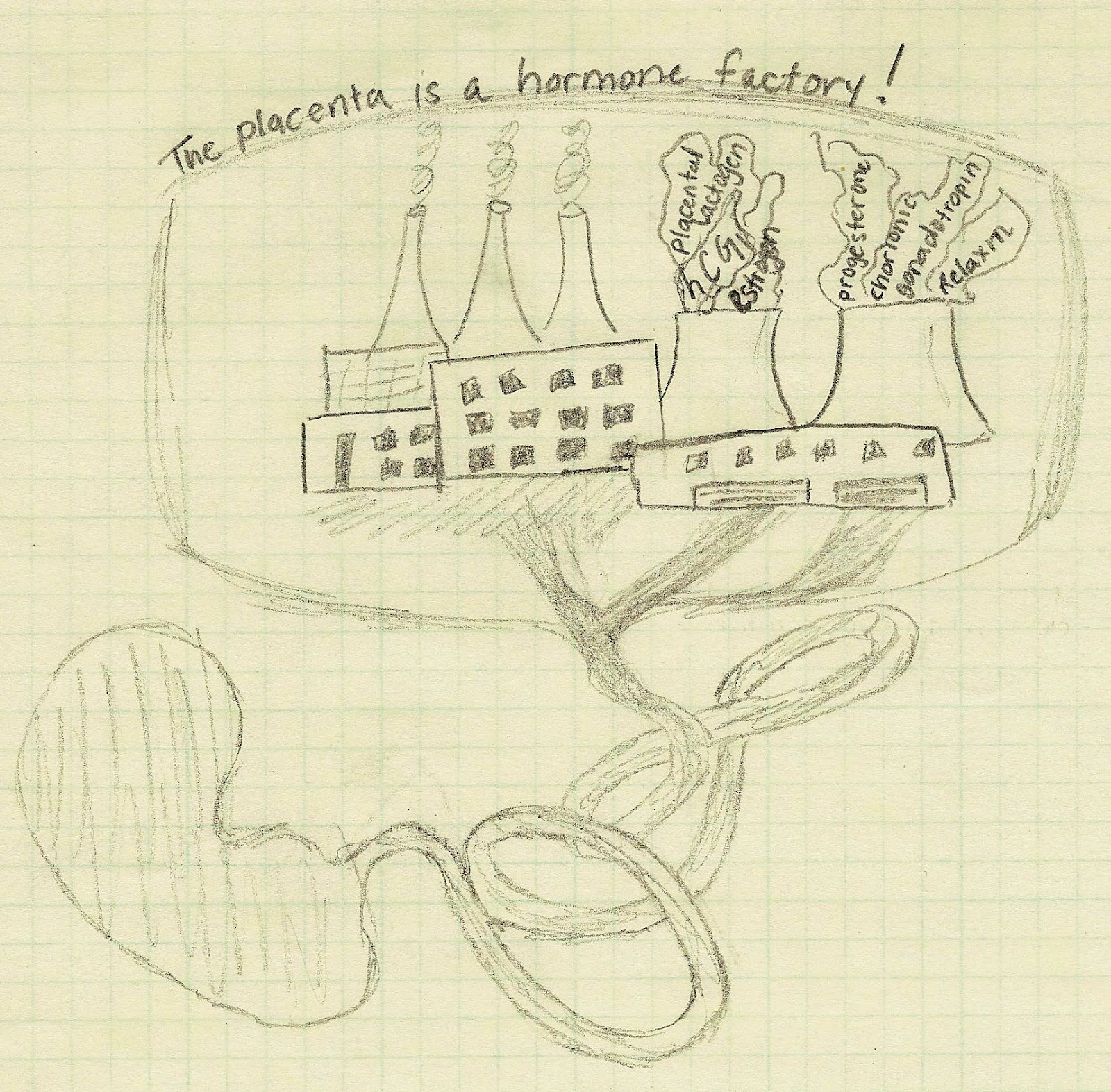
But it’s not just about nutrition and waste. The placenta also serves as a hormone factory, making and secreting biological chemicals to help sustain the pregnancy. I mentioned above that the placenta produces hCG, which pretty much serves as a master regulator for pregnancy in that it helps control the production of maternally produced hormones, estrogen and progesterone. It also helps to suppress the mother’s immunological response to the placenta (along with other factors), which cloaks the growing baby, thereby hiding it from being viewed as a “foreign” invader (like a virus or bacteria).

Another hormone produced by the placenta is human placental lactogen (hPL), which tells the mother to increase her mammary tissue. This helps mom prepare for nursing her baby once it’s born, and is the primary reason why our boobs tend to get bigger when we are pregnant. (Yay for big boobies, but my question is, what the hell transforms our rear ends into giant double cheeseburgers, and what biological purpose does that serve?? But I digress…)

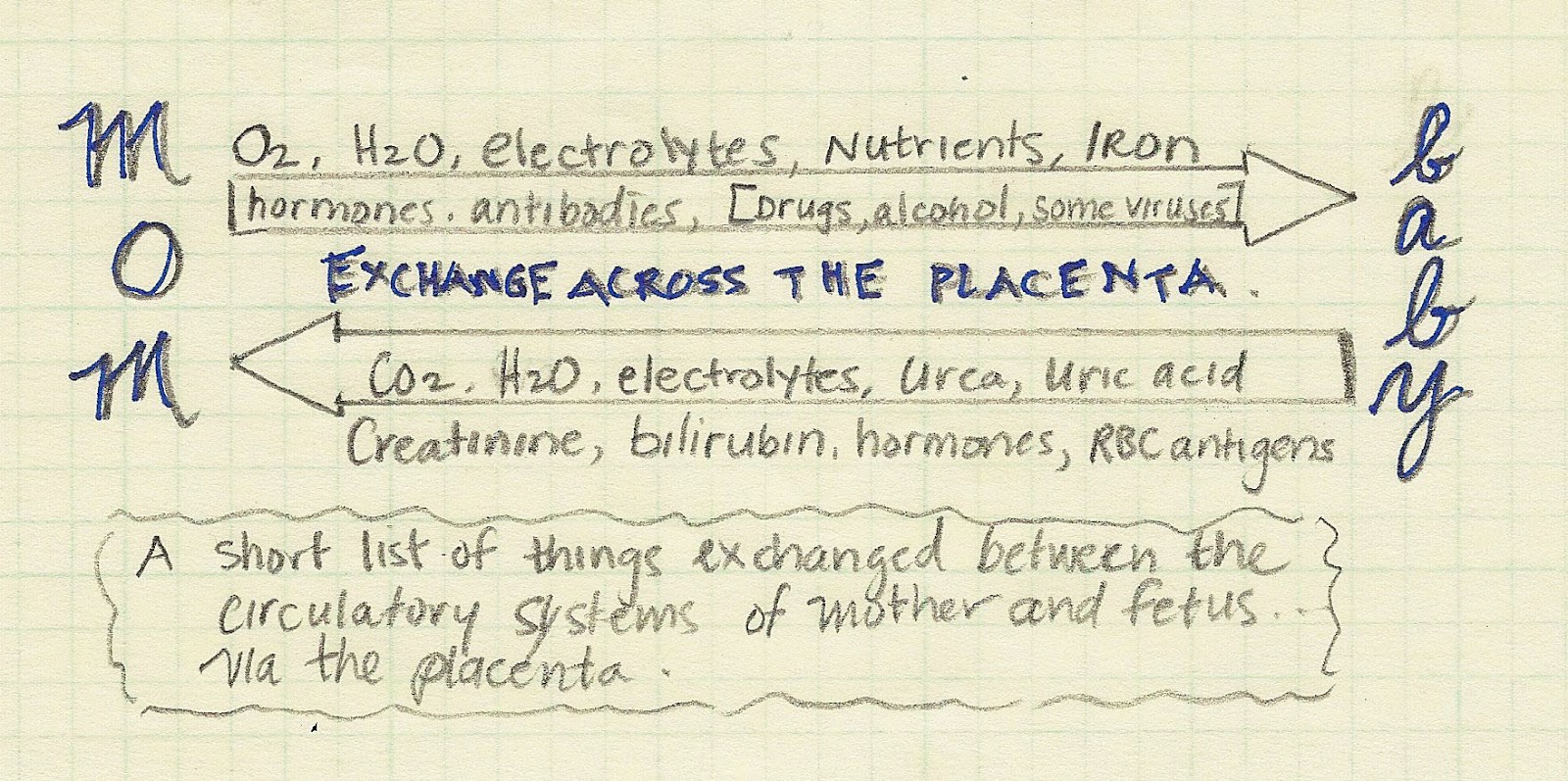
Despite the fact that the mother’s circulatory system remains separate from the baby’s circulatory system, there are a clear mixing of metabolic products (nutrients, waste, hormones, etc). In essence, if it is in mom’s blood stream, it will very likely pass into baby’s blood stream. This is the very reason that pregnant mothers are strongly advised to stay away from cigarettes, drugs, alcohol, and other toxic chemicals, all of which can easily pass through the placental barrier lying between mother and fetus. When moms do not heed this warning, the consequences can be devastating to the developing fetus, potentially leading to birth defects or even miscarriage.

There are also situations that could compromise the functions of the placenta – restriction of blood supply, loss of placental tissue, muted placental growth, just to name a few – reducing the chances of getting and/or staying pregnant. This placental insufficiency is generally accompanied by slow growth of the uterus, low rate of weight gain, and most importantly, reduced fetal growth.

And it’s not just the growth of the placenta that is important – where the placenta attaches to the uterus is also very important. When the placenta grows on top of the opening of the birth canal, the chances for a normal, vaginal birth are obliterated. This condition, known as placenta previa, is actually quite dangerous and can cuase severe bleeding in the third trimester. 0.5% of all women experience this, and it is one of the true medical conditions that absolutely requires a C-section.

Then, there is the issue of attachment. If the placenta doesn’t attach well to the uterus, it could end up peeling away from the uterine wall, which can cause vaginal bleeding, as well as deprive the baby from nutrient delivery and waste disposal. This abruption of the placenta is complicated by the use of drugs, smoking, blood clotting disorders, high blood pressure, or if the mother has diabetes or a history of placental abruption.

Conversely, there are times when the blood vessels originating from the placenta implant too deeply into the uterus, which can lead to a placenta accreta. If this occurs, the mother generally delivers via C-section, followed by a complete hysterectomy.

Cultural norms and the placenta

There are many instances where the placenta plays a huge role in the culture of a society. For instance, both the Maori people of New Zealand and the Navajopeople of Southwestern US will bury the placenta. There is also some folklore associated with the placenta, and several societies believe that it is alive, pehaps serving as a friend for the baby. But the tradition that seems to be making it’s way into the granola culture of the US is one that can be traced back to traditional Chinese practices: eating the placenta.

Placentophagy, or eating one’s own placenta, is very common among a variety of mammalian species. Biologically speaking, it is thought that animals that eat their own placenta do so to hide fresh births from predators, thereby increasing the chances of their babies’ survival. Others have suggested that eating the nutrient-rich placenta helps mothers to recover after giving birth.

However, these days, a growing number of new mothers are opting to ingest that which left their own body (likely) through their own vaginas. And they are doing so though a very expensive process involving dehydrating and encapsulating placental tissue.

Why would one go through this process? The claims are that placentophagy will help ward of post partum depression, increase the supply of milk in a lactating mother, and even slow down the ageing process. But, alas, these are some pretty bold claims that are substantiated only by anecdata, and not actual science (see this).

So, even though my placentas looked like meatloaf, there was no way I was eating them. If you are considering this, I’d approach the issue with great skepticism. There are many a people who will take advantage of maternal vulnerabilities in the name of cold hard cash. And, always remember, if the claims sound to good to be true, they probably are!


Thanks for tuning into this issue of Pregnancy101, and enjoy this hat, and a video!

Source


Shmeat and Potatoes: The dinner of the future?

By Jeanne Garbarino, Biology Editor


(Source)

“Meatloaf, beatloaf, double s[h]meatloaf…” Was little Randy on to something?
Food engineering has been on an incredibly strange journey, but there is none stranger (at least to me) than the concept of in vitro meat. Colloquially referred to as “shmeat,” a term born out of mashing up the phrase “sheets of meat,” in vitro meat may be available in our grocer’s refrigerator section in just a few years. But how exactly is shmeat produced and how does it compare to, you know, that which is derived from actual animals? Here, I hope to shed some light on this petri dish to kitchen dish phenomenon.

The shmeaty deets

When it comes to producing shmeat, scientists are taking advantage the extensive cell culture technologies that have been developed over the course of the 20th century (for a brief history of these developments, check this out). Because of what we have learned, we can easily determine the conditions under which cells grow best, and swiftly turn a few cells into a few million cells. However, things can get a little tricky when growing complex, three-dimensional tissues like steak or boneless chicken breast.

(Source)

For instance, lets consider a living, breathing cow. Most people seem to enjoy fancy cuts like beef tenderloin, which, before the butcher gets to it, is located near the back of the cow. In order for that meat to be nice and juicy, it needs to have enough nutrients and oxygen to grow. In addition, muscles (in this case, the tenderloin) need stimulation, and in the cow (and us too!) that is achieved by flexing and relaxing.

If shmeat is to be successfully engineered, scientists need to replicate all of the complexities that occur during the normal life of an actual animal. While the technology for making shmeat is still being optimized, the components involved in this meat-making scheme successfully address many of the major issues with growing whole tissues in a laboratory.

The first step in culturing meat is to get some muscle cells from an animal. Because cells divide as they grow, a single animal could, in theory, provide enough cells to make meat for many, many people – and for a long period of time. However, the major hurdle is creating a three-dimensional tissue, you know, something that would actually resemble a steak.

Normally, cells will grow in a single layer on a petri dish, with a thickness that can only be measured by using a microscope. Obviously that serving size would not be very satisfying. In order to create that delicious three-dimensional look, feel, and taste, and be substantial enough to count as a meal, scientists have developed a way to grow the muscle cells on scaffold made of natural and edible material. As sheets of cells grow on these scaffolds, they are laid on top of each other to bulk up the shmeat (hence “sheets of meat”). But, in order for the cells on the inside of this 3D mass to grow as well as the cells on the outside, there has to be an sufficient way to deliver nutrients and oxygen to all cells.

Back to the tenderloin – when it is still in the cow, the cells that make up this piece of meat are in close contact to a series of veins, arteries, and capillaries. Termed vasculature, this system allows for the cells to obtain nutrients and oxygen, while simultaneously allowing cells to dump any waste into the blood stream. There are some suggestionsthat the shmeat can be vascularized (grown such that a network of blood vessels are formed); however, the nutrient delivery system most widely used at this point is something called a bioreactor.

A Bioreactor (Source)

This contraption is designed to support biologically active materials and how it works is actually quite cool. The cells are placed in the cylindrical bioreactor, which spins at a rate that balances multiple physical forces, which keep the entire cell mass fully submerged in liquid growth medium at all times. This growth medium is constantly refreshed, ensuring that the cells are always supplied with a maximum level of growth factors. In essence, the shmeat is kept in a perpetual free fall state while it grows.

But there is one last piece to the meat-growing puzzle, and that is regular exercise. If we look at meat on a purely biological level, we would see that it is just a series of cells arranged to form muscle tissue. Without regular stimulation, muscles will waste away (atrophy). Clearly, wasting shmeat would not be very efficient (or tasty). So, shmeat engineers have reduced the basic biological process involved with muscle stimulationto the most basic components – mechanical contraction and electrical stimulation. Though mechanical contraction (the controlled stretching and relaxing of the growing muscle fibers) has been shown to be effective, it is not exactly feasible on a large scale. Electrical stimulation – the process of administering regular electrical pulses to the cells – is actually more effective than mechanical contraction and can be widely performed. Therefore, it seems to be a more viable option for shmeat production.

Why in the world would we grow meat in a petri dish?

Grill it, braise it, broil it, roast it – as long as it tastes good, most people don’t usually question the origins of their meat. Doing so could easily make one think twice about what they are eating. Traditionally speaking, every slab of meat begins with a live animal – cow, pig, lamb, poultry (yes, despite what my grandmother says, this vegetarian does consider chicken to be meat) – with each animal only being able to provide a finite number of servings. While shmeat does ultimately begin with a live animal, only a few muscle, fat, and other cells are required.

Given the theoretical amount that can be produced with just a few cells, the efficiency of traditional meat-generating farms and slaughterhouses is becoming increasingly scrutinized. There are obvious costs – economic, agricultural, environmental – that are associated with livestock, and it has been proposed(article behind dumb pay wall, grrrr….) that shmeat engineering would substantially cut these costs. For instance, it has been projected that shmeat production could use up to 45% less energy, compared to traditional farming methods. Furthermore, relative to the current meat production process, culturing shmeat would use 99% less land, 82-96% less water, and would significantly reduce the amount of greenhouse gasesproduced.

The impact of shmeat compared to tradtional agricultural processes.
(Environ. Sci. Technol., 2011, 45 (14), pp 6117–6123)

But the potential benefits of making the shift toward shmeat (as opposed to meat) doesn’t stop with its positive environmental impact. From a nutritional standpoint, it is possible to produce shmeat in a way that would significantly reduce the amount of saturated fat it contains. Additionally, there are technologies that would allow shmeat to be enriched with heart-healthy omega-3 fats, as well as other types of polyunsaturated fats. In essence, shmeat could possibly help combat our growing obesity epidemic, as well as the associated illnesses such as diabetes and heart disease. That’s *if* it can be produced in a way that is both affordable and widely available (more on that in a bit).

In terms of health, switching to shmeat would improve more than our waistlines. Because shmeat would be produced in a sterile environment, the incidence of E. coli and other bacterial and/or viral contamination would be next to nothing relative to current meat production methods. On a more superficial level, shmeat technology would allow for the introduction of some very exotic meats into the mainstream. Because this technology does not require an animal to be slaughtered (another good reason that supports shmeat productions) and it is not limited to the more common sources of meat, it would be entirely possible to make things like panda sausage and crocodile burgers. But, of course, getting people to actually eat meat grown in a test-tube is another issue…

The limitations of shmeat

Now that I’ve just spent a few paragraphs singing shmeat’s praises, it is probably best that I fill you in on some of the major roadblocks associated with shmeat production. According to scientists, there are two main concerns: the first is that shmeat production will not be subjected to the normal regulatory (homeostatic) mechanisms that naturally occur in animals (scientists are having trouble figuring out how to replicate these processes); and the second is that shmeat engineering technology has not evolved enough so that it can occur on an industrial scale. Because of these issues and others, the cost of culturing shmeat in the laboratory is very high. But, there has always got to be a starting point. As the technologies advance, the cost-production ratios will decrease and, eventually, shmeat will find its way to the dining table – our dining table.

Interestingly, the folks at PETA are all for shmeat and offered a one million dollar prize to the first group who could come up with the technology to make shmeat commercially available by June, 2012. Obviously, that did not happen, and the contest has been extended to January 2013 (this offer has been on the table since 2008). But, the first tastes test for shmeat hamburgers is going down in October of this year.

At the moment, the largest piece of shmeat to be created is about the size of a contact lens and my guess is that, barring unforeseen technological breakthroughs, this reward will go unclaimed for a long, long time. But, many a miracle has been known to happen in about nine months time…

A few final thoughts on shmeat

With the world population expected to hit 9 billion by 2050, which will be accompanied by a major increase in the need for the amount of food produced, perhaps shmeat technology will become one of the critical innovations required for our collective survival on this planet. But, there is just one thing: the ick factor. It is a little hard for me to weigh in on this issue because almost all meat seems gross to me (unless it is a pulled pork sandwich, lovingly made by my long-time pal and professional chef – Julie Hall). While most of my peers have less of an aversion to meat, I can’t imagine that they would eagerly line up for a whopping serving of lab-grown shmeat.

But, say scientists finally figure it out and shmeat production is scaled up for mass consumption – how will the agricultural sector react? As of right now, the agricultural industry in the USA is worth over $70 billion, with a yearly beef consumptiontipping over the 26 million pound mark (of which 8.7% is exported). Shmeat probably has definitely gotten the attention of cattle farmers (and other meat farmers/production companies) and, given the size of this industry, I wonder how much muscle will be used to block shmeat from becoming a household phenomenon.

Over all, I think that shmeat is a revolutionary idea as it could have a significant impact on humanity. However, there are many complex questions that need to be both asked andanswered. As excited as I am at the thought of not having to kill an animal to eat a steak, I still remain skeptical (though this sentiment may not have been fully present for the majority of this post). Will shmeat be produced in such a way that it will be indistinguishable from traditional meat? Additionally, will shmeat live up to all of these expectations? I am going to try and keep a positive outlook with this one. Perhaps the next time I actually step foot in a kitchen to prepare a meal, I’ll follow Randy’s lead by making a shmeatloaf, served alongside a heaping side of mashed potatoes. Now that’s some pretty cool kitchen science.

And now, an oldie but a goodie (let it be known that I am in love with Stephen Colbert):

The Colbert Report Mon – Thurs 11:30pm / 10:30c
World of Nahlej – Shmeat
www.colbertnation.com
Colbert Report Full Episodes Political Humor & Satire Blog Video Archive

For more information:
The Brian Lehrer Show, Shmeat: It’s whats for dinner