About Emily

Emily, co-founder and editor in chief of DoubleXScience, is an editor and a research scientist whose investigations involve sex determination/differentiation and developmental endocrinology, toxicology, genetics, and physiology. She also is the ambigendered partner of a Viking and the mother of three very interesting sons.

Watch this space

Next week, we have big things coming up. First, our new site rollout, complete with a great new look, great new motto, and a great kickoff post from the fabulous Scicurious. After that opening salvo, next Friday, we’re kicking off our series, “I Am Mental Illness,” with first-person accounts from people describing their experiences having a mental illness.

So be sure to check in with us next week and let us know what you think! We’re excited to be the only outlet dedicated to bringing evidence-based science news and essays to women, and we hope you like the new and improved Double X Science, made possible thanks to a generous grant from the National Association of Science Writers.

Bad flu season in full swing, but flu shot still helpful
Bad flu season in full swing, but flu shot still helpful

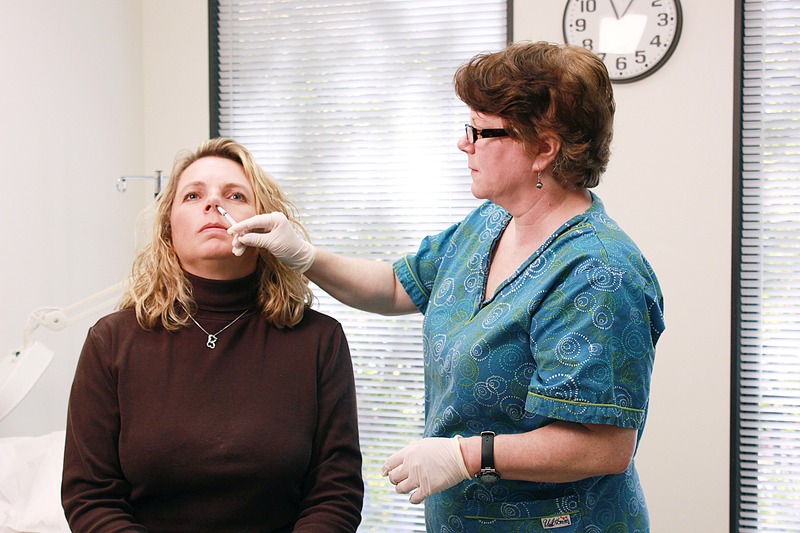
Source: Wikimedia Commons; credit: CDC.

The flu season that is unfolding is a killer, with influenza having already taken dozens of lives across the United States. Deaths from flu during the flu seasons are actually the norm, ranging from 3000 to 50,000 annually, but this year’s outbreak arrived early and features a strain that is infamous for its virulence. Forty-four states now have met the cutoff for “widespread” flu activity as of this writing, and in hotspots like Boston, MA, cases are 10 times the number from the same time last year. In many areas, hospitals have taken to setting up temporary tent shelters outside the buildings to manage the flood of cases and prevent spread inside the facility. ETA: This USA Today article gives an overview of how clinicians are experiencing this outbreak on the ground. [Update: As of 1/18/13, a total of 48 states are now at widespread status, and 29 children have died. Forty percent of hospitalized children have had no known underlying medical conditions.]

Public health officials from the US Food and Drug Administration and the Centers for Disease Control and Prevention(CDC) are urging people who have not gotten their flu shots to do so, saying that there is still time for the vaccination to work for you against the flu. The most vulnerable population is children, and 18 children have already died in the United States during this year’s season. According to reports, far less than half of the eligible population in the US has gotten a flu vaccination.

People express reluctance to get the flu vaccine for several reasons. Among them are fears that the vaccine contains mercury as part of a preservative, thimerosal, that has been used for years in various immunizations, although it’s been removed from many. For the flu, only vaccines from multidose vials contain this preservative, which is needed to protect the contents from contamination when the vials are opened for repeated use. Single-dose shots and the inhaled Flu Mist do not contain this preservative, which an abundance of studies have shown does not cause harm despite diligent efforts from anti-vaccine organizations to argue otherwise. For more information about this preservative in multidose vials of flu vaccines, the CDC offers a Q&A.

Another source of reluctance is the fact that the flu vaccine, like several other vaccines-or indeed, having the infection itself-is not 100% protective against the illness. In fact, it appears to be about 60% effective in preventing illness, although those who have been vaccinated and do fall ill with the strain included in the vaccine might experience less intense symptoms. The CDC also offers a Q&A addressing why some people who have been vaccinated still catch the flu. My personal feeling is that I’d rather give my children that 60% chance in a rampant flu season with a virulent strain that’s hospitalized tens of thousands than give them no protection at all. Any number of interventions don’t carry a 100% guarantee of effectiveness, but they certainly enhance the favorable odds. My children and I all received the Flu Mist vaccine back in October. ETA: A recent report found that different forms of the vaccine have different levels of effectiveness in different age groups and that the vaccines and vaccine program require improvement. For more information about the report, which concluded as we’ve written here that flu vaccines offer moderate protection and have a good safety profile, please see this post by an epidemiologist.

People also forgo a shot because they think that only people in poor health or with pre-existing conditions are susceptible to the most dreaded outcomes with flu: hospitalization and death. That’s not actually the case. “Influenza” is the name we give to the highly variable viruses that play games of genetic mix-and-match in different species, with results that are unpredictable and rapidly changing. No one’s previous experience with flu will necessarily be predictive of later experiences with the virus. Some flu strains do hit certain populations with specific existing health problems, but other strains kill the young and healthy preferentially. And whether or not you yourself are in perfect health, if you get the flu, you risk passing it along to someone who is not. ETA: For a personal look at who some of those people are, please see the Faces of Influenza site. Some people cannot get a flu shot for medical reasons, and anyone who has had a reaction to a vaccine should obviously consult with their medical professional about vaccines.

A final source of reluctance is that the flu vaccine each year is developed based on educated guesses. No one can predict with certainty which strains will gain the upper hand. As it happens, one strain in circulation this year falls outside of the vaccine target, but medical authorities report that so far, 91% of strains identified in circulation are targets of the vaccine. Because we are talking about influenza and several circulating strains, if you do not get a vaccination, it’s entirely possible for influenza viruses to hit you or your family hard more than once this flu season.

Bottom line? Without a vaccination, you’re 100% exposed no matter what your age, health, diet, exercise routine, or supplement intake. And if you get sick, you’ll endanger everyone you’ve been around and contaminate every place you’ve been. Flu carries innumerable potential and unpredictable outcomes, from complete recovery to death, and hospitalizations this year are extremely high. People with a genuine case of influenza end up floored for days, in body-wide pain, with high fevers and wracking coughs and a risk for pneumonia, hospitalization, and death, sometimes with unpredictable rapid progression. Even for those who don’t end up in the hospital, complete recovery from these deadly and unpredictable viruses typically takes weeks, meaning lost school, lost productivity, lost work, lost wages. Meanwhile, the vaccine cost ranges from free to about 20-40 bucks at various pharmacies.

Here is a basic video explaining some of the complexities of the flu vaccine and its success rate:

The opinions expressed in this article do not necessarily reflect or conflict with those of the DXS editorial team or contributors.

2013 is our year

2013

Watch this space as we bring you an updated and upgraded Double X Science packed with evidenced-based information for the woman in you. If you’re a science writer with a good story idea that fits our mission, please check out our Submissions page for information about pitching. Thanks to a grant from the National Association of Science Writers, we can pay writers competitive rates for online articles.
 
We are currently developing an ongoing personal essay series, “I Am Mental Illness,” and you can find information about that series also on our Submissions page.
 
Like thinking folk everywhere who identify as female, we don’t want science and health information that’s puffed up and dumbed down and always dressed in pink and purple and haranging us about beauty problems we didn’t know we had. We want facts and depth and the fascinating, often surprising details about the world and universe around us. If you’ve got something you would like to see us cover at Double X Science, don’t hesitate to drop us a line or ask us a question.
 
Happy New Year from all of us on the Double X Science editorial team!

Why being a Nature editor is like riding the Knight Bus

 
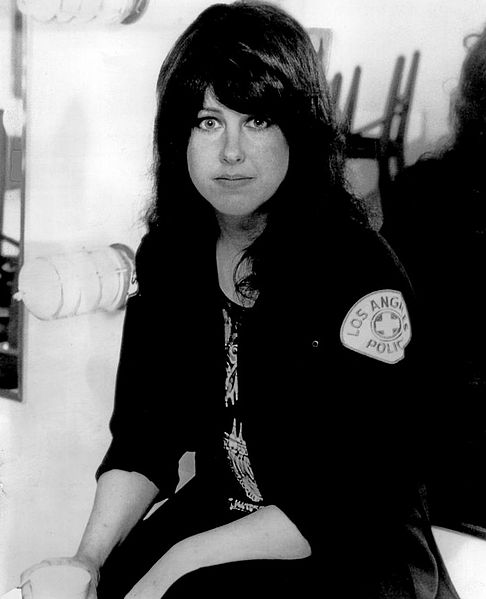
Have you seen a picture of our science education editor, Chris Gunter (above)? She looks kinda nice, doesn’t she? Would it surprise you to learn that once upon a time, she was viewed along the lines of the love child between a rock goddess and Darth Vader? Perhaps picture Grace Slick in a long black cape, glaring at you. Like this:
 
Via Wikimedia Commons.
Why was Chris such a badass? Because she was an editor at Nature, science’s toppest-tier journal, for almost seven years, dealing with submissions in the genetics/genomics side of things. You might be surprised to learn, as Chris relates in telling about her experiences at Story Collider, which features compelling stories about science, that what sounds like an intensely precise and technical field generated “mountains of drama.” In telling her tale, Chris likens her experience to riding the Knight Bus in Harry Potter, in which you’re never quite sure who your seat mate will be. She writes,

People ask me all the time what the job was like. The best analogy I’ve I found is riding the Knight Bus in Harry Potter. The Knight Bus is the magical transport full of crazy people and events, both amazingly good and scarily over the top. Similarly, I felt like I was on this magical transport that went to the wildest places, and every week I’d think, “There is absolutely no way we will get to our destination” of putting out a magazine. Yet, thanks in part to the skillful drivers on the editorial and production teams, every week we did arrive at the publication of an issue, and it was an exhilarating ride.

For more about Chris and her experiences on the Knight Bus … er, at Nature … read on over at Story Collider, where her story has been filed under “Stress.” For good reason.


A behind-the-scenes look at the fungal meningitis outbreak

Center for Disease Control and Prevention’s tabulation of
fungal meningitis cases and related deaths as of 12/3/12.
Watching the meningitis outbreak unfold has been watching a tragedy in the making. As of this writing, 541 people in the United States have developed the disease, and 36 of them have died. The source of the outbreak was fungus-contaminated injections of an immunosuppressant steroid from a compounding pharmacy. The compound used in the injections was preservative free, which appears to have allowed the contamination to occur. The unfolding story has led to closer scrutiny of compounding pharmacies and their practices, but that comes too late for the outbreak victims.


Meningitis is an inflammation of the meninges, the membranes encompassing the brain and spinal cord. Bacterial meningitis is highly infectious, but this fungal form arises from the spinal injections with the contaminated steroid preparation rather than person-to-person infection. To add to the anxiety for people who received spinal steroid injections in recent months, the infection can take weeks to manifest. And while death is obviously the worst outcome, as Superbug author Maryn McKenna discovered in her insider’s eye-view look at how the outbreak unfolded, people who survive this meningitis still have a long, unpredictable, costly, and painful recovery ahead of them.


McKenna storified a briefing from the Center for Disease Control and Prevention’s Dr. John Jernigan, who directs the CDC’s Office of Health Associated Infections Prevention Research and Evaluation. He’s the person who’s been overseeing the meningitis investigation, which involves tracking not only the source of the outbreak but where it started, where new cases are arising, and the clinical outcome of each case.

In her preface to the storify, McKenna notes:

But what struck me, in Jernigan’s description of this outbreak, is that this story will continue long after most of the reporters covering it have moved on to other issues. These patients, it turns out, are facing unusually lengthy, high-dose, toxic and expensive treatment, with uncertain odds of success. Months after the injections were delivered, he said, it isn’t possible to say that any of these patents are cured; in fact, at this point, no one can say just how “cure” will be defined.
For more about what McKenna learned regarding what the meningitis survivors face, read the complete storify here.

Emily Willingham, DXS managing editor

Tracing the taming of the turkey

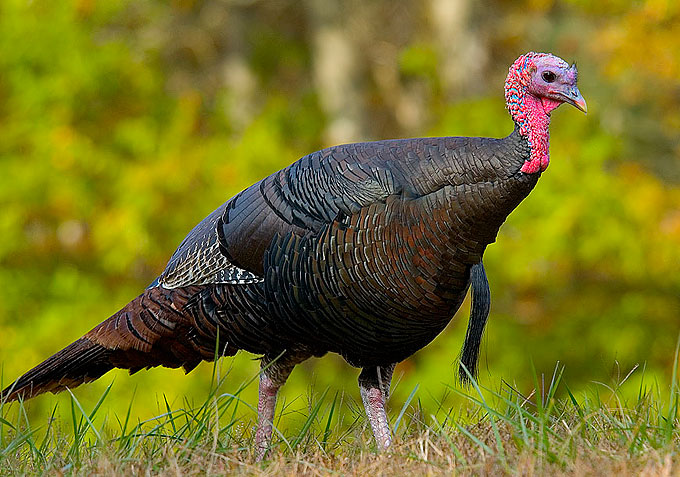
That turkey on your table probably was genetically distinct from this
wild turkey. Via Wikimedia Commons.

by Emily Willingham, DXS managing editor

The turkey doesn’t get a lot of respect. We mock its gobble, eat it for major holidays, and use its name as an epithet. Yet, Benjamin Franklin at least privately thought the bird was noble enough to be nominated as the national bird—clearly, the bald eagle won out there—and the lowly gobbler has a long and illustrious secret history that researchers are just now beginning to uncover.

Domestication of animals and plants do not make for gripping headlines, but such achievements represent major turning points in the evolution of human culture. With domestication came villages, then cities. With domestication, people had time to turn to less mission-critical activities, such as art. And the process of domestication itself makes for a fascinating study in species interactions. Think what it must have required to take wild turkeys or donkeys or pigs and assiduously, over the years, produce the relatively docile creatures we see today.

The turkey we belittle so offhandedly was so highly prized among indigenous Americans that it may not even have been used as food at first. But it did eventually become an important protein source for indigenous peoples, in addition to providing feathers and bones for ornamentation and other uses. Strangely enough, the turkey we eat today—the one that gets pardoned at the White House every Thanksgiving and serves as an icon of a U.S. holiday—isn’t even descended from the native turkeys of the Americas.

How did that happen? It all may have begun about 800 B.C.E. when indigenous Americans might have first domesticated the animal. Some research suggests that the event happened twice, a pattern of repeats that already has emerged with Old World domestications of sheep and pigs. One turkey breed achieved importance in South Mexico, where the native peoples domesticated the wild South Mexican turkey.

But the turkey also proved to be an important feature of native culture in what is now the southwestern U.S. Evidence from bones and fossilized excrement—coprolites—from archaeological digs in the area show that the turkey’s importance goes back at least 2000 years there, as well.

In addition, analysis of the mitochondrial DNA—which passes only from mother to offspring and accumulates mutations at a slow, predictable rate—yielded two unexpected finds. First, these birds did not make their way by trade from South Mexico to the American Southwest, as did other domesticated products like maize and beans. Instead, the indigenous peoples of the Southwest did their own domesticating, taking as their starting bird the Rio Grande/Eastern wild turkey. A bottleneck in the genetic history, indicating a severe reduction in numbers and genetic diversity, shows that the native peoples of the Southwest strongly selected for a specific breed of their domesticated bird. And then they propagated it for at least 1000 years.

You might think that the turkeys we eat today in the United States would be descendents of these Southwestern birds. They’re not. When Europeans showed up in the Americas, they grabbed a few of the birds and took them back to Europe, where they bred new strains. Meanwhile, in the American Southwest, the domesticated turkey faded away, replaced by other food stocks like sheep and chickens and wiped out by disease.

Today’s turkeys that appear on Thanksgiving tables, new research indicates, show a considerable lack of diversity in their genome sequence compared to DNA from South Mexican turkeys that were collected in 1899, even less than other domesticated food animals like pigs. So where did they come from? Genetic analysis indicates that they originated in the wild turkeys of South Mexico, but having been bred anew in Europe, they’re really a form of inbred European export with the name of a country (Turkey) that has nothing to do with their origins. They are, according to the new research, genetically distinct from their wild ancestors.

Benjamin Franklin was a wise man, but he couldn’t have known that he was proposing a European breed to represent his newborn nation. That said, the turkey still stands as one of the few native domesticated animals of the Americas as most of our other familiar domesticates originated somewhere else.

[Some of this post has appeared previously at The Biology Files and in Biology Digest.]

The opinions expressed here do not necessarily either conflict with or reflect those of the DXS editorial team or contributors.

We can’t stop preterm births. Can we do more for preterm babies?

Baby girl born at 26 weeks, 6 days of gestation,
weighing less than 2 pounds. Via Wikimedia Commons.
Credit: Chris Sternal-Johnson.
by Emily Willingham, DXS managing editor

Today, Carolyn S. Miles, president and CEO at Save the Children writes at the Huffington Post (ducks) about the latest findings regarding our ability to stop a preterm birth from happening. As anyone who’s given birth knows, it’s not easy to stop that process once it starts, and that persistent inability means devastating outcomes for some families. As Miles writes:

A new study out in The Lancet Continue reading
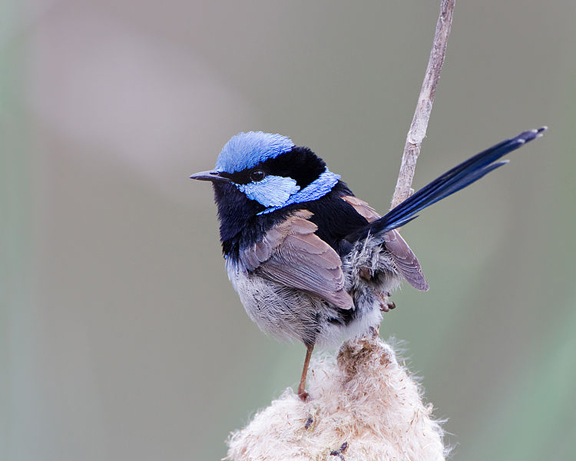
If you want your dinner, little fairy wren, sing the secret password!

By Tara Haelle, DXS contributor
[This post appeared previously at Red Wine and Applesauce.]
Magic words and passwords are fun – and good learning tools. We teach our children to say the “magic word” when they ask for something, and many of us teach our children a password to use with school pick-ups so they don’t go home with a stranger.
But there’s one bird species that one-ups us humans on special passwords – the superb fairy-wrens of southeastern Australia. Not only do they teach their chicks a special secret password note, but they do it before the chicks even hatch. And just like humans, they’re trying to keep the strangers away. These are the findings of Diane Colombelli-Négrel and her colleagues in a Nov. 8 study in Current Biology.
The superb fairy-wren of southeastern Australia. Photo by JJ Sullivan.
See, fairy-wrens are a bird species who are sometimes exploited by a “brood parasite.” Brood parasites are animals that use the parenting of a different species to save themselves all that energy of raising their young. It’s like having a baby and dropping it off in your neighbor’s bassinet to deal with to save you the trouble. In the case of superb fairy-wrens, the brood parasite is the Horsfield’s bronze cuckoo. Momma cuckoos lay their eggs in fairy-wren nests with the expectation that once the cuckoo chick hatches, he’ll reap the benefits of having a fairy-wren mother to feed and protect him.
But fairy-wrens have adapted to this evolutionary trick with a clever one of their own. A little more than halfway through their 14-day incubation, starting on day nine, fairy-wren mothers sing an “incubation song” while sitting on their eggs. Every four minutes, she sings a two-second tune, and the little growing chicks in her eggs are listening… and learning.
She sings daily until the eggs hatch five days later, and then the chicks do what any other newborn bird does: they beg for food. But their begging cries contain a single unique note pulled from their mother’s song. That note becomes a password letting the mother fairy-wren know that each of these chicks are really hers.
So what about the cuckoos? Well the mother cuckoos usually drop off their eggs just a few days before the fairy-wrens hatch – too late in the incubation period for the cuckoo chicks inside to learn the password note. When a cuckoo posing as a fairy-wren hatches, he doesn’t know the password of his fake step-brothers and sisters, so he doesn’t incorporate that single special note into his cries. And so the fairy-wren mother ignores him. In fact, when she notices there’s interloper in the nest, she and her mate will usually fly off and make a new nest elsewhere.
Colombelli-Negrel and her colleagues discovered this unique password adaptation through a series of cross-fostering experiments. They observed 15 fairy-wren nests during incubation periods, when they heard the mothers singing to their eggs. When they swapped eggs of fairy-wrens among the nests, the newly hatched chicks begged for food using the special note of the mother who incubated them, not the foster mother whose nest they hatched in. When the researchers played a loudspeaker under a nest with the wrong begging call, the mother fairy-wrens didn’t feed their chicks.
Fairy-wrens stick with their mates for life, so dad is involved in caring for the chicks as well. But often so are other males because even though the fairy-wrens are socially monogamous, they tend to have open marriages – both males and females will mate with others, and a clutch of eggs is often the result of different more than father.
The female fairy-wrens therefore make sure that dad and any other helpers know the secret password by singing them a “solicitation song” away from the nest. If dad or any other helpers are assisting with feeding, then, like mom, they only feed the chicks who sing the secret password.