Bladder to gut might be bacterial two-way street.
by Jeffrey M. Perkel Continue reading


Bladder to gut might be bacterial two-way street.
by Jeffrey M. Perkel Continue reading

Synthetic viruses could mean a faster flu vax.
by Carrie Arnold Continue reading

It could be Andrew Wakefield or a brain-hijacking microbe.
by Meredith Swett Walker
I’m a scientist, but I’ve learned that when we become parents, paranoia can trump the powers of rational analysis I’ve so carefully nurtured and developed. For some parents, media-whipped fears about vaccines take front and center in the anxiety lineup. For me, a brain-infecting microbe that makes mice hang around cats is at the top of my parenting paranoia list.
Parenting requires making many, many choices. Some seem inconsequential, like whether your child will wear overalls or sweatpants, pigtails or a pixie cut. But other choices have to do with health issues such as circumcision, immunization, and breast milk vs. formula – just a few in an endless list. For geeks like me, the first impulse is to research each issue, make a choice, and prepare an argument for anyone who questions the decision (and believe me, someone will.) My response usually goes something like this: “Well, recent studies have shown that yada yada yada…” Then I pat myself on the back for being so informed and making such a well-reasoned decision.
My process ran into trouble, though, when my relationship with a university and its online library access ended. What happens when you can’t get your hands on peer-reviewed scientific journal articles? One consolation should be that we live in the “Information Age.” Surely, Google, a fast internet connection, and an overwhelming flood of information should lead to what we need to make well-reasoned, science-based parenting choices. Surely.
Maybe not. A friend recently shared with me an article from the open-access (i.e., free) online journal PLoS: “Why Most Biomedical Findings Echoed by Newspapers Turn Out to be False: The Case of Attention Deficit Hyperactivity Disorder.” The gist is that the news media preferentially cover initial findings described in the most prominent scientific journals. The key word there is initial. No initial result is going to be the final word in science, and all results require confirmation from other researchers repeating or extending the experiments. Sadly, in practice, many of the follow-up studies don’t get published in the most prominent journals because they are not “a big scoop.” Yet they often show that the initial, Big Headline Finding was overblown or even incorrect.
That brings me to an example that really pushes my buttons — childhood immunizations. In 1998, Andrew Wakefield and colleagues published a study in the prominent British medical journal the Lancet. The paper examined a hypothesized association between the MMR (measles, mumps, rubella) vaccine and autism, but the authors used fairly moderate language in their conclusions. But then, Wakefield participated in a press conference about the paper and asserted in much stronger language that the MMR combined vaccine and autism were linked and that parents should turn to single shots for measles, mumps, and rubella. The news media ate it up.
The scientific community immediately pointed out a number of glaring flaws in the study, and subsequent investigations over the next decade failed to reproduce or confirm the results. But it was too late. The popular media and celebrities like Jenny McCarthy had already done the damage. Parents were terrified, vaccination rates dropped, and deadly measles and whooping cough outbreaks starting cropping up.
Yes, the news media covered subsequent studies reporting no link between vaccines and autism, but let’s face it: Science is slow, and news is fast. In the interval, scary information takes root. The Lancet retracted the article 12 years after its publication, and in 2011, British investigative journalist Brian Deer demonstrated that Wakefield actively falsified data. Still, to this day, vaccination rates have not fully recovered, and many parents remain misinformed and concerned about vaccinating their children. Indeed, the Wakefield debacle has been directly blamed for a huge and ongoing measles outbreak in Wales.
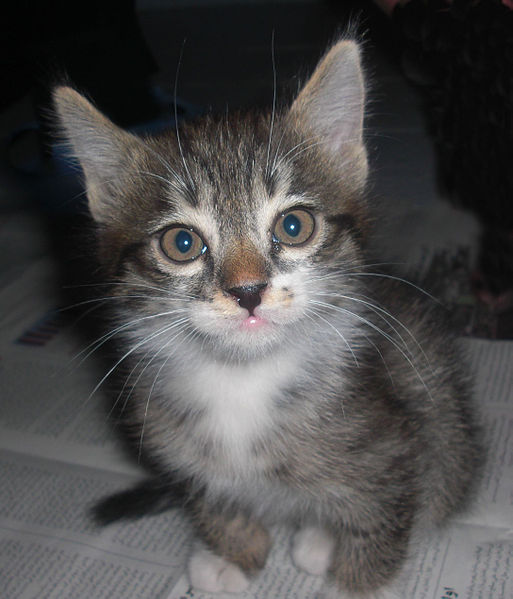
I could haz Toxoplasmodium in my poop, so be careful.
Admittedly, the MMR case is an extreme example but also a good one of how a single initial study and the ensuing media hysteria can have a huge effect on parents — and on children’s health.
And we all have our trigger points for fear. One (of the many) things in our family tree is schizophrenia. A member of our extended family developed schizophrenia as an adolescent and has never recovered. Schizophrenia can run in families, so my two children have up to a 4% chance of developing this disorder compared to the 1.1% chance of someone without close relatives who have it.
So along comes my March 2012 issue of The Atlantic featuring “How Your Cat Is Making You Crazy” by Kathleen MacAuliffe. I would have found this article fascinating even if schizophrenia weren’t a concern. Its subject is a parasite called Toxoplasmosis gondii, which usually cycles through two hosts: cats and rodents. Toxo, as I’ll call this beast, starts life as an egg in a cat, is pooped out, and then gets picked up by a new cat. How does it get into a new cat? Cats, unlike dogs, are pretty fastidious and don’t tend to eat or otherwise mess around with cat poop. So Toxo gets itself into a less fastidious but tasty morsel like a mouse, instead, making its way into the cat when the mouse becomes dinner.
That seems simple enough, but there’s more. Toxo infection ups the odds of a mouse–cat encounter by hijacking the mouse’s brain and changing its behavior. The mouse’s activity level increases (cats love to chase fast-moving objects), and the rodent might become less wary in exposed areas and even attracted to the smell of cats. Watch these videos, and you’ll see how the infected mice move faster and wander into unknown spaces, seemingly without fear, as you can see in this video and this one.
The trouble for humans is that we also can pick up Toxo through contact with cat poop or eating undercooked meat or unwashed veggies from a garden where cats poop. Becoming infected with Toxo during pregnancy can be very harmful to a fetus, so pregnant women have long been warned off cleaning kitty litter boxes. But healthy, non-pregnant adults infected with Toxo weren’t thought to experience any detrimental effects — until recently. According to MacAuliffe’s article, which focuses on the work of Czech biologist Jaroslav Flegr, Toxo might alter human behavior, too, in mouse-like ways, such as reducing fearfulness. In most people, these purported behavioral shifts are probably very subtle and unremarkable. But Flegr suggests that in some people, Toxo infection serves as the trigger for mental illness, including schizophrenia.
Schizophrenia likely develops because of interactions between genes and the environment. Having risk gene variants isn’t a guarantee a person will develop schizophrenia, and it can arise in people without those risk variants. The list of potential environmental triggers is long and includes childhood stress, prenatal undernutrition, drug abuse, and … infections with microbes like Toxo.
Reading this article set me off on a tear of worrying. We have a cat, but I wasn’t worried about her. She is an indoor cat (we love birds), and there is a very low incidence of Toxo infections in indoor cats. But we have outdoor cats and feral cats in our neighborhood. They sometimes hang out in our yard, where my kids like to play in the dirt and eat things out of the garden, including the dirt itself. Oh, poop.
I took to Google and researched cat traps and repellents and how to get kids to wash their hands. I laid awake at night for hours strategizing about how to keep my home and yard Toxo free. And then I realized, even if I managed to exclude all cats from my yard and the totally impossible feat of getting my children (ages 1 and 2) to wash their hands before they touched their faces or food every time, I was still doomed to failure. My kids would go to friend’s houses and play in their Toxo-infested yards. Or they might already have encountered Toxo anyway.
Toxo was something I couldn’t control, and I needed to let it go. At our next check-up, I talked to our pediatrician about it, who had never heard about the potential Toxo–schizophrenia link. She graciously concealed her “Oh, Lord, another parent with a loony theory” reaction and calmed me down. As she put it, my only real option to prevent Toxo infection was to never allow my children to play outdoors or in the dirt, and the detrimental effects of that were likely far greater than the risk of schizophrenia, Toxo or no Toxo.
And she also reminded me of what I already knew and should have remembered: These findings about Toxo are initial findings.
As a scientist, I know that the schizophrenia–Toxo link needs more study. A lot more study. As a parent, well … yeah. I still worry, and no lack of replication or confirmation is likely to stop me.
[Image credits: cat on this page by Sasan Geranmehr under Creative Commons 3.o license; mouse under same license.] Continue reading

Can depression be a matter of genetic fate?
by Siobhan Mitchell Continue reading

The points where our system could lose women needing care.
by Emily Willingham Continue reading
Can adult women make new oocytes?
by Sarah C.P. Williams
For decades, biology textbooks have stated this as fact: “Women are born with all the eggs, or oocytes they will ever have.”1 The assumption — which shapes research on infertility and developmental biology, as well as women’s mindsets about their biological clocks — is that as women age, they use up those reserves they are born with. With each menstrual cycle, egg by egg, the stockpile wears down.
But is it true that women can’t produce any new oocytes in their adult life? Over the past decade, some scientists have begun to question the long-held assumption, publishing evidence that they can isolate egg-producing stem cells from adult human ovaries.
Last week, biologist Allan Spradling of the Howard Hughes Medical Institute and Carnegie Institution for Science, cast a shadow over those findings with a new analysis of the ovaries of adult female mice, which have similar reproductive systems to humans. By his measures of new egg formation, which he has previously studied and characterized during fetal development, there were no signs of activity in the adults.
“Personally, I think it’s quite clear,” says Spradling. “All the evidence has always said this. When oocyte development is going on, you see cysts everywhere. When you look at adults, you don’t see any.”
An oocyte, or egg cell, surrounded by some supporting cells.
The new paper does little to change the direction of those researchers already pursuing the stem cells, though. Jonathan Tilly of Massachusetts General Hospital was among the first to publish evidence that mice and human females have adult germ-line stem cells that can make new eggs.
“There’s so much evidence now from so many labs that have purified these cells and worked with these cells,” says Tilly. “What I don’t find of value is to say these cells don’t exist.”
For now, the two sides remain fractured — Spradling sees weaknesses in the way Tilly and others have isolated cells from the ovaries and suspects that the properties of the cells could change when they’re outside the body. And Tilly proposes that Spradling’s new data could be interpreted in a different way that in fact supports the presence of stem cells.
For women hoping for a scientific breakthrough to treat infertility — or even those simply curious about how their own body works — a consensus on the answer would be nice. But the continued probing on both sides may be just as much a boon to women’s health. After all, it’s questions like these that drive science forward.
In his new study, Spradling labeled a spattering of cells in the ovaries of female mice with fluorescent markers to make them visible and watched them as the mice aged. If any labeled cells were egg-producing stem cells, he says, they would spread the fluorescence as they made clusters of new eggs.
“But you never see clusters,” Spradling says. “Not once.”
In the process of this study, though, Spradling made new observations about how egg cells develop into their final form in female mice, published in a second paper this month. As the precursor cells to eggs mature, they lump together into cysts, a phenomenon also seen in the flies that Spradling has spent decades studying. In flies, one cyst eventually forms one egg. But in the mice, he discovered, those cysts break apart and form multiple eggs.
“This actually leads us to propose a new mechanism for what determines the number of oocytes,” says Spradling. And, of course, that means a better understanding of reproductive biology.
On the side of those who are confident about the existence of adult ovarian stem cells, the field of fertility medicine could be revolutionized if the cells that Tilly has isolated from ovaries can form healthy egg cells that can be fertilized in vitro. These stem cells could also be a tool to study more basic questions on oocyte development and formation or a screening platform for fertility drugs. Tilly is confident enough in the research that he has founded a company, OvaScience, to pursue the commercial and clinical potential of isolating the stem cells.
“The value for the lay public is that we have a new tool in our arsenal,” says Tilly.
Spradling doesn’t argue that continued research in this area isn’t a good thing. “Scientific knowledge doesn’t just come from the proposal of ideas, but also from their rigorous tests,” he says. “I think the most powerful tool we have in medical science is basic research,” he adds, referencing research using cell and animal studies. Investigations of the basics of how and when oocytes form, he says, are the best way forward toward developing ways to improve egg cell formation or development and could even lead to infertility treatments.
So if it finds support from further studies, Spradling’s new work — which states bluntly right in its title that “Female mice lack adult germ-line stem cells” — needn’t be seen as bad news for those dreaming of a breakthrough in understanding fertility. Instead, whether or not egg stem cells end up having clinical value, it’s a step forward in advancing understanding about women’s reproductive biology.
As Spradling puts it: “You have a much better chance of actually helping someone with infertility if you know what the real biology is. Right now, we’re a ways from really understanding the full biology, but we’re making progress.”
1 Direct quote from the third edition of “Human Physiology: An Integrated Approach”, one published by Pearson Education in 2004 and used in medical school classes. Continue reading
Filial cannibalism: one way evolution can bite
by Jeanne Garbarino Continue reading

Mothers who rule in the animal kingdom.
by Jacquelyn Gill
On the second Sunday in May in the United States, mothers reign supreme, receiving tributes of breakfast in bed, hand-made cards, flowers, and obligatory long-distance phone calls. Meanwhile, for the rest of the animal kingdom, it’s just another day: eat, hunt, mate, birth, nest, migrate, defend, and rest.
Some go it alone, but others—like spotted hyenas and bison—live in groups with complex social structures, and moms are at the top, year-round. In a matriarchy, females hold central roles of leadership and power. This might sound like a nice change of pace for some of us, but most anthropologists now agree that there have likely been no true matriarchal human societies (in spite of popular books like The Chalice and the Blade). Instead, matriarchies are more likely to be found in the rest of the animal kingdom, from meerkats to mammoths. Here are a few examples:
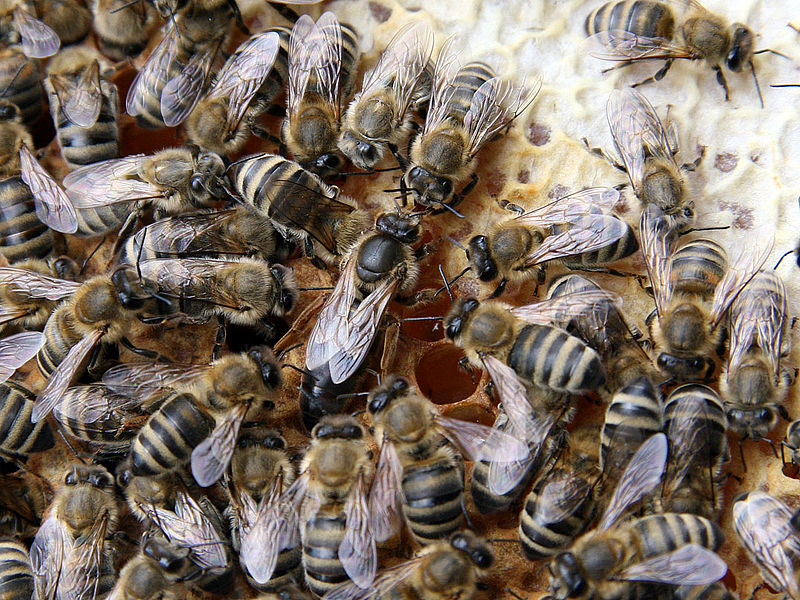
The Queen, surrounded by her supportive workers.
Honey bees: Bee colonies are giant matriarchal societies ruled by a single queen—quite literally the “queen mum.” Her offspring (as many as 25,000 at a time) make up the entire clan of female workers and male drones. The queen spends her life tended to by her worker daughters. These workers have underdeveloped reproductive systems, so the queen is the only female in the hive who gets to mate. The females do the work of the hive and tend to the queen while the male drones laze about until it’s time to mate with the queen. This setup might sound appealing at first, but it comes with a couple of important caveats. The Queen only mates once in her lifetime with a select handful of drones who were bred for that sole purpose (assuming they weren’t pushed out or killed by their worker sisters during tough times, when freeloading is less tolerated). During a series of nuptial flights, the queen gets all the sperm she’ll ever need for an entire lifetime—as many as five million individuals. She uses this sperm for to around 2500 eggs a day, which are tended to by her sterile daughters while she dines on royal jelly. The males get no reward for their service, but instead perish shortly after depositing their sperm, the unfortunate victims of an acute case of exploded abdomen.
Positives: Waited on hand-and-foot, low risk, low stress. Negatives: Once-in-a-lifetime mating, copious egg-laying.

Captivating and matriarchical: the meerkat.
Meerkats: Meerkat societies are highly structured, with a complex ranking system based on dominance. If you want to get ahead in the meerkat world, perfect the art of chin swiping and hip checking, practiced on those lower down the totem pole while someone more powerful than you is looking the other way. Being on top has its rewards; alpha female meerkats are the only ones who get to mate in meerkat town. A matriarch chooses her partner, who becomes the dominant (and only mating) male. Males initiate copulation by ritually grooming the female until she submits. If the matriarch tires of her partner, he’s quickly deposed by beta males who are more than eager to earn a chance at mating. Alpha females make all the decisions in the group: where to sleep, where to burrow, when to go outside, when to forage. Like bees, meerkat females are typically mother to all the pups in the group (females typically kill pups born of unsanctioned unions). In addition to being free to engage in mating, being a matriarchal meerkat comes with free baby-sitting and nursemaid service from the subordinate females (who also will lactate to feed her pups). The downside is that all the other females want your job; as they get older, the young females start hip-checking, stealing food, and even picking fights. Often, the alpha kicks young competitors out of the group before they get old enough to pose a threat.
Positives: Your clan, your rules; mate selection; ritual grooming; cooperative breeding. Negatives: High risk.
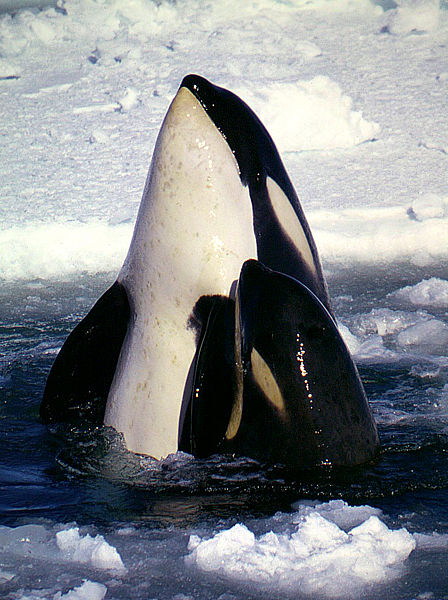
Cooperative and matriarchical.
Killer whales (orcas): Killer whales have some of the most complex social structures known in nature and are found in large resident groups (mostly fish eaters), smaller transient groups (seal hunters), or offshore groups (of which relatively little is known). Killer whale societies are entirely structured around the maternal line, in a hierarchy of groups. The smallest of these is the matriline, which contains the oldest female and her direct descendents—as many as four generations in one (great grand-whale, grand-whales, mama whales, and baby whales). Several matrilines together make a pod, and groups of pods with the same dialect and shared maternal lineage form a clan. For killer whales in resident groups, the young live with their mothers for the their entire lives, while in the smaller, transient groups, females tend to depart once they become mothers of their own. Meanwhile, male killer whales are mama’s boys, maintaining a strong relationship with their mothers for life. Even siblings remain close after their mother dies. Unlike bees or meerkats, all females can mate as they wish, although almost always only with males from other pods. These close-knit groups are important for successful hunting, as well as for rearing young that require a lot of parental investment (like humans do!). A killer whale’s female relatives assist her during labor, and even help guide her 400 lb calf to the surface to take its first breath. This cooperative behavior is a key part of teaching calves important life skills like the complex group hunting strategies similar to those that wolf packs use.
Positives: Strong family structure, cooperative breeding, matrilineal. Negatives: The kids never leave home.

Don’t let the tusks fool you: It’s a she, and she’s the boss.
Elephants: Female elephants live together in small family groups, typically consisting of a matriarch and her young or closest relatives. The oldest female elephant in each family group gets the job, and the position is passed down to her oldest daughter when she dies. Matriarchs have a lot of social power but are also the source of important lore in the herd, like where the water is, how to avoid predators, and even how to use various tools like makeshift fly-swatters. Meanwhile, males live bachelor lifestyles, fending for themselves alone or in small groups after getting kicked out at puberty. Male and female elephants occasionally come together to socialize or mate, but otherwise live separately. Unlike bees, meerkats, and killer whales, female elephants have a lot less control in the mating process. Fertile females are followed around by aggressive bulls who rumble, produce a musky scent that they disperse by flapping their ears, and fight off other interested parties. For young female elephants, this mating behavior can be a bit intimidating, and so her female relatives will often stay by her side to provide moral support. After a two-year pregnancy, a female will give birth to a calf, which quickly becomes the center of herd life, as female relatives caress and welcome the newborn. The perks of elephant motherhood include free babysitting and protection from predators; females will circle the young when they sense danger. In some Asian elephant populations, multiple families have even been observed coming together to form specialized groups for nursing or juvenile care, like a cooperative preschool.
Positives: Strong family ties, cooperative parenting. Negatives: Lack of mate control, two-year pregnancy (!).
Many different kinds of matriarchy exist in the animal kingdom, as do many kinds of moms. Whether you’re a queen or a worker, an alpha or a beta, a subdominant or a matriarch, Happy Mother’s Day to moms everywhere.
References
The Living Elephants: Evolutionary Ecology, Behavior, and Conservation, Raman Sukumar. Oxford University Press, Oxford, UK. Kalahari Meerkat Project, Cambridge University
Killer Whales: The Natural History and Genealogy of Orcinus Orca in British Columbia and Washington, Kenneth C. Ford, Graeme M. Ellis, & Kenneth C. Balcomb. University of British Comumbia Press, Vancouver.
WebBeePop, Carl Hayden Bee Research Center, USDA Agricultural Research Service
[Photo credits: all photos are from Wikipedia with Creative Commons with Attribution liceneses except for #3, which is Public Domain: (1) A queen bee surrounded by her worker daughters. Photo by Waugsberg. (2) A meerkat in the Kalahari. Photo by Muriel Gottrop. (3) A mother-calf killer whale pair. Photo by Robert Pitman. (4) A matriarchal elephant and her family. Photo by Amoghavarsha.] Continue reading

But it’s still a killer.
by Emily Willingham Continue reading

Or, what it might mean to swap spit with your baby
by Tara Haelle Continue reading