

Category Archives: Physics
The 2013 Flame Challenge Question: What is time?

By Biology Editor Jeanne Garbarino
Last year, Alan Alda presented scientists all over the globe with a challenge: explain what a flame is to an 11 year old. This was born out of his personal experience when, at age 11, he asked his teacher what a flame was and was given a one word, and completely incomprehensible answer, “oxidation.”
As a founding member of Stony Brook University’s Center for Communicating Science, Alda is committed to promoting better science communication from scientists. In an effort to enhance the dialogue between scientists and the general public in a fun and meaningful way, Alda initiated the first ever The Flame Challenge competition. Much to everyone’s surprise, this creative competition was a big hit, and over 800 entries were submitted (including mine!). Each entry was vetted for accuracy and then judged by entire classrooms of 11-year-olds located all over the world. The winner of the first Flame Challenge was a graduate student and father, Ben Ames, who presented the public with an incredible story and original music that thoroughly explained the concept of a flame.
Because of the success of last year’s Flame Challenge, Alda has set out to do it again. However, instead of asking the question himself, he crowdsourced the question from — you guessed it — actual 11-year-olds. “Last year’s contest question came from a real 11-year-old: me,” Alda said. “But when I asked what a flame was at the age of 11, I was probably younger in some ways than most 11-year-olds are now. They’re asking a very deep question this year. It’s going to be fun to see how scientists around the world answer that one in everyday language.”
According to the press release, the Center for Communicating Science collected about 300 questions from children, ranging from “Does the universe have a known end?” and “How does the brain store all that information?” to “Why are Shetland ponies so small?” But, once the votes were counted, there was one question that reigned supreme: What is time?
Scientists will have until March 1, 2013, to submit their answer, and this year, there will be winners selected from two categories: written and video/graphics. Once submitted, the explanations of time will be scrutinized by over 5,000 11-year-olds worldwide. The winning scientists will be rewarded with a trip to New York City and honored at a World Science Festival event on June 1, 2013.
For more information on entering or judging the contest, or to see last year’s top entries, please visit www.FlameChallenge.org.
If you are planning to enter, best of luck! I can’t say that this is an easy question, and I look forward to seeing all the wonderful answers come spring. Happy sciencing!
Ben Ames award winning explanation of a flame:
The Bright Crystal
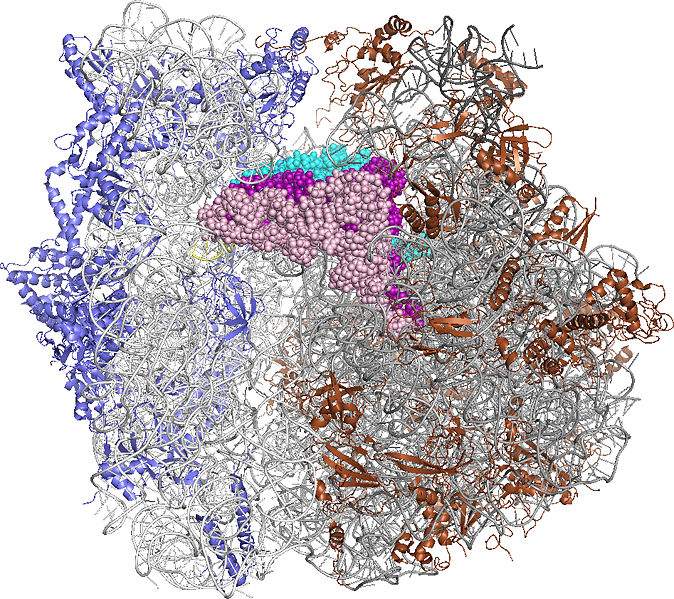 |
| The crazy-complicated structure of the ribosome, solved by x-ray crystallography (Source) |
Drug development used to be accomplished by the chemical equivalent of what you might call the spaghetti method: Throw a bunch of molecules against the wall and see what sticks. More recently, pharmaceutical companies have applied a more rational approach, using the molecular structures of drug targets to design molecules that “fit” them like a lock to a key.
The technique most often used to solve those molecular structures is x-ray crystallography. With this approach, which turned 100 years old in November, a high-powered beam of x-rays is shot at a crystal of protein molecules. The x-rays collide with the crystal’s atoms, scattering at specific angles. Working backwards from that information, researchers can figure out the original structure.
Over at Boing Boing, Maggie Koerth-Baker recently came up with a really fantastic analogy to explain this idea. X-ray crystallography, she wrote, is
… a method of determining the shape and structure of things that we can’t see with our own eyes. Imagine that you have captured Wonder Woman’s invisible airplane. You can’t see it. But you know it’s there because when you throw a rubber ball at the space, the ball bounces back to you. If you could throw enough rubber balls, from all different sides, and measure their trajectory and speed as they bounced back, you could probably get a pretty good idea of the shape of the plane.
 |
| (Source) |
Anyhoo, as the name of the technique implies, the key to crystallography is, well, crystals. But not all proteins crystallize, and even with those that do, it can be hard to grow crystals large enough for the technique to work.
Recently, though, a pair of technology developments have made it possible (in some cases) to work around these problems.
The first development was the commissioning in the past few years of ultra-bright x-ray sources in California (the Linac Coherent Light Source at Stanford) and Japan. These so-called “x-ray free electron lasers” (X-FELs) shoot incredibly bright, incredibly short x-ray pulses, pulses that are so intense that they destroy a sample in a fraction of a second, but not before the x-rays (which travel at the speed of light, natch) have bounced off of it.
The reason crystals are required in crystallography is that any one diffraction event is hard to see. The regularly spaced molecules inside a crystal amplify that relatively weak signal, simplifying detection and structure determination. As it turns out, the brighter an x-ray source, the smaller the crystal required to obtain such data has to be, and with X-FELs, the crystals can be very small indeed – on the order of millionths of a meter (micrometers) in size, and perhaps even smaller.
Which brings me to the second development. In the March issue of the journal Nature Methods, a team of researchers led by Michael Duszenko in Germany showed that some proteins that cannot crystallize in a test tube will crystallize inside insect cells. Protein chemists often use cells as molecular factories to obtain large quantities of protein. But the goal is to extract the protein from the cells, not have them crystalize inside of them. Generally speaking, protein crystallization inside cells is a bad thing, the kind of thing researchers really don’t want to see; Duszenko and his team are the first to capitalize on this so-called “in vivo crystallization” phenomenon.
The crystals Duszenko’s team collected are quite small, of course –- they fit inside cells, after all — and in that initial study, they were on the order of 1 micrometer wide and 15 micrometers long. But as it turns out, they are big enough for the X-FEL. In the March paper, the team showed that these crystals will diffract x-rays in the X-FEL, but they didn’t solve the resulting structure.
Now, in a paper published Nov. 29 in Science, they have. They did it by combining X-FEL and in vivo crystallization to solve the structure of a trypsanosomal enzyme called cathepsin-B, a potential drug target for African sleeping sickness.
The team sprayed a stream of tiny enzyme crystals (each about 1 x 1 x 11 micrometers) into the path of the X-FEL, which fired discrete pulses of x-ray, each just 40 femtoseconds, or 0.000000000000040 seconds long, 120 times per second. Every so often, one of those pulses would collide with a crystal, and a nearby camera would capture the event.
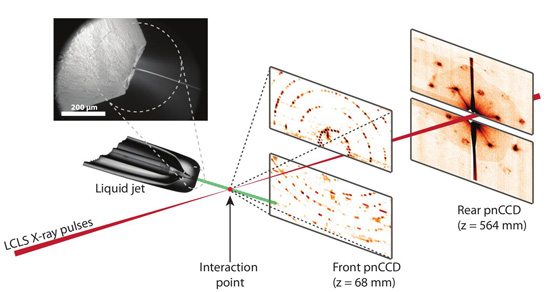 |
| Serial femtosecond crystallography (Source Continue reading |
A Few Modern Physicists
by Adrienne M. Roehrich, Chemistry Editor
In this edition of Notable Women in Science, I focus on women working in physics, typically traditional physics rather than astrophysics. There is no particular reason to make this distinction other than it allows me to choose a small group of women to highlight within a parameter set. These women are listed in no particular order.
Vera E. Kistiakowsky spent much of her career as a professor at MIT. Born in 1928, she received her A.B. from Mt. Holyoke College in 1948 and her Ph.D. from the University of California – Berkeley in 1952, both degrees in chemistry. Her chosen career stemmed from advice from her father to support herself and not depend on another person to support her. Her father was a respected physical chemistry professor at Harvard and his support in her chosen activities was instrumental to her success. She entered college at the age of 15, choosing a pre-med major. She changed to chemistry due to Mt. Holyoke’s extraordinary female faculty at the time. While her degrees are in chemistry, her studies and research were physics intensive. Graduating with her Ph.D. before her newly married husband hindered her initial job opportunities. She had several positions before eventually settling into a professorship at MIT. During her tenure at MIT, she was scientifically prolific with 86 technical publications as well as highly active in feminist activities, including organizing for the National Organization of Women (NOW), Women In Science and Engineering (WISE), the Association for Women in Science (AWIS), and an ad hoc committee in the American Physical Society (APS) on women physicists to name a few.
Helen Thom Edwards is recognized for her work with the Tevatron. She was born in 1936 and received both her B.A. and Ph.D. from Cornell University in 1957 and 1966, respectively. Her interest in science was outside that of her family’s interests, so she was used to paving her own way. Her technical and mechanical acumen served her well as a group leader at the Fermilab. Dr. Edwards is a team player and insists upon acknowledging the contributions of her colleagues in her and Fermilab’s success.
 |
| Vandana Shiva in 2008. |
[Edited, 11/26/12, 14:43 ET]: Vandana Shiva was trained in physics and the philosophy of science and now works as an environmentalist, achieving considerable global prominence. She was born in 1952 and, according to most sources, earned a B.A. in physics, a master’s in philosophy of science, and a Ph.D. in physics. When she began her training as a nuclear scientist, she encountered a hostile environment, which caused her to emigrate west. Her experiences led her to become a prominent (and extremely controversial) environmentalist and into the position of Director at the Research Foundation for Science, Technology and Natural Resources Policy in Dehradun, India. She writes books and publishes articles in the area of environmentalism. [ETA: As a commenter notes below, Shiva also has been embroiled in controversy and accused of taking an anti-scientific stance over her assertions about “terminator seeds.”]
| Ingrid Daubechies, 2005. |
Ingrid Daubechies is a physicist and a mathematician known for her work in wavelets.
Born in 1954, she received her B.S. and Ph.D. at Vrije University in Brussels in 1975 and 1980, respectively. Her interest in science and math was nurtured by her parents who also encouraged her independence. In 1984, she received the Louis Empain prize for physics for the work she accomplished before the age of 29. The prize was followed by tenure in her position at the Free University Brussels. She moved into a position at Rutgers and also worked at the AT&T Bell Laboratories. In 1992, she was awarded a MacArthur Foundation Fellowship followed by the Steele Prize from the American Mathematical Society in 1994. She has continued to receive honors and ovations to this day.
Janet M. Conrad researches neutrinos. She was born in 1963 and received her B.A. from Swarthmore College in 1985, her M.Sc. from Oxford University in 1987, and her Ph.D. from Harvard University in 1993. After a postdoctoral stint at Columbia University, she moved into a professor position there. In 2008, she moved to MIT. She has received many awards, including an NSF CAREER Award, an Alfred P. Sloan Research Fellow, and the Maria Goeppert-Mayer Award from the APS. She can be found involved in research and teaching at MIT, as well as communicating science to scientists and general audiences around the country.
Reka Albert blends cross and inter-disciplinary expertise. She received her B.S. and M.S. from the Babes-Bolyai University in Romania and her Ph.D. from the University of Notre Dame in 2001. After a postdoctoral position at the University of Minnesota, she joined the faculty at Pennsylvania State University, where she is currently a professor in the physics department. She has received several awards for her work, including a Sloan Research Foundation Fellowship, an NSF Career Award, and the Maria Goeppert-Mayer Award.
Louis Empain Prize is awarded every five years to a young Belgian scientists on the basis of work done before the age of 29.
MacArthur Foundation Fellowship is awarded to individuals who have shown extraordinary originality and dedication in their creative pursuits and a marked capacity for self-direction.
The Steele Prize is awarded for cumulative work of mathematical contribution to the field.
The NSF Career Award is a highly competitive grant awarded to early career scientists.
Alfred P. Sloan Fellowships are awarded to distinguished scholars with high potential for impact in their respective fields.
The Maria Goeppert-Mayer Award recognizes outstanding achievement by a woman physicist in the early years of her career.
The opinions expressed in this post do not necessarily agree or conflict with those of the DXS editorial team and contributors.
The Steele Prize is awarded for cumulative work of mathematical contribution to the field.
The NSF Career Award is a highly competitive grant awarded to early career scientists.
Alfred P. Sloan Fellowships are awarded to distinguished scholars with high potential for impact in their respective fields.
The Maria Goeppert-Mayer Award recognizes outstanding achievement by a woman physicist in the early years of her career.
The opinions expressed in this post do not necessarily agree or conflict with those of the DXS editorial team and contributors.
Frankenstorm: What is the role of climate change?
Sandy the Superstorm and her water vapor.
Video via NOAA; hat tip to Andrew Revkin.
[First, check out this hurricane crisis map Google developed, complete with updated information on the storm’s status and effects and even shelter location info.]
I’ve seen this question crop up a lot over the last few days-it’s a natural one, I’d think, given promises of more frequent extreme weather events in association with human-driven global climate shifts: What is the role of climate change, if any, in Sandy the Frankenstorm, currently bearing down and flooding the US northeast after having killed dozens in the Caribbean on her way to US shores?
I’ve seen this question crop up a lot over the last few days-it’s a natural one, I’d think, given promises of more frequent extreme weather events in association with human-driven global climate shifts: What is the role of climate change, if any, in Sandy the Frankenstorm, currently bearing down and flooding the US northeast after having killed dozens in the Caribbean on her way to US shores?
Lucky for people like me who couldn’t begin to answer this question, people like Andrew Revkin at the New York Times have gathered the resources for us. Of course, the first take-home is the usual one: Nothing is straightforward here. As Revkin writes:
While the echo of Frankenstein in that Twitter moniker can imply this is a human-created meteorological monster, it’s just not that simple.
He gets into the “not simple” parts of things and cites some data (with links!) and then has been providing useful and insightful updates from meteorological experts. What it comes down to is, Sure, there’s a littla the global climate change at play here-it’s happening and it’s global, so it’s going to have some influence. But also at play are typical or at least not-wildly-unimaginable variations of weather patterns that just happen to be converging right now, right there. So a single weather event is just an anecdote in the climate context and doesn’t necessarily stand as a reflection of an entire climate pattern. These patterns can emerge with warming or with cooling-and they have, over long time frames. Revkin writes:
But there remains far too much natural variability in the frequency and potency of rare and powerful storms — on time scales from decades to centuries — to go beyond pointing to this event being consistent with what’s projected on a human-heated planet.
In other words, this Frankstorm really is a monster built of parts-convergence of typical weather patterns and heavily populated places, roughly pieced together to some extent by human-driven climate change and animated on live radar. But Sandy the Frankenstorm is likely no more exemplary of the dire future some think it represents than poor Frankenstein’s monster himself was an exemplar of humanity.
By Emily Willingham
The opinions expressed in this post do not necessarily conflict with or represent those of the DXS editors or contributors.
———————————-
FYI: For updates on this sort of analysis and what’s happening with Sandy in real time, the folks at Boing Boing tweeted this list of recommended people to follow on Twitter.
Update 2:30 ET: Check out this beautiful, mesmerizing, and scary wind map, made with data on surface winds from a national database.
By Emily Willingham
The opinions expressed in this post do not necessarily conflict with or represent those of the DXS editors or contributors.
———————————-
FYI: For updates on this sort of analysis and what’s happening with Sandy in real time, the folks at Boing Boing tweeted this list of recommended people to follow on Twitter.
Update 2:30 ET: Check out this beautiful, mesmerizing, and scary wind map, made with data on surface winds from a national database.
As Seen on TV! Restoring Hair with LASERS!!!!!!
The author’s rapidly-expanding forehead. Anyone who watches TV, reads magazines, or flips through catalogs has seen some interesting products. Maybe they seem plausible to you, maybe they don’t. However, a little investigation shows they are based less on science and well…actually working, and more on wishful thinking. At worst they’re actual con-jobs, designed to separate you from your money as efficiently as possible (which I guess is a certain standard of success). As a result, we at Double X Science bring you “As Seen on TV!” In these features, we’ll look at some of the products shilled on talk shows and infomercials, items lurking between the articles you read in magazines, or things you might find on the shelves of the stores where you shop.
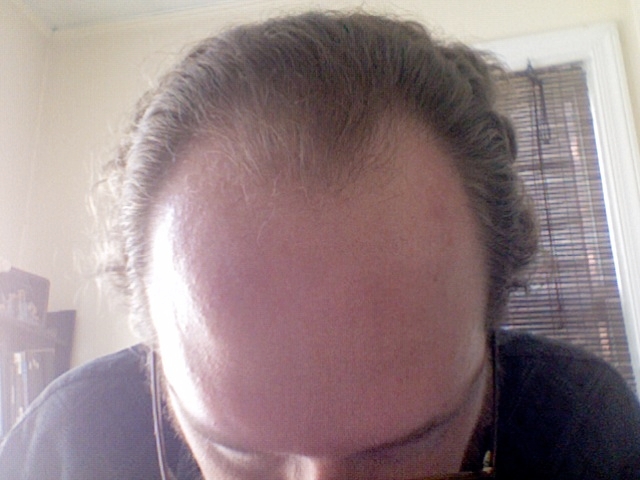
I admit it, I’m a balding dude. My forehead is gradually taking over my entire scalp, replacing my formerly thick and curly hair with a vast expanse of pink skin. Yes, dear readers: My hair was once so thick and curly that, when I wore it long and in a ponytail, ladies would ask me for my secret. (The answer: Wash it every other day with some brand of cheap shampoo and let it air dry. Don’t tell.) I don’t like the fact of my impending baldness, so I’m sympathetic toward defoliation-sufferers who want to bring their hair back at any cost.
On the other hand, I don’t think I’ll invest in any of the hair restoration products advertised in the SkyMall catalog I picked up on my flight to my brother’s wedding in San Francisco. I counted seven products in this single catalog promising to restore hair in one way or another, either reversing baldness or filling in thin patches on the scalp –- and that doesn’t include hair-coloring, extensions, or other options. I won’t cover all of them, but no fewer than three products pledge to bring hair back through the magic of lasers.
Ah, lasers. They may not have the mystique of magnets or the nous of “natural”, but they are a frequent ingredient in modern snake oil. (Come to think of it, one of the hair-restoration products may have contained snake oil. I don’t want to ask.) But while lasers can help correct nearsightedness in some cases, perform minimally invasive surgeries, and remove hair, color my scalp skeptical about their ability to restore hair.
First, a disclaimer: I’m not a biologist, a doctor, medical researcher, or in any field related to those. I’m a physicist, so the closest I ever get professionally to this topic is the “no-hair” theorem in black hole physics. The “no-hair” theorem says that black holes have very few distinguishing characteristics: only mass and rotational rate (and technically electric charge as well, though it’s hard to build up enough charge to make a difference). The analogy is that, if all humans were completely hairless, we would have a lot fewer ways to tell each other apart. In other words, this ain’t my area, so bear (bare) with me!
Night on Baldhead Mountain
Hair loss can occur for a wide variety of reasons: chemotherapy, a number of unrelated diseases, even stress. However, as humans (both men and women!) age, we all tend to lose our hair to some degree. The effect is most pronounced in male pattern baldness (a bare patch on the top of the head merging over time with the growing forehead to leave a fringe around the edges of the scalp) or female pattern baldness (a general loss of hair at the top of the scalp). However, past the age of 80, nearly everyone starts losing hair, regardless of genetics, diet, or health.
The reasons, as with so many other things, are hormonal. Hair production is governed by sex hormones: most famously testosterone, but also a less well-known cousin known as dihydrotestosterone (DHT). In some people, DHT commands the follicles — the small organs in the skin that produce and feed hair — to shrink, producing ever-finer hair until they cease operating entirely. Thus, gradual hair loss of the usual (as opposed to disease- or circumstance-derived) variety is generally preceded by the hair itself becoming thinner and fuzzier.
My naive understanding of the biology of hair loss leads me to suspect that since hormones are the culprit behind hair loss, then any hair restoration should address those hormones in some way. That alone makes me suspicious of the laser-based products SkyMall peddles. To see why, let’s look at lasers themselves.
Lasers (without sharks)
The word “laser” began as an acronym: Light Amplification by the Stimulated Emission of Radiation. The details could be an Everyday Science or Double Xplainer post in their own right, but here’s the short version. The lasers used in the SkyMall products are LED lasers, meaning they are based on the underlying physics as LED lights. An electric current kicks electrons or other electric charge carriers from one type of material to another across a junction. The excess energy the electric charge sheds during this process is given off in the form of a photon, a particle of light. Since the same amount of energy is involved every time, light from LEDs is nearly monochromatic, meaning it is almost purely one color.
The “amplification” part of the name comes by putting the LED into a special kind of cavity with reflective walls. These walls set up standing waves for the light, which interfere constructively like vibrations in a guitar string, making them brighter. However, unlike guitar strings, the production of the light in lasers is a self-feeding process, resulting in the different parts of the system synchronizing until they emit photons in concert with each other. It’s really interesting stuff, and while it’s somewhat complicated, there’s nothing really mysterious or magical about it, any more than magnets are magical.
In fact, LED lasers are so unmagical that you can buy them as cat toys. LED lasers are the inner workings of laser pointers, which you can buy very inexpensively at any number of shops.
The smell of frying follicles
 |
| One of three laser-based hair-restoration products from SkyMall. This one features built-in headphones, so you can at least listen to music while you sit around looking like a fool. However, I recommend a cheaper set of headphones, since the $700 price tag is a bit steep, and you’d get the same result with regards to hair restoration. |
Laser hair removal uses intense lasers to selectively heat the follicles in the skin, hopefully avoiding damage to the rest of the skin. This process can slow down hair growth and cause the hair to fall out of the treated follicles, but it doesn’t always actually stop it: the treatment must be continued for a long term. Basically, the laser is damaging the follicle.
As you can imagine, that also makes me skeptical that lasers can stimulate new hair growth. Lasers produce light…and that’s it! In addition to the usual red lasers like in laser pointers, manufacturers also make infrared lasers, which are useful for surgery. While we perceive infrared as heat (which is why sunshine feels warm), I don’t think merely warming the scalp is going to make hair grow faster, or else you wouldn’t need lasers at all — an electric blanket would do just as well. Too much heating and we’re back at laser hair removal.
Similarly, visible-light lasers like the kind that seem to be in these SkyMall products simply produce red light. Because ordinary light bulbs produce a broad range of colors (white light is a mixture of all the visible-light wavelengths), sitting under a desk lamp would expose your scalp to red light. Yes, it wouldn’t be as intense as lasers, but you could do the same trick with a laser pointer from Schtaples (the Scmoffice Schmupply Schtore), provided you have the patience to hold it against your scalp for long periods of time.
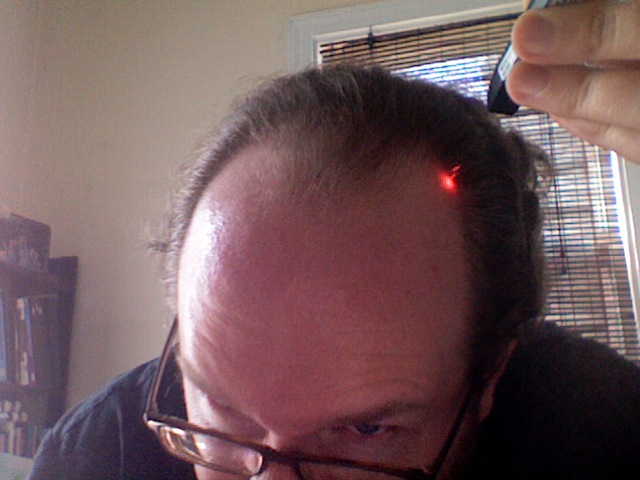 |
| The author engages in home laser hair restoration, while his cats meow around his feet. |
So, to summarize:
- Hair loss in its most common forms is hormonal, so it’s unclear to me that light (whether laser or otherwise) has anything to do with it. Hair removal can be achieved with lasers, but that involves causing damage to hair follicles, not using anything intrinsic to light.
- Lasers are simply very monochromatic light sources, that use synchronization of atoms on the microscopic level to do their business. There’s nothing in a laser that isn’t in ordinary light bulbs, though you can make things far more intense with a laser. However, high intensity brings us back to laser hair removal, not restoration.
- As always, if a product sounds miraculous, it’s probably bunkum. If all it took to regrow hair was a glorified laser pointer, nobody would be bald! LED lasers are cheap and ubiquitous; we could all restore our hair without paying a company $700 (and listen to the music on inexpensive headphones, to boot).
Now if you’ll pardon me, I’ll get back to shining this laser pointer at my scalp.
Drill, baby, drill — microbial-style
 |
| Could the oil energy needed to light up this drill come directly from soil bacteria instead of the soil? Image credit: Obakeneko; via Wikimedia Commons |
By Jeffrey Perkel, DXS tech editor
It’s no secret that America’s petroleum addiction is a problem in need of a solution. “Drill, baby, drill” notwithstanding, this country eventually will have to find a way to survive without low-cost oil – or at least, find another way to make it.
A recent MIT press release suggests one route to energy independence: soil bacteria. The release, “Teaching a microbe to make fuel,” details a recent study from MIT graduate student Jingnan Lu, research scientist Christopher Brigham, and their lab director, Anthony Sinskey.
What Brigham, Lu, and their colleagues did was convince a soil bacterium called Ralstonia eutropha to turn carbon into gasoline –- specifically, the four-carbon molecules iso-butanol and 3-methyl-1-butanol.
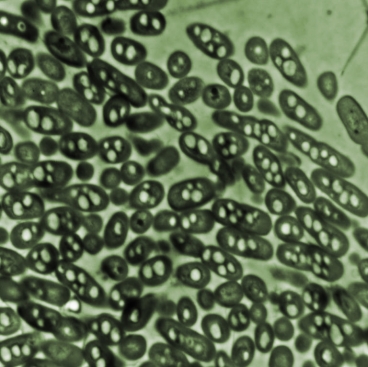 |
| Ralstonia eutropha bacteria in culture |
How’d they do that? It was a simple matter of microbial engineering. As detailed in MIT’s description:
… in the microbe’s natural state, when its source of essential nutrients such as nitrate or phosphate is restricted, “it will go into carbon-storage mode,” [Brigham says,] essentially storing away food for later use when it senses that resources are limited.
“What it does is take whatever carbon is available, and stores it in the form of a polymer, which is similar in its properties to a lot of petroleum-based plastics,” Brigham says. By knocking out a few genes, inserting a gene from another organism and tinkering with the expression of other genes, Brigham and his colleagues were able to redirect the microbe to make fuel instead of plastic.
That last sentence makes the process sound easier than it was. It took a full year of work to effect that transformation, Brigham tells me, and no wonder: Bacteria don’t normally make gasoline. But they do make amino acids, the protein building blocks that all living things need to survive. The team realized that Ralstonia bacteria create one particular group of amino acids (the so-called branched-chain amino acids) using chemical intermediates that they could coopt to turn sugar into fuel.
To realize that potential, Brigham and his colleagues first had to get Ralstonia to refocus its energies, literally. When stressed, the bacteria store carbon in a polymer-a chain of molecules-called PHB. The bacterium executes this particular biochemical program extremely effectively, cranking out enough polymer to account for more than 80% of the cell’s mass. Brigham and Lu had to redirect that enzymatic zeal towards gasoline instead. So, they knocked out the genes involved in building PHB.
Next, they added some missing chemical pieces. I said earlier that the branched-chain amino acid pathway includes an intermediate that could be used to make gasoline. To do that, the cells need a missing bit of hardware — specifically, an enzyme to convert that chemical intermediate into something the gasoline-making enzymes can use. That enzyme is called KIVD, and Ralstonia does not make it. But another bacterium, Lactococcus lactis, does make it. Brigham and Lu borrowed the related bit of genetic material from Lactococcus lactis, expressed it in Ralstonia, and –- not much happened.
As University of California, Berkeley, biochemical engineer Jay Keasling explained to me, the cell in such situations is literally a chemical factory. For the factory to run smoothly, all the factory workers –- the enzymes -– need to be fully engaged at the right time. That won’t happen if one enzyme is cranking out lots of its product but others are not. Intermediate products will start piling up, reducing efficiency and potentially poisoning the cell.
In this case, with KIVD, the cells had all the necessary pieces to make gasoline. But they weren’t producing them at the same levels. In other words, the factory had more workers at one part of the assembly line than at others. As a result, productivity was relatively low (about 10 mg isobutanol per liter of culture). To boost that output, the researchers dialed up expression levels of several proteins to get them all in sync. They also shut down a handful of other chemical assembly lines, too, “carbon sinks” that could siphon off intermediates.
When all was said and done, the cells could produce about 310 mg of gasoline per liter of culture. That gas conveniently drifts into the culture medium surrounding the cells, from which it is easily extracted. Now, says Brigham, the trick is optimizing the process.
In the meantime, others are working towards the same goal. Researchers have considerable experience getting bacteria and yeast to produce compounds they don’t normally make — the antimalarial drug artemisinin, for instance -– and microbial biofuel development is a research target at the Joint BioEnergy Institute (headed by Keasling), Synthetic Genomics, and LS9, among other places.
Often, those biofuel strategies rely on plants to produce their starting materials. And that’s the really cool part about Sinskey’s work: Ralstonia can eat almost anything, Brigham says, from carbon dioxide and organic acids to fatty acids and sugar. Brigham envisions coupling these organisms to waste streams, such that they can suck out the nutrients and turn them into fuel, no plants required.
Garbage in, fuel out: Now that’s a microbial trick I can get behind.
(If you’re interested, you can read Brigham and Lu’s work here.)
Image: Christopher Brigham / http://web.mit.edu/newsoffice/2012/genetically-modified-organism-can-turn-carbon-dioxide-into-fuel-0821.html
Double Xplainer: Once in a Blue Moon
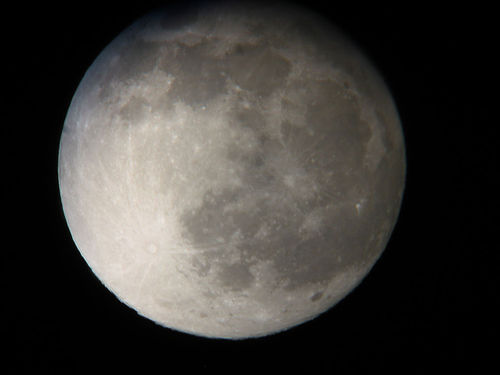 |
| Full Moon, from Flickr user Proggie under Creative Commons license. |
Tonight—August 31, 2012— is the second full Moon of August. The last time two full Moons occurred in the same month was in 2010, and the next will be in 2015, so while the events are rare, they aren’t terribly uncommon either. In fact, you’ve probably heard the second full Moon given a name: “blue moon”. (The Moon will not appear to be a blue color, though, cool as that would be. More on that in a bit.) What you may not know is that this term dates back only to 1946, and is actually a mistake.
According to Sky and Telescope, a premiere astronomy magazine (check your local library!), the writer James Hugh Pruett made an incorrect assumption about the use of the term “blue moon” in his March 1946 article. His source was the Maine Farmers’ Almanac, but he misinterpreted it. The almanac used “blue moon” to refer to the rare occasion when four full Moons happen in one season, when there are usually only three. By the almanac’s standards, tonight’s full moon is not a blue moon (though there will be one on August 21, 2013).
However, even that definition of “blue moon” apparently only dates to the early 19th century. In its colloquial, non-astronomical sense, a “blue moon” is something that rarely or never happens: like the Moon appearing blue. The Moon is white and gray when it’s high in the sky, and can appear very red, orange, or yellow near the horizon for the same reason the Sun does. As far as I can tell, the only time the Moon appears blue is when there’s a lot of volcanic ash in the air, also a rare event (thankfully) for most of the world. The popular song “Blue Moon” (written by everyone’s favorite gay misanthrope, Lorenz Hart) uses “blue” to mean sad, rather than rare.
I’m perfectly happy to keep the common mistaken usage of “blue moon” around, though, since it’s not really a big deal to me. Call tonight’s full Moon a blue moon, and I’ll back you up. However, because it’s me, let’s talk about the Moon and the Sun and why this stuff is kind of arbitrary.
The Moon and the Sun Don’t Get Along
The calendar used in much of the world is the Gregorian calendar, named for Pope Gregory XIII, who instituted it in 1582. The Gregorian calendar, in turn, was based on the older Roman calendar (known as the Julian calendar, for famous pinup girl Julie Callender Julius Caesar). The Romans’ calendar was based on the Sun: a year is the length of time for the Sun to return to the same spot in the sky. This length of time is approximate 365.25 days, which is why there’s a leap year every four years. (Experts know I’m simplifying; if you want more information, see this post at Galileo’s Pendulum.)
A problem arises when you try to break the year into smaller pieces. Traditionally, this has been done through reference to the Moon’s phases. The time to cycle through all the phases of the Moon is called a lunation, which is about 29 days, 12 hours, 44 minutes, and 3 seconds long. You don’t need to pull out a calculator to realize that a lunation doesn’t divide into a year evenly, but it’s still a reasonable way to mark the passage of time within a year, so it’s the foundation of the month (or moonth).
Many calendars—the traditional Chinese calendar, the Jewish calendar, and others—define the month based on a lunation, but don’t fix the number of months in a year. That means some years have 12 months, and others have 13: a leap month. It also means that holidays in these calendars move relative to the Gregorian calendar, such that Yom Kippur or the Chinese New Year don’t fall on the same date in 2012 that they did in 2011. (The Christian religious calendar combines aspects of the Jewish and the Gregorian calendars: Christmas is always December 25, but Easter and associated holidays are tied to Passover—which is coupled to the first full Moon after the spring equinox, and so can occur in a variety of dates in March and April.)
Another resolution to the problem of lunations vs. Sun is to ignore the Sun; this is what the Islamic calendar does. Months are defined by lunations, and the year is precisely 12 months, meaning the year in this calendar is 354 or 355 days long. This is why the holy month of Ramadan moves throughout the Gregorian year, happening sometimes in summer, and sometimes in winter.
The Gregorian calendar does things oppositely to the Islamic calendar: while months are defined, they are not based on a lunation at all. Months may be 30 days long (roughly one lunation), 31 days, or 28 days; the latter two options make no astronomical sense at all. Solar-only calendars have some advantages: since seasons are defined relative to the Sun, the equinoxes and solstices happen roughly on the same date every year, which doesn’t happen in lunation-based calendars. It’s all a matter of taste, culture, and convenience, however, since the cycles of Sun and the Moon don’t cooperate with the length of the day on Earth, or with each other.
Blue moons in the common post-1946 usage never happen in lunation-based calendar systems because by definition each phase of the Moon only occurs once in a month. On the other hand, the version from the Maine Farmers’ Almanac is relevant to any calendar system, because it’s defined by the seasons. As I wrote in my earlier DXS post, seasons are defined by the orbit of Earth around the Sun, and the relative orientation of Earth’s axis. Thus, summer is the same number of days whatever calendar system you use, even though it may not always be the same number of months. In a typical season, there will be three full Moons, but because of the mismatch between lunations and the time between equinoxes and solstices, some rare seasons may have four full Moons.
The Moon and Sun have provided patterns for human life and culture, metaphors for poetry and drama, and of course lots of superstition and pseudoscience. However, one thing most people can agree upon: the full Moon, blue or not, is a thing of beauty. If you can, go out tonight and have a look at it—and give it a wink in honor of the first human to set foot on it, Neil Armstrong.
Work-Life Balance for Whom?
Today we are grateful to Athene Donald for allowing us to repost her piece on work/life balance. This post originally appeared on her blog, Athene Donald’s Blog, in July of this year.
Professor Athene Donald is Professor of Experimental Physics at the University of Cambridge. She has spent most of her professional career at Cambridge, apart from 4 years at Cornell University. She is a soft matter physicist, currently mainly researching physics at the interface with biology. Within her University she is the Gender Equality Champion, and also nationally chairs the Athena Forum, which aims to disseminate best practice with regard to gender within Higher Education. She was elected a Fellow of the Royal Society in 1999, and is chair of their Education Committee. She was awarded the L’Oreal/UNESCO For Women in Science Laureate for Europe in 2009, and appointed a Dame Commander of the British Empire for services to Physics in 2010. She is mother to 2 adult children. For more information, you can follow Athene Donald on Twitter.
 |
| (Source) |
Can women ‘have it all’ (i.e. have a family as well as a career) is a question frequently asked, and one Sally Feldman referred to in her article in last week’s Times Higher Education. Although the sub-title for her article said ‘despair not’ – despite the growth of presenteeism, the high-profile women who have dropped out of pressured jobs because of the call of family and the growth of out-of-hours communication via Blackberry and their look-alikes – despair not, she says, because ….well to be honest I’m not sure why she feels that way. It wasn’t at all clear to me from what she wrote. At the end of the article she referred to various utopian solutions and tossed out a final solution, she attributed to Sheryl Sandberg, namely ‘find a supportive husband Continue reading
Welcome to the 21st century and welcome to MARS
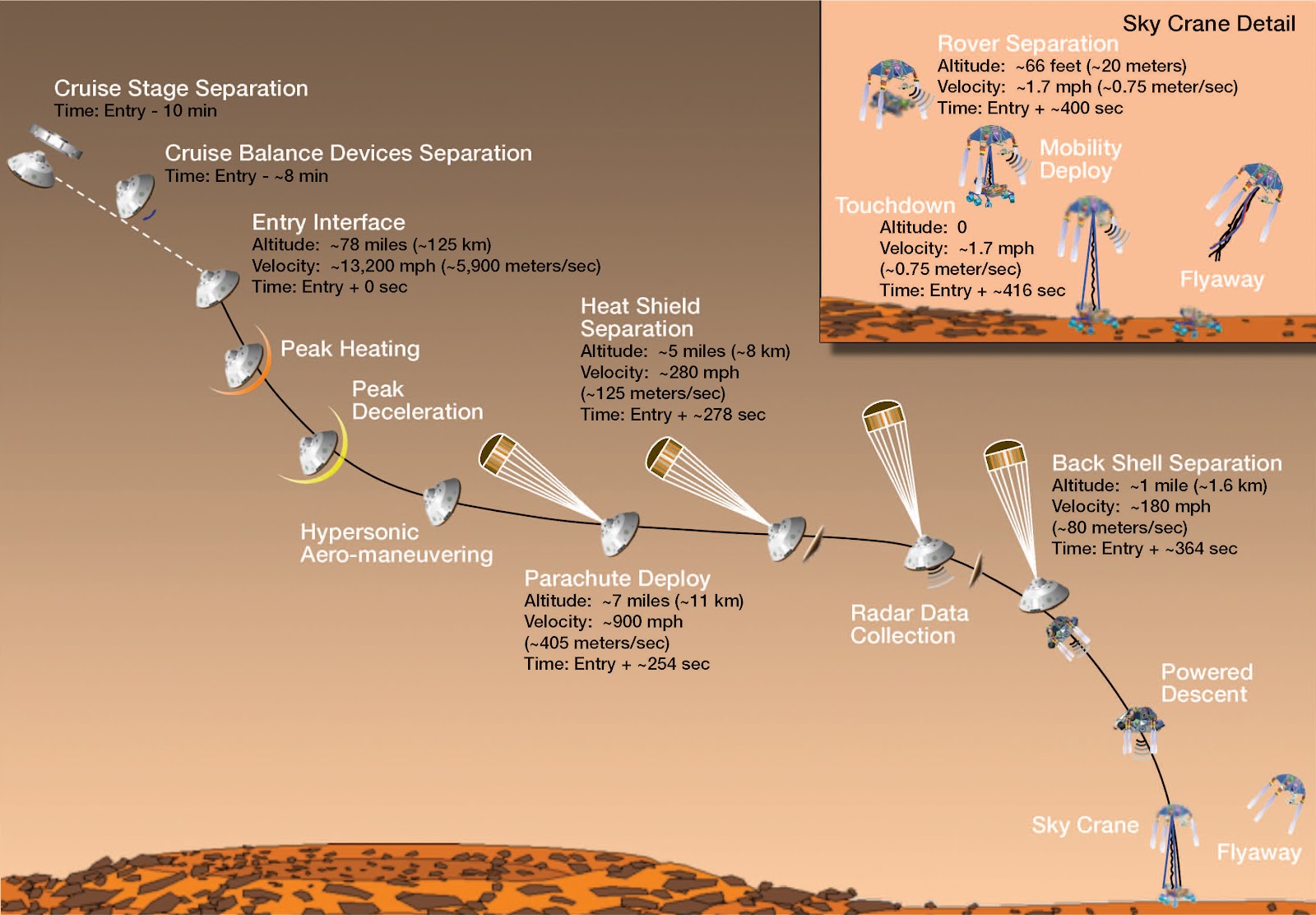 |
| Parachutes and SKY CRANES! Image credit: NASA. Woohoo, NASA! |
by Emily Willingham, DXS managing editor, who totally stayed up to watch all of this unfold
Update: Check out below what you see in the above graphic, except that it’s a real image of the real rover with its real parachute, heading for the surface of Mars! Image by way of the Bad Astronomer, a.k.a., Phil Plait.
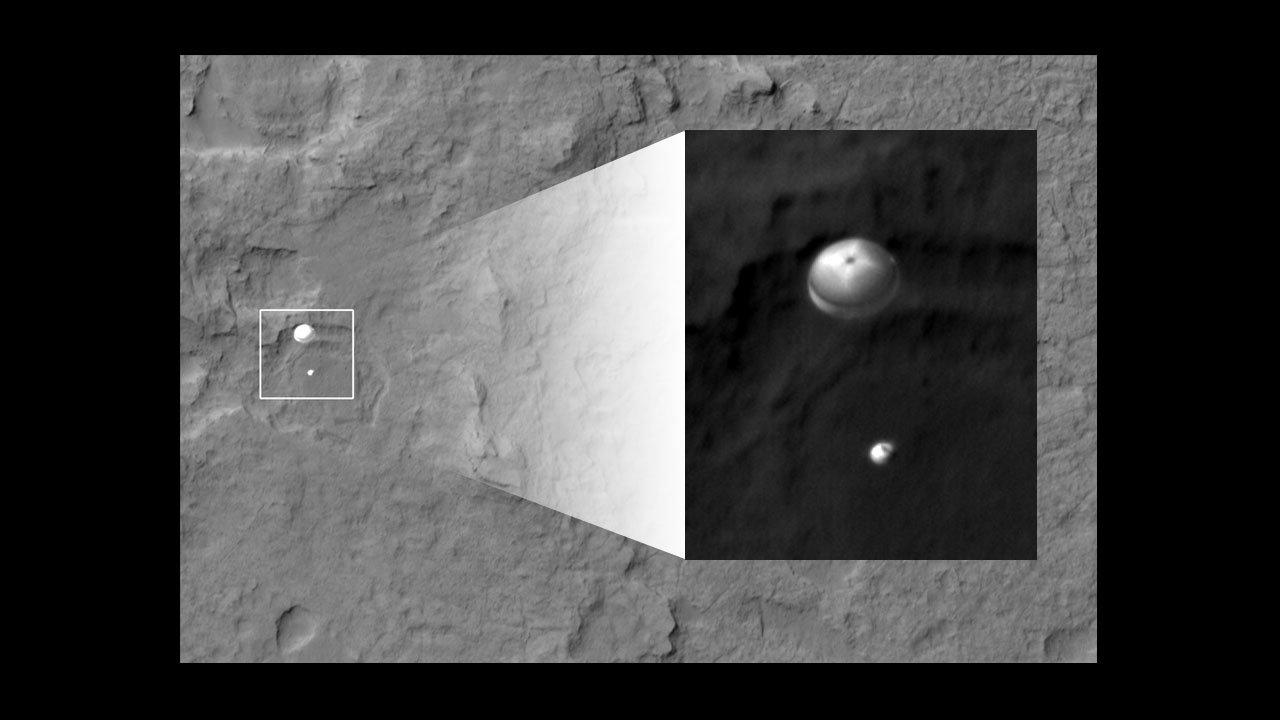 |
| Via NASA. |
Because we are freaky, geeky, and totally tweaky excited about the Mars Curiosity landing (woohoo!), today we bring you a links roundup related to this event. For some perspective-my own-I was born the year before the first people walked on the moon, an event known as the Moon Landing. That day was such a big deal that in a photo book of baby images capturing my first year, six dim Polaroid photos of the moon landing take up the entire last page, fuzzy, blurry images of our ancient Zenith television, including one of an Earth-bound Walter Cronkite (I still miss that man) wiping his face in disbelief. As someone who was born in the mid-20th century and knew and lived with people born in the 1800s, I am in awe of what I’m seeing today in the second decade of the 21st century.
You can relive that moment from 43 years ago in the video below. You might even recognize the real-life versions of some of the characters who featured in Apollo 13, one of my favorite movies. I also am a fan of Janet Armstrong’s hair in this video. The entire clip sequence is typical ’60s news television and features a strikingly young Mike Wallace. Armstrong is on the moon at around 9:39. “One small step for man… “
The moon is a mere 238,900 miles away from us. We could practically fly there on a space plane (assumes this biologist). But Mars? That’s 350 million miles. The rover we just dropped on the planet, using technology with shades of the latest Star Trek movie, will spend a planned two years roving the red planet, sending back data about what it finds. The Great Hope, of course, is that one thing it will find is signs of Life.
Now, enjoy this video of the successful Curiosity landing from the wee hours this morning. “Thumbnails complete! We’ve got thumbnails! Woohooooo!” My favorite quote: “You can see dust particles on the window!”
Then, visit NASA’s page dedicated to the Rover Curiosity, where NASA’s posting great images from 350 million miles away.
Our own physics editor, Matthew Francis, has a post up over at his blog, Galileo’s Pendulum, giving a personal perspective on this historic event. He’s also included links to a post by Emily Lakdawalla telling us what comes next for Curiosity and to ArsTechnica’s retrospective overview of Mars missions.
The L.A. Times, near ground zero of mission control, has a lengthy piece complete with links to photo essays. Worth exploring and enjoying.
Finally, just follow Mars Curiosity itself @MarsCuriosity (natch) and follow along at the related hashtags:
A couple of these are currently even trending on Twitter, which gives me hope for science and humanity. In that spirit, I leave you with a screenshot of this tweet from Story Collider’s Ben Lillie:
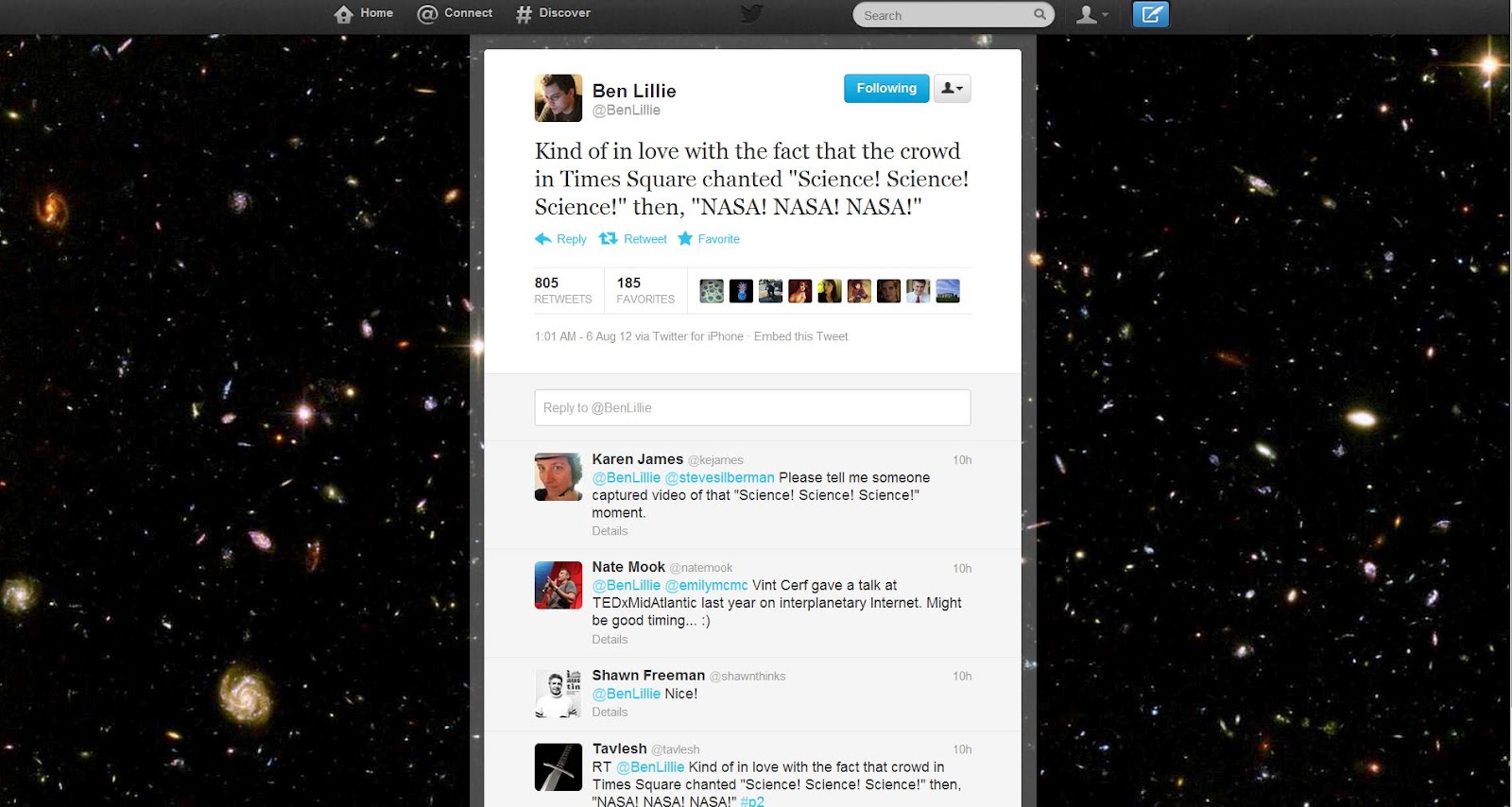
Science, FTW! We sure have come a long way since 1969, baby.