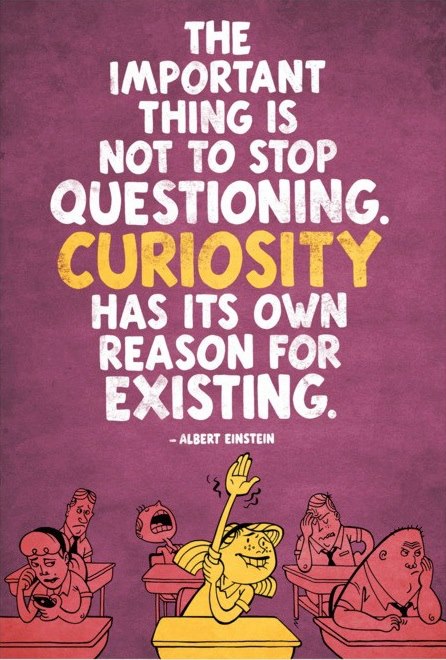
Aren’t you curious?


Source: IFLS
By Courtney Williams, DXS contributor
Recently my on-line science pal Emily J. Willingham asked on Facebook,
“You are a consumer of science. As one, what bothers you about how science is offered to you? What questions do you have? How do you consume scientific information? How do you use it?”
She’s going to be blogging on the Forbes network, see her here, and I’m guessing this was the impetus for that particular set of questions.I had much to say in answer to her questions.
One of my biggest pet peeves is that the most sensational headlines are used- even if they are entirely inaccurate scientifically. For example the recent news about small pox and breast cancer. Headlines like, “New smallpox virus could ‘cure’ breast cancer, studies reveal.” How many ways is that wrong? Well, it’s not smallpox the researchers were using, it’s a vaccinia virus, which is in the same family as the smallpox virus. Big difference. For instance, there wasn’t a global effort to eradicate cowpox– another vaccinia family member. Just because the viruses are related doesn’t mean they are the same thing. Also, what’s with the quotation marks around cure?Maybe because it’s not actually a cure, not even a treatment, just an interesting experiment done in mice- but cure (even in quotes) makes for a better headline. [If you want to learn about the real science behind that crappy headline, here’s the original paper- “Vaccinia Virus GLV-1h153 Is Effective in Treating and Preventing Metastatic Triple-Negative Breast Cancer“]
Articles rarely cite their scientific sources- i.e. linking to the actual journal article they are writing about. For instance, the craptastic example above where the ‘journalist’ (how’s that for quotation marks?) not only failed to link to the original article, he didn’t even mention the journal it was published in, when it was published, or any other info (other than the lead author’s name) that would help a reader find the journal article or additional info on it.
As for sources, it’s important to distinguish for the reader between peer reviewed journal articles and mere opinion pieces on blogs. Take for instance the blog post I wrote about  here  that appeared on the website of Psychology Today. Many news outlets picked it up and touted it as research that showed it was dangerous to let your infant ‘cry it out’ when really it was just a post (poorly researched, lacking citations, and full of unsupported conjecture and opinion) on the blog of a psychologist. A blog post is NOT the same thing as a peer reviewed journal article. Please journalists, know this!
Another gripe, accuracy is sacrificed for the sake of brevity, which completely defeats the purpose of sharing the science. See above yet again about smallpox as a ‘cure’ for breast cancer.
Another problem I have is the way the media handles funding sources for research studies- they always matter, it’s imperative that scientists report any conflicts of interest that funding sources might prove to be. However, they are not always a sign that researchers are ‘in cahoots’ with the companies that fund them. For instance, would you trust RJ Reynolds to fund unbiased research on smoking and cancer? Probably not. Thus, if at the end of a research article you see a company with a known bias and the findings support their assertions, you are right to be skeptical. However, sometimes the funding merely means a company paid for work to be done, regardless of the outcome. For instance, a pharma company that partners with an academic lab on basic science and published the results in a peer reviewed journal. Or, a drug company that funds the clinical trials for it’s drugs. That’s just the way it works- who else would fund the trial if not the manufacturer? If those types of studies are published in peer reviewed journals, they have been vetted to that extent. Further, with clinical trials, the Federal Drug Administration (FDA) oversees all those trials to help ensure they are unbiased and protect the patients involved as well as the public as a whole. The media seems unable to distinguish.
As for how I generally consume science/scientific information? It’s usually as follows- hear about it on the radio or read a lame article via Yahoo News/Strollerderby/The Stir/etc., assume the author is either full of bologna, got the science partly/mostly wrong, had their more level-headed title replaced by an editor, is totally biased, etc., then I track down the original research article, and possibly seek out commentaries on the work from reliable sources (SciAm blogs, Double X Science, fellow scientists, etc.).
What about how I use it? Well, obviously I’m a scientist, so I ‘use’ science/scientific information professionally every single (work) day to try and cure (no quotation marks) and/or treat cancer. In my personal life, science helps me make healthcare decisions for myself and my family, decide which products to buy or to avoid, answer questions about the natural world when my toddler asks, as material to blog about and use to dispel misconceptions held by myself and others.
However, a lot of the time I don’t necessarily even use the science I consume. Sometimes I just want to know it. I’m curious.
Pretty frequently people ask me, “How do you know that?” or “Why do you even know that?” I’m not sure how to answer. If it’s a medical question, a lot of the times the answer is, “Well, I have that body part and I want to know how it works.” Or, “Well, I’m taking that medicine, so I looked up how it works.” People forget that science is the basis of everything- it’s how everything works or came to be. While others seem to find it odd that I’m always looking up the science behind was I see/do/hear about, I find it odd that other don’t seem to question enough.
You’re taking that medicine, you’re having that surgery, you’re using that product right now- don’t you wonder how/why it works? Why aren’t you wondering?
Where’s your curiosity? Don’t you just want to know why the sky is blue? How did you came to be? Why are roses red and violets blue?
Aren’t you curious?
The opinions in this article do not necessarily reflect or conflict with those of the DXS editorial team and its contributors.———————————————
Courtney Williams is a scientist, wife, and mother (in no particular order). She works in the oncology department of a biotech company in the burbs of NYC. She blogs about marriage, motherhood, and science at http://mommacommaphd.wordpress.com/.
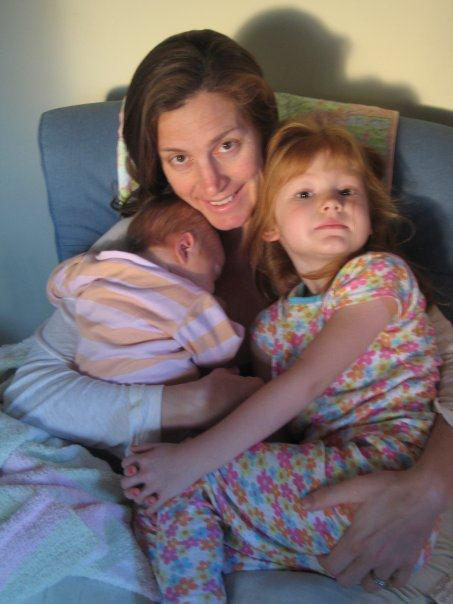
Leah Gerber, conservation biologist and lover of sushi


Leah Gerber and her little lovelies!
Leah Gerber is an Associate Professor of ecology at Arizona State University. Her research is motivated by a desire to connect academic pursuits in conservation science to decision tools and effective conservation solutions. This approach includes a solid grounding in natural history and primary data collection, quantitative methods and an appreciation for the interactions between humans and the environment. She is keenly aware of the need for the communication of scientific results to the public and to government and non-governmental agencies. This communication is essential for the translation of scientific results into tenable conservation solutions.
DXS: First, can you give me a quick overview of what your scientific background is and your current connection to science?

LG: I learned about ecology and environmental conservation as an undergraduate and quickly became motivated to do science that impacted the real world of conservation. Learning about the impacts of humans on nature was a wake-up call for me, and inspired me to channel my feeling of concern for the demise of nature in a positive way.

From there, I have walked the tightrope between science and policy. After getting my undergraduate degree in environmental biology, I wanted to do more than just the science. So I enrolled in a masters program at the University of Washington – an interdisciplinary program called Marine Affairs. It was a great experience, but I wanted to have more substance to my science background – I wanted to know how to do the science in addition to how to apply the science.

This compelled me to enter a PhD at the University of Washington, which was largely funded by NOAA. My thesis involved trying to figure out how to make decisions about endangered species – how to determine which were endangered and which were threatened. This was a perfect project given my interest in developing tools to solve problems. After finishing my PhD, I did a postdoc at the National Center for Ecological Analysis and Synthesis (NCEAS) and developed approaches for marine reserve design and endangered species recovery. I was at NCEAS for three years before starting on the tenure track at Arizona State University. I’ve been at ASU for about 10 years now.

A major theme in my work has remained constant – that is, how to use the information we are generating in the natural and social sciences to better manage our natural world. Pre-tenure I focused a lot more on doing the science, publishing in good journals, and hoping that it made its way into good policy. Now that I am midcareer, meaning that I have a good amount of papers and tenure, I am enjoying the opportunity to work with practitioners outside of academia. For instance, I just got off the phone with someone from National Geographic regarding my recent publicationon seafood health and sustainability. In that study, we performed an analysis regarding seafood in the context of health and sustainability, to answer simple questions like, what to order when out to sushi? How do we educate about health benefits and risks? We will be organizing a workshop to help restaurant chains, grocery stores, as well as environmental NGOs identify a path forward in informing consumers about healthy and sustainable seafood choices. As a tenured professor, I feel fortunate to have the opportunity to work at the science-policy interface and to give society some science that is truly applicable.

DXS: It is too bad that you have to wait until you are more established and have tenure to go out and engage with the public, because this type of thing is just so important!

LG: Yes, I agree. There isn’t a clear path in academia when it comes to public engagement. But in recent years I have felt optimistic – the landscape within academia is starting to change, and at ASU this change is noticeable. We have a fabulous president, Michael Crow, who has really transformed ASU from just another state institution to a leader in sustainability. Part of this is the establishment of the Global Institute for Sustainability, and one of Michael Crow’s mantras is “community embeddedness.” He is really on board with this type of thing and I have seen evidence of his commitment trickle down throughout the University. For instance, when I first arrived, I had to justify and explain why I was serving on these federal recovery teams for endangered species. Now I feel that there is no justification needed. Developing solutions is not only so important for society, but should also be a key aspect of what we do at Universities.

DXS: We were introduced by another fantastic science communicator, Liz Neeley, who you met at a communications workshop. Why is it important to take part in this type of training?

LG: I met the Fantastic and Fashionable Liz through the Leopold Leadership Program, offered through the Woods Institute for the Environment at Stanford University. The Leopold Leadership training was the best professional development experience of my career, and has made me a better translator and communicator of science to policy. Pre-Leopold, I had little training in communications, and there I was, in a teaching position where I taught hundreds students. I thought to myself, well, how do I do this? The Leopold experience has solidified my commitment to teaching students about communication and engaging in policy.

One development emerging from this training is a science communication symposium at the AAAS meeting. Elena Bennett and I are giving a talk on overcoming institutional barriers for community engagement, and we will address the issues head on. We put out a survey asking others if they faced institutional barriers, and how they might work to engage more.

DXS: What ways do you express yourself creatively that may not have a single thing to do with science?

LG: I have 2 young kids, a 3yo and a 7yo. Being a mom helps me keep it real – I love that I get to enjoy the awe of discovering the world with my girls. We just got a puppy this weekend and we are having fun dressing her up and painting her nails (only partly joking). Other things that I do that are creative – truthfully, I am uninteresting – I don’t bake bread or go to the opera. I just work and take care of my kids. I practice yoga for my own sanity and also love to work in the garden. Doing these things gives me a reason to pause and step off the treadmill of keeping up with everything.


DXS: Do you find that your scientific background informs the creativity you have with your kids or your yoga practice, even though what you do may not specifically be scientific?

LG: I think there is synergy with my science and my kids and my yoga practice in helping me to accept things and be mindful – but not in any conscious way. For instance, when doing my science, the type A person that I am, I have an inclination to keep pushing, pushing, pushing. My kids and my yoga help me to shift gears and accept that things are going to happen when they happen. I try to let the kids be kids, including the associated chaos, and accept that this is a snapshot in time that they will be little. Now I find joy in that chaos. Having kids and yoga gives me a little more perspective, and the knowledge that things aren’t lined up and neatly placed in a box. It rounds me out.

DXS: Are your kids are major influencers in your career?

LG: My first child, Gabriella, was born just after I submitted my application for tenure – so it was good timing. And I was able to slow down. I quickly realized that I wasn’t able to work a 60+hour week. Before kids, I lived to work. Now, I work to live. I absolutely love my job and I feel so lucky that I have a career that I believe in and that I am actually paid to do it – it’s not just a hobby. But having kids made me chill out a little. If I get a paper rejected, I can let it go instead of lamenting about it for weeks. It has made me healthier. I don’t necessarily know if it has had positive impact on my career – time will tell. While my publication rate may be slightly smaller, I think my work now has different dimensions, and greater depth.

I am still pretty passionate about my work, and my kids know what I do and are proud of it. They share it with their classmates, and take every opportunity to wax poetic about how their mom saves animals in the ocean. They also have a built in conservation effort – my 7YO gets irritated when she can’t find a compost bin, and her new thing is to only fill her cup half way because she will only drink a little bit of water.

DXS: When you decided to have children, did your colleagues view you differently? Did they consider that you were sending your career down the tubes or was it a supportive environment?

LG: I honestly had a really positive experience. I can’t think of any negative sentiments from my colleagues, and they were actually really supportive. For instance, when I was pregnant with my first daughter, ASU did not have a maternity leave policy. Before that, you would have to take sick leave. So my colleague worked within the parameters of the unit to give me maternity leave. And then with my second daughter, our new president had established a maternity policy.

The support of my colleagues at ASU has made me feel loyal to my institution. Normally, I am loyal to people and not institutions, but overall, the support has been fabulous. Of course, with having the kids in each case, I did decline a lot of invitations – some pretty significant ones – but I did not have a desire to drag a newborn to give a talk, especially when I was nursing. And it was hard for me to do this at times, especially given my career driven nature, and I had to learn to accept that there would be other opportunities.

I had to shift it down a notch and realize that the world wasn’t going to freeze over, and that I could shift it back to high gear later. With “mommy brain”, I knew I wasn’t going to be at the top of my game at that point in my life. But I have incredible role models. Most notable is Jane Lubchenco, currently the Director of the National Oceanic and Atmospheric Administration. During the first part of her career, she shared a position with her husband – each did 50% – and they did that on purpose so they’d be able to enjoy having children and effectively take care of them. Now, she is in the National Academy, is having major scientific impacts, and she did it all despite having kids. If she can do it, why cant the rest of us?

DXS: Given your experiences as a researcher, as a mother, and now as a major science communicator, do you feel that your ability to talk to people has evolved?

LG: Absolutely. I think that the Leopold Training Program, which selects 20 academics from North America to participate in retreats to learn how to be better communicate and lead, has re-inspired all who attended. It has recharged our batteries and allowed us to make realizations that doing good science and putting it out there via scientific publication is just not enough. We also have to push it out there and make it available to a broader, more diverse population. As part of the training, we also learned about different thinking styles – super analytical or super emotional – and after I returned, I had my lab group participate in this type of exercise. And now I feel like I can better assess a persons thinking style and adjust the way I communicate accordingly.

DXS: Did you always have the ability to talk to the general public or does having kids help you to better understand some of the nuances associated with science communication?

LG: I think so. In fact, I am thinking back to when I had a paper in Sciencecome out around the time that I had my first child. It got a lot of news coverage and was featured in Time magazine. I thought it was so cool at the time, but looking back on it I realized that have come a long way. I said something to a journalist, who then asked me to translate it into “plain English.” It was a little bit of a jab.

Now, with kids, I can tell you a lot more about my research and can better see the broader impact. Talking to them helps me to do that. Here is a conversation about my research with my daughter:

L: Mama is working on figuring out how to help the whales that people like to eat. It’s a big problem because some people like to eat whales and some like to see them swimming in the ocean.

G: What we have to do is let the people eat the whales in the ocean, and buy some whales from the pet store to put back in the ocean. How much do whales cost?

L: Good idea. But you can’t buy whales at the store. They are too big. And if we take them all out of the ocean there will be none left.

G: Well instead we should ask the people to eat bad things like sharks.

L: Another good idea. But if we take sharks out there will be no predators to eat the big fish. And the whole ecosystem would collapse.=

G: Well then the people should eat other things like fish instead of whales. They should buy a fishing pole and catch a fish and eat those instead of whales.

L: What about chicken, shouldn’t people just eat chicken?

G: Mama, we can’t kill chickens. Chickens are nicer than fish, so that’s why we have to eat fish.

L: What about just eating vegetables?

G: Oh mama, some people are meat-eaters. And there are no more dinosaurs. They all got extinct. They should have saved some of the dinosaur meat in the freezer for the meat-eaters. When the dinosaurs come back, there will be enough meat to eat and people won’t want to eat whales.

The simplicity of taking myself out of my research bubble and engaging with a creative (and nonlinear?) 7YO has taught me how to be a better communicator – with the media, with my students, and with the general population.

DXS: Do you think these efforts in science communication are helping to shift other peoples perspectives about who a scientist actually is? For instance, are we changing the old crazy haired white guy stereotype?

LG: Well, I hope so. A couple of examples – again, as a mom, one of my daughters a Girl Scout and I get to help with the troop. One of the themes was to teach about environmental and conservations awareness. We did this Crayola molding experiment where we put our fingers into cold water. We then did the same thing except we put modeling clay over our fingers before putting them into the cold water and to learn about adaptations to extreme environments. Also, we play games where they simulate fishing – what if there is plastic? What happens to you if you eat that? My hope is that this shows these young girls that science is both interesting and fun.

Another thing that just happened today is that I was contacted by Martha Stewart’s office, and it seems that some of my research results will be featured in the October issue of Martha Stewart Living. The message here is that I happen to care about the ocean, but I also love sushi. I also I care about health. I am not just a nerd in a lab coat. I am a mom, I do yoga, I have wonderful friends, and here is the kind of science that I do. It seems to me that it is better to connect with others when I can give them something that is relevant to their lives instead of a more abstract ecological theory.

DXS: If you had something you could say to the younger you about getting on your chosen career path, what would you say?

LG: I feel like I have been very effective at figuring out how to get from point A to point B, but less successful at savoring the process. I think that I’d tell myself to make time to celebrate the small victories. I have also learned to identify what kind of research is most exciting, and I would tell myself to say “no” to everything that is only moderately interesting. I tell my grad students that if you don’t dive in head first, you won’t ever know. So why just not give it a try! And if it doesn’t work, move on. Also, if something isn’t making you happy, change! Academia isn’t for everyone, and there is a lot more to life than science.


Fighting the stereotype that math is only for boys

Does she look like an engineer to you?
She should. She is one.

[Ed. note: This post first appeared at our beloved Steminist and is reprinted here with permission.]
by Patricia Valoy
When I take a look around my office I see a lot of men, mostly older White men. There are also women, mostly administrative assistants, accountants, and marketing personnel, but few like me. I am an engineer, and I am young, female, Ivy League educated, and Hispanic. I took the same science and mathematics classes all my male peers took. I was given the same tests, the same homework assignments, and the same projects. Yet, every day I have to battle stereotypes of what some think women should be.
Courtesy of Indiana University.
Engineering, and most science fields, have long been male-dominated professions. Yet, in spite of traditional gender roles pigeonholing women to domestic duties, women haven’t necessarily settled into domesticity without first making many great advances in the science fields. We cannot forget Merit-Ptah, an ancient Egyptian physician, and also the first woman to be known by name in the history of the field of Medicine. Or the ancient Greek philosopher Hypatia, also the first historically noted woman in Mathematics. These women were not given positions in Science to fill a status quo, they earned it, just like women today.
Stereotypes are part of my daily life. In high school I was discouraged by a school teacher to apply to Engineering school, because she claimed it was “harder than I was imagining it to be.” She told me that I wanted to pursue a degree in Engineering because of the money I would earn, but it was clear to her that I did not have a passion for it. Never mind that I outperformed all my classmates, including all my male peers, and that I was about to graduate at the top of my class. As a professional adult, I still face these misconceptions about women in science fields. I get my bosses’ mail delivered to me every day because the delivery man, after four years, still thinks that I am a secretary. I politely remind him every day that I am in fact, also an engineer, like my boss, but it seems to fall on deaf ears. So I find myself not only doing my work, but also delivering mail. A week ago I was asked by a new employee which department I belonged in, and the conversation went like this:
Me: “Hi, are you new to our office?”


New Employee: “Yes, I work in the Marketing department. Do you work with Corporate?”

Me: “No, I work in the Transportation and Infrastructure department.”
New Employee: “Are you an administrative assistant?”
Me: “No, an Engineer.”
New Employee: “Oh, you’re an Accountant.”
Me: “Noooo, an Engineer, a Civil Engineer!”
New Employee: “Oh, wow! I would have never guessed…you don’t look like one.”
Me: “Umm…thanks?”

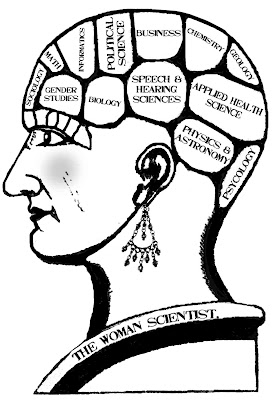
While I admit to becoming irritated, it was more disconcerting that this co-worker was also a young woman like myself. She reacted in a way that was natural and all too common, because there really aren’t enough women being positively represented in the fields of Science, Technology, Engineering, and Mathematics (STEM). I quite enjoy shaking up perceived ideas of what society assumes I should be, as a woman, a woman of color, and a woman in a male-dominated field, but when will all this shock and awe over women in science fields end? Nonetheless, I love the work I do and the feeling of accomplishment I get when I finish a project. And contrary to 18th century views of the female brain, we have shown that when given the same curriculum as men, we can equally excel.
According to a research study done by the University of Washington, the main culprit for girls not becoming enthusiastic about careers in mathematics and science is gender-stereotyping. The study speaks of the widespread cultural belief in the “girls don’t do math” stereotype. In the study, 247 school-age children (126 girls and 121 boys) were asked to sort four kinds of words: boy names, girl names, math words and reading words, into categories, with the use of an adapted keyboard on a laptop. The lead author of the study, Dario Cvencek, concluded that: “Not only do girls identify the stereotype that math is for boys, but they apply that to themselves. That’s the concerning part. Girls are translating that to mean, ‘Math is not for me.’”
While the study found that both genders equate mathematics with boys, it is unclear why this stereotype is so pronounced at such a young age, though there seems to be a connection with the way in which we speak to young children about mathematics. Dario Cvencek explains: “When a girl does poorly on a math test, often she’s told, ‘That’s fine. You did your best.’ When a boy does poorly, he is more likely to be told, ‘You can do better. Try harder next time.’”
Stereotypes are hurtful, and I believe that stereotype threat, the notion that we experience anxiety in a situation where we have the potential to confirm a negative stereotype, is all too real. We cannot expect young girls to be interested in pursuing careers in science, technology, engineering, and mathematics, if we continue to associate them with one gender. Stereotyping career choices is not in our best interest as we cannot achieve success if we believe that half of our population is not capable of contributing to the betterment of our society. I challenge every educator and parent to reevaluate the way they educate their children. Think about the toys we give them. Building blocks and other shape-sorting toys are equally entertaining for girls as they are for boys, and they help develop cognitive skills, something Barbie and Easy-Bake Ovens will never achieve. Teaching is powerful, and encouraging children to challenge themselves should not depend on the child’s gender.
I am passionate about increasing the number of women represented in STEM fields, not merely because I believe we should be equally represented in all career fields, but because I know we can positively contribute to the advancement of our society. Having both sexes equally represented opens the door for a more diverse range of ideas, which in turn can result in a more robust range of services and products. Additionally, having more women in STEM fields ensures that women’s health and well-being become common practice, and not women’s issues.
Careers in STEM fields require high-level skills and earn higher wages, they are also always in high demand, and experts predicts an even stronger demand for professionals in STEM fields in the future. Our economy is in crisis and 60% of women are the breadwinners or co-breadwinners in their families. If we continue to believe that these high paying careers are only for men, we are not cashing in on the earning power of women. Ultimately, it is not about filling a status quo, it is about using our population, men and women, to the best of their abilities.
Patricia Valoy is a Civil Engineer and an Assistant Project Manager at STV, an architectural, engineering, planning, environmental and construction management firm based in New York City. She is a graduate of the Columbia University School of Engineering in Applied Science, where she majored in Civil Engineering with a concentration in Construction Management. Patricia also is a co-host of a weekly radio show called, “Let Your Voice Be Heard.” The show’s mission is to spread awareness of social and political issues. In addition, she writes a blog about feminist issues and mentors high school and college students interested in pursuing careers in STEM fields. You can follow Patricia on Twitter at @besito86 and read her blog at www.patriciavaloy.blogspot.com.

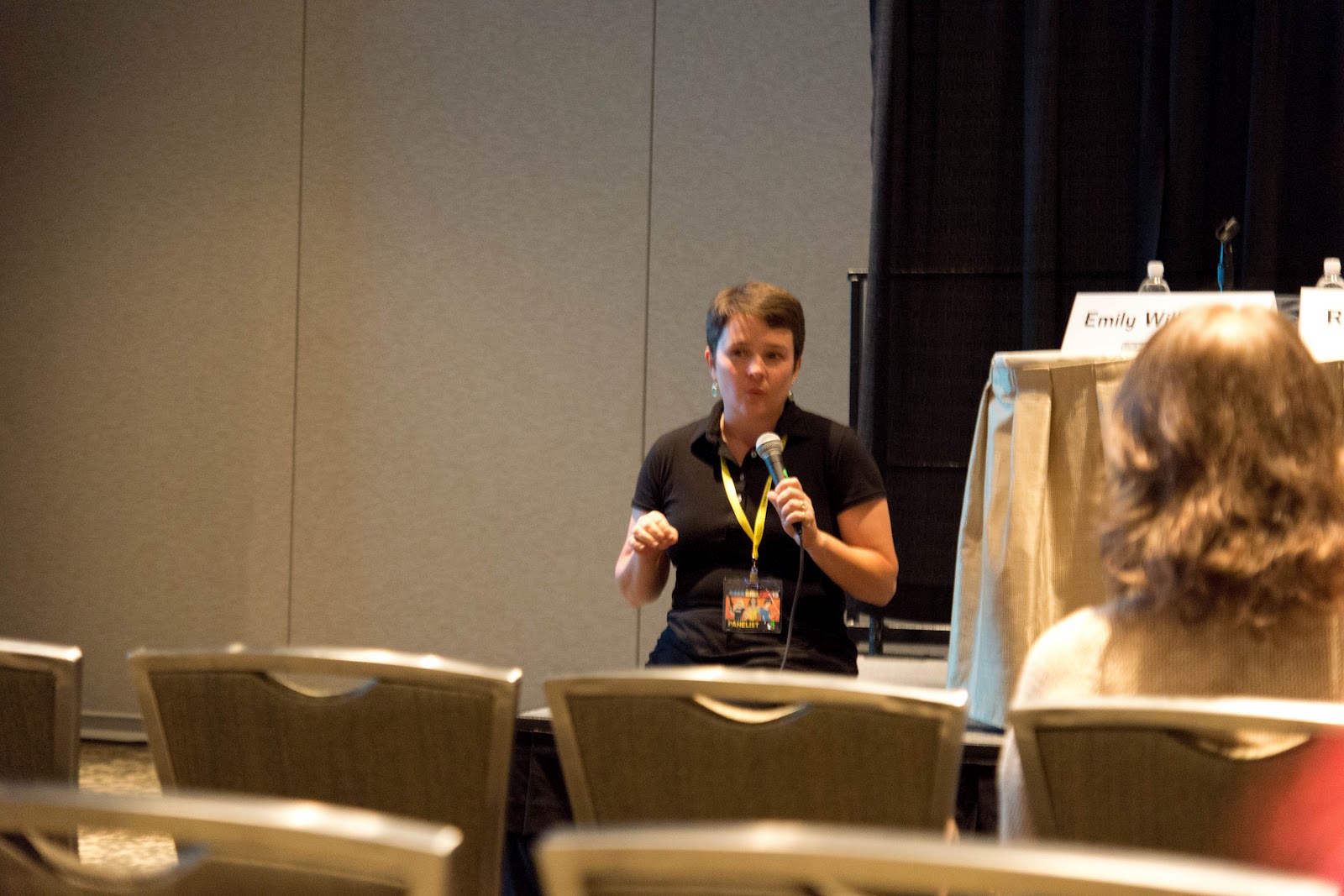
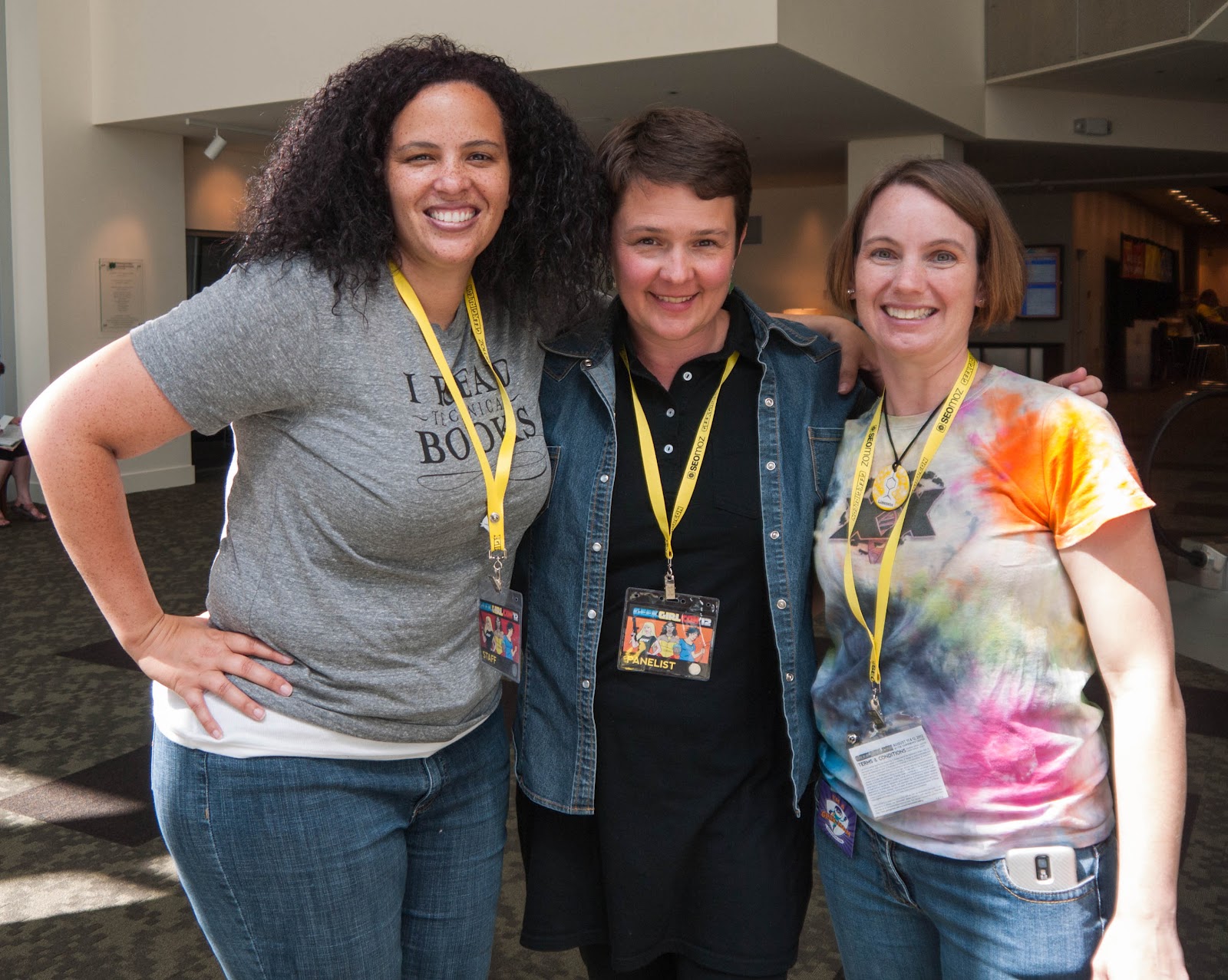
Double X Science panel at GeekGirlCon 2012

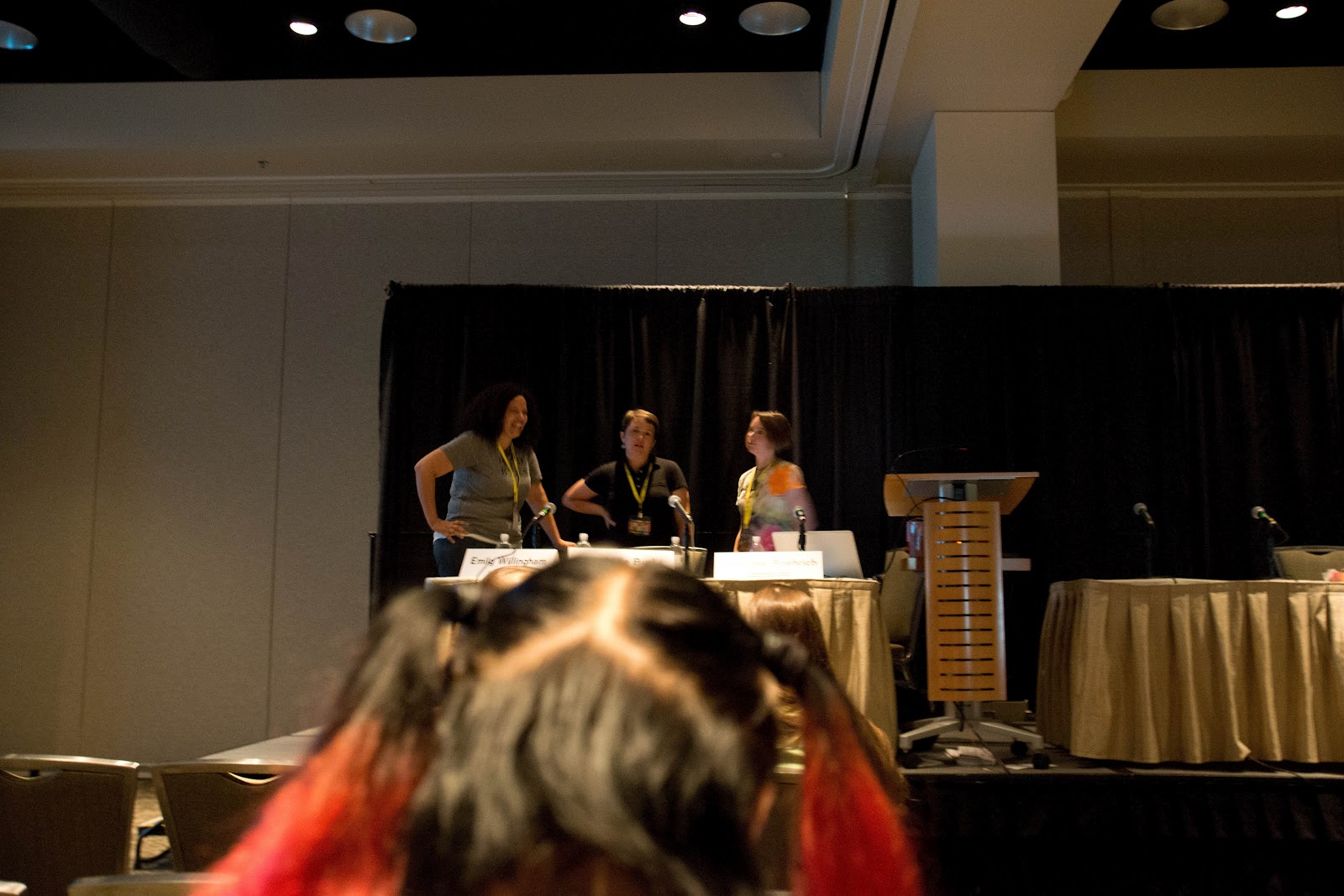
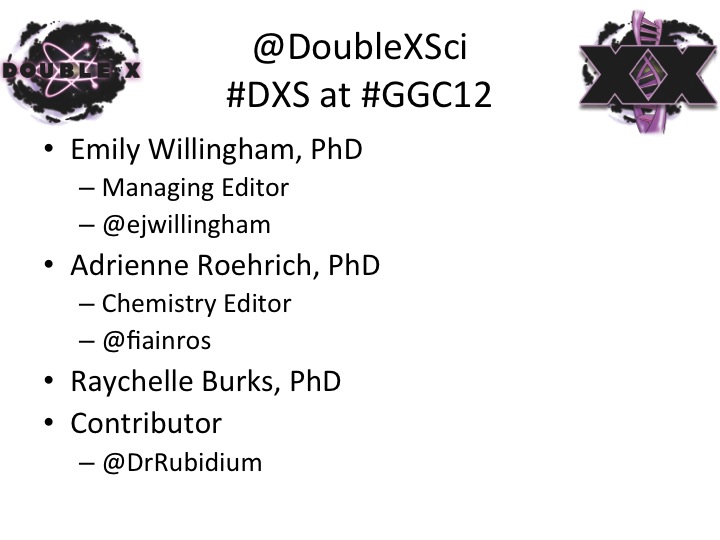
On Sunday, Aug 12, Managing Editor Emily Willingham, Chemistry Editor Adrienne Roehrich, and Contributor Raychelle Burks spoke on bringing science to you. Here’s a summary of our panel.

Photo by Ryan Roehrich and used with permission.

We started with a welcome and gratitude to the organizers and attendees and our tagline “Science, I am Just That Into You.” We were selected to appear with a lot of fantastic programming over the weekend.
We introduced our 3 panelists:
Adrienne Roehrich, your panel moderator and the chemistry editor at Double X Science
Emily Willingham, founder and managing editor
Ray Burks, contributor to Double X Science
Photo by Ryan Roehrich and used with permission.

All 3 have PhDs in their respective fields – Emily is a developmental biologist, Ray is an analytical chemist, and Adrienne is a physical chemist. Emily and Ray are prolific writers. You can find their articles all over the internet and in print. Ray is a staff member for GeekGirlCon and Adrienne is a Special Agent volunteer. All 3 are active on social media and welcome live-tweeting and suggest the #DXS hashtag along with the #GGC12. And you can use the @DoubleXSci for the panel.

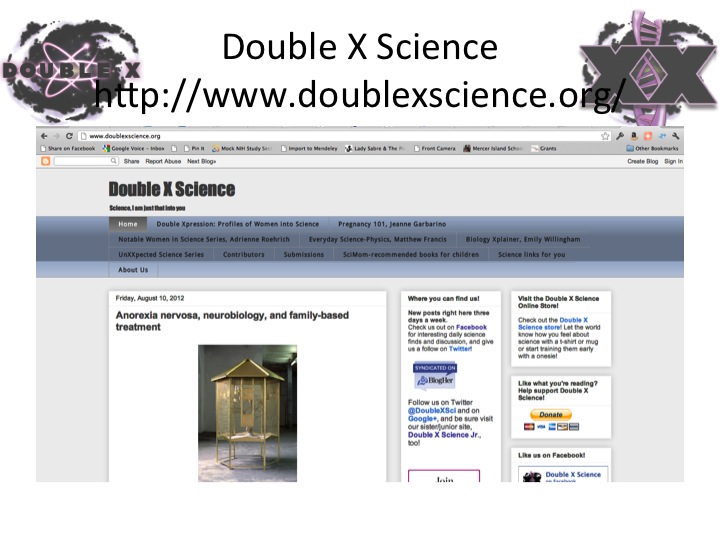
Then a poll of the room to see who had heard of the site. Only a few attendees were already familiar with the site, so we told them that DoubleXScience covers a lot of current science. For example on (the previous) Monday, Emily posted about the Mars Curiosity Rover touchdown. In July, the physics editor covered the Higgs particle announcement. We also cover timeless, yet updated science, such as pregnancy and other health issues that we editors perceive to be of interest to ourselves and our readers.
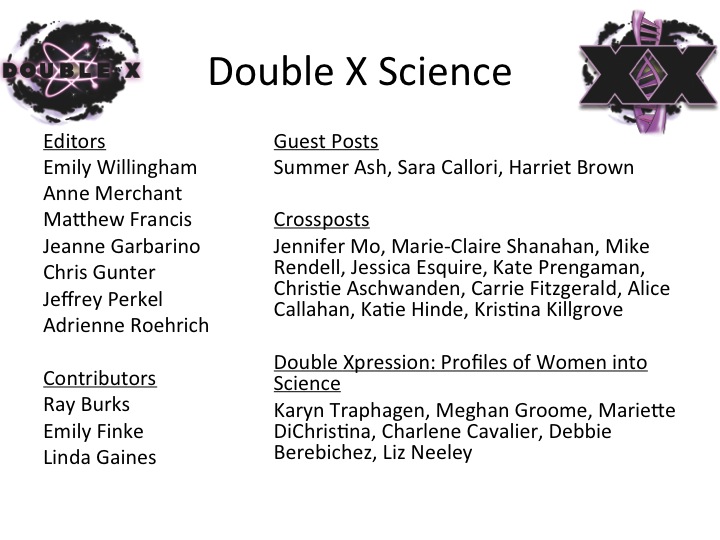
It’s hard to discuss what Double X Science is without discussing who it is.
After a review of who all the people on that particular slide are and what they have to do with Double X Science, three questions were asked by the moderator:
In November of 2011, Emily founded Double X Science, Emily what was your motivation in founding the site and what was then and is now your vision for it?
As mentioned, we have content from editors, other sites and contributors. Ray was the first contributor to the site – what attracted you to Double X Science?
What do the attendees want to know?
And then our discussion really got started. Thankfully, we had 3 great tweeters attending, so I can just point you along their tweets:

[<a href=”http://storify.com/fiainros/double-x-science-panel-at-geekgirlcon-2012″ target=”_blank”>View the story “Double X Science panel at GeekGirlCon 2012” on Storify</a>]

Photo by Adrienne Roehrich and used with permission.

Posted by Adrienne M. Roehrich, Chemistry Editor

Work-Life Balance for Whom?

Today we are grateful to Athene Donald for allowing us to repost her piece on work/life balance. This post originally appeared on her blog, Athene Donald’s Blog, in July of this year.

Professor Athene Donald is Professor of Experimental Physics at the University of Cambridge. She has spent most of her professional career at Cambridge, apart from 4 years at Cornell University. She is a soft matter physicist, currently mainly researching physics at the interface with biology. Within her University she is the Gender Equality Champion, and also nationally chairs the Athena Forum, which aims to disseminate best practice with regard to gender within Higher Education. She was elected a Fellow of the Royal Society in 1999, and is chair of their Education Committee. She was awarded the L’Oreal/UNESCO For Women in Science Laureate for Europe in 2009, and appointed a Dame Commander of the British Empire for services to Physics in 2010. She is mother to 2 adult children. For more information, you can follow Athene Donald on Twitter.
(Source)


Can women ‘have it all’ (i.e. have a family as well as a career) is a question frequently asked, and one Sally Feldman referred to in her article in last week’s Times Higher Education. Although the sub-title for her article said ‘despair not’ – despite the growth of presenteeism, the high-profile women who have dropped out of pressured jobs because of the call of family and the growth of out-of-hours communication via Blackberry and their look-alikes – despair not, she says, because ….well to be honest I’m not sure why she feels that way. It wasn’t at all clear to me from what she wrote. At the end of the article she referred to various utopian solutions and tossed out a final solution, she attributed to Sheryl Sandberg, namely ‘find a supportive husband Continue reading

Women in science … on television?!? Evidently not

Really, TV people? Again with the “male only” science hosts?
Image via Wikimedia Commons, credit to Wonderlane.
Emily Willingham, DXS managing editor

Today, I’ve seen yet another casting call for the “new Bill Nye the Science Guy” specifying a need for a male host for a science show. In fact, female science show hosts are so rare that even when a call seems to invite women as well as men, the people who write it can only think of men as examples. Ahem. Tiresome. So tiresome, in fact, that it’s inspired me to make my very first video rant on behalf of women in science. [Apologies for the wobbly, underwater-like camera and my lack of a chin. I’m a writer, dammit, not a videographer. Obviously.]


Who are these women who could host shows about science? Several obvious candidates come to mind, including Carin Bondar and Joanne Manaster, who are degreed and experienced on camera and in talking about science. Another one who just eats a camera is Danielle Lee, although she’s a tad busy in Tanzania right now doing, you know, science. It’s possible that even television folk might consider any one of the Science Cheerleaders reasonably presentable and sufficiently educated to talk science to a television audience, or any one of our featured science communicators in our Double Xpression series profiling women into science. And that’s just a starting list of the articulate, camera-friendly women out there with degrees in science and a happy capacity for communicating it to the masses.

So… can we take the gonads out of it? Or, better yet, let’s Title IX this puppy and level the playing field by making sure that for opportunities like this, gonads of all kinds are welcome. Testes don’t do the talking when we communicate science, so why are they an important requirement?
These views are the opinion of the author and do not necessarily reflect or disagree with those of the DXS editorial team.

Double Xpression: Karyn Traphagen, co-founder of ScienceOnline

 
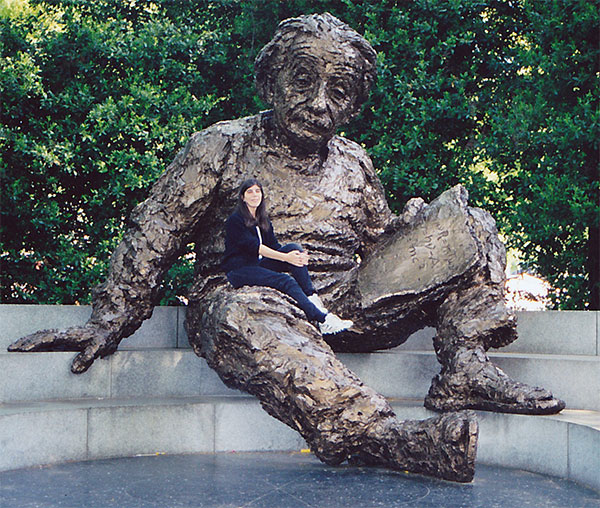
Hanging out with Al.

Karyn Traphagen is the Executive Director of ScienceOnline Inc., a non-profit organization representing a diverse science community that cultivates conversations both online and face-to-face. At face-to-face events, including a perennially popular signature conference in North Carolina, ScienceOnline encourages creativity, collaborations, connections, and fun. Through social media, the ScienceOnline community listens, supports, shares, recommends, and reaches out. ScienceOnline also develops tools such as ScienceSeeker news river and curates The Open Lab, an annual anthology of the best science writing on the web.

Karyn previously taught physics at the high school, undergraduate and graduate levels. As a teacher, she sought to connect the science of the curriculum with the everyday life of her students and to instill lifelong skills for learning. Karyn completed graduate work at the University of Virginia and also studied at the University of Stellenbosch (South Africa). She has trained physics teachers through the University of Virginia’s Physics department and traveled to South Sudan to conduct professional development training for local teachers. She has more than 10 years of experience developing and teaching online courses.

In addition to her science work, Karyn maintains a freelance graphic design studio. Her latest project was a work on Ancient Near Eastern royal inscriptions.

Karyn lives in Durham, North Carolina, and she encourages readers wherever they are to Stay Curious at her blog. Connect with her on Twitter or Google+. You can also follow ScienceOnline on Twitter and Google+. [Editor’s note: Karyn is also an official ADK46er, which is pretty incredible.]


DXS: First, can you give me a quick overview of what your scientific background is and your current connection to science?

Karyn enjoys creating art with…LEGOS!

I remember one of my favorite childhood gifts was a chemistry set and a microscope. My mother was a great role model. She left a job as a chemist to get married and raise a family, but she always instilled in me the attitude that if I was interested in any subject, I could learn it and do it. I always accepted a challenge.

Although I attended excellent public schools, I had to overcome some significant challenges. Our family was one of the only ones in our town designated as eligible for the new free lunch program, and I started high school when Title IX was passed (go ahead, do the math). This was an exciting time for girls in school-but not just for sports (our legacy to our 8thgrade class was a change in our public (!) school policy to allow girls to wear jeans).

I was thrilled to be the one of two females on our Math League squad and to have access to advanced science courses and labs in high school. It seems I always took a circuitous route though. I helped change the rules so that I could graduate in 3 years. I was very fortunate to have lots of opportunities after graduation (including being recruited for the first female class at West Point). But then, I took on other responsibilities and went back to school later to finish my degrees.

In addition to research, I have taught high school physics and physical science, undergrad physics (I especially liked the Physics for Non-Science majors!), and helped to develop a degree program in the university physics department for high school physics teachers. I’ve led sailing trips in the Bahamas for biology students and I’ve been trained by the American Meteorological Society to use live data in classrooms. I’ve even been a programmer. Obviously I’m interested in too many things for my own good.

Currently, I am the Executive Director of ScienceOnline, a non-profit organization that facilitates discussion about science through online networks and face-to-face events. We welcome all to the conversation – scientists, journalists, librarians, educators, students, and anyone interested in engaging in science. Four words that help to define ScienceOnline are: Connections, conversations, collaborations, and community. We also develop projects that work to connect scientists and their research to the public. I’m thrilled to be representing this thriving community, and I enjoy working with so many talented, brilliant, and fun people.

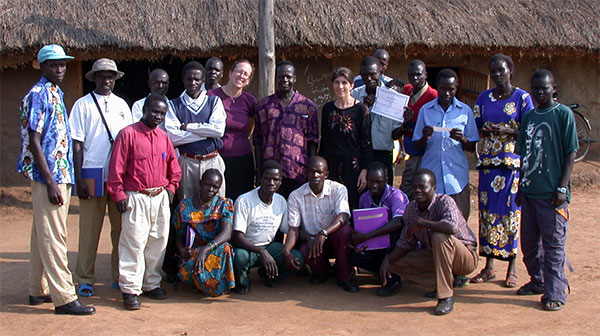
Karyn has traveled to South Sudan to conduct professional development training for local teachers.

DXS: What ways do you express yourself creatively that may not have a single thing to do with science?

I have an insatiable thirst to learn and try new things, which has resulted in a string of very diverse jobs. Over the years my creative activities (and jobs) have included medieval calligraphy, art, photography, mathematics (I count this as creative), LEGO creations, graphic design, garment creation, gardening, construction projects, violin/guitar (as musician and also instructor), studying ancient languages and writing systems (both real and created).

On the surface, many people think these are not “science-y” but really, they are all about science. Seeing that connection is something I love to introduce people to. My science career has included research that helps create more bio-fidelic crash test dummies (I worked with cadavers-this makes for great party stories), meteorology, high school physics teacher, and university physics instructor. I used to think that people would think I was flighty or unable to commit to a project. Now I see the benefits of having been successful at so many different skills and fields of study. The key was seeing how they all tapped into my curiosity and creativity.

DXS: Do you find that your scientific background informs your creativity, even though what you do may not specifically be scientific?

Definitely. Paying attention to the details of the world gives me opportunity to see beauty, symmetry, order, and chaos in unusual places. I am thrilled by the macro and the micro vision of our universe and lives (which is why I continue to study other fields of science in addition to physics). These are not only realms to explore with experiments, but to experience emotionally and to communicate creatively. I have learned to appreciate the details in science and that carries over into the art, photography, design, and construction projects that I may spend time on. Even my tattoo (snow crystals) reflects both beauty and science (and a lot of personal meaning too!)

DXS: Have you encountered situations in which your expression of yourself outside the bounds of science has led to people viewing you differently-either more positively or more negatively?

I think that sometimes the more conventional creative side of my life makes me seem more “human” and approachable. When non-science people ask what I do, I don’t usually start with “physics” in the answer because that often is hard for people to relate to and the conversation dies. But if they get to know some things I am interested in or the diversity of things I’ve created, and THEN learn about my science background, they are more likely to perceive me as more than a physics geek. At that point they feel more comfortable asking questions about science.

On the other hand, some of my science colleagues in the physics department saw those other activities as something that took me away from time that could be spent on physics. Even if they thought my non-science activities might be amazing they minimized their value. Thinking back now, maybe this is why I keep so much of what I do to myself and it takes time to draw out of me all the things that I have had the joy of learning and doing.

I think there is a geek aspect to many of the things I like to do. They don’t completely overlap with the same brand of geekiness though. It’s just that you align yourself with a community that is very engaged in a certain niche. A tribe if you will. Some of these tribes don’t understand each other very well, so I sometimes feel like an ambassador of the various communities I am a member of.

DXS: Have you found that your non-science expression of creativity/activity/etc. has in any way informed your understanding of science or how you may talk about it or present it to others?

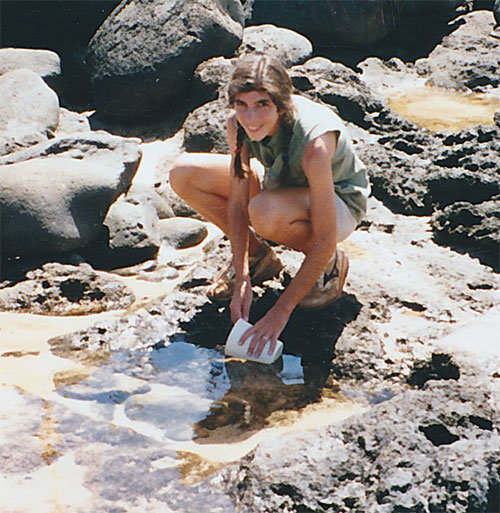
Karyn collecting water samples in Molokai, Hawaii

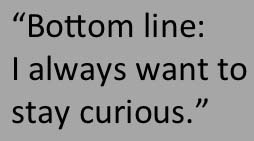
Yes, I used to focus more on the narrow aspects of my field. Now I try to see interconnectedness—not only with other fields of science, but more broadly with day-to-day life. My “non-science” expressions are really gateways into understanding the science better or being willing to think more creatively about how to solve a research problem. Bottom line: I always want to stay curious. We don’t value curiosity enough. I think curiosity undergirds creativity. Curiosity doesn’t just beget science questions. We also have to ask, “What would happen if I mixed these colors together?” or “How small can I write with this pen nib and ink?” or “What kind of effects can I create in this photograph by changing the lens?”

DXS: How comfortable are you expressing your femininity and in what ways? How does this expression influence people’s perception of you in, say, a scientifically oriented context?

I really tried to think about this carefully. In the physics department at the university where I worked, my main concern was not the fact that I was in the minority (or that there were more men’s rooms in the building), but that the lab was freezing and I needed to keep warmer layers at work to survive! Basically, the lab protocols determined what kind of clothing and shoes I could wear, how I kept my hair (out of the way!) etc. I never felt those things were anything particularly against being feminine, but I didn’t go out of my way to wear makeup or dress special.

On the other hand, I do think that female visitors and students who dressed more feminine were definitely treated differently. I desperately wanted to be valued for my ideas and work ethic and not what I looked like or which bathroom I used, so I was probably more affected by others attitudes than I realize(d).

Probably the most feminine thing I’ve ever done was to have children and show my priority for them (I realize that there are fathers who do this too, so it may be more a parent thing than a feminine thing, but in the society I live in, it is still the mothers who bear the lion’s share of the responsibility for child-rearing). I had colleagues who could not understand some choices I made because of family. They felt I was wasting my potential (whatever that means!).

Now that I am not in a lab and don’t have small children at home, I alternate between tomboy and professional attire. I do like that it is easier to create a more feminine professional wardrobe these days.

I find it odd that women are complimented for their appearance more than men. I don’t think people realize how out-of-balance this is. I try to notice and mention men’s clothing and appearance as a small step toward equalizing that.

DXS: Do you think that the combination of your non-science creativity and scientific-related activity shifts people’s perspectives or ideas about what a scientist or science communicator is? If you’re aware of such an influence, in what way, if any, do you use it to (for example) reach a different corner of your audience or present science in a different sort of way?

I think that getting the attention of whatever audience you are addressing is paramount. You may have something wonderful to share, but if you don’t have their attention, it will fall to the ground. I want to develop a relationship with people in order to get them to trust me, believe me, and be interested in what I have to say. Dispensing information is not enough.

The manner in which I communicate makes all the difference in how the person will engage the topic. To do this, I need to listen first and understand who my audience is. Using creativity, I will then try to connect with each person or audience in a way that I hope will best bring them along the journey I have experienced. Some people will want to know more specific details, others will want to know how it affects their lives, and still others will challenge and question my thoughts and methods.

Using visual arts (e.g. fine arts, video, etc) can be as important as a data chart. As long as the conversation continues, then I have been successful in communicating. My goal is to make someone (whether a researcher or a teenager) so interested that they will take on a search for more information on their own. That’s really how we learn and retain best—to explore something we have invested our own time in.

I also use a variety of outlets for communication. There are definitely important and different roles for journals, conference presentations, Twitter, blogs, Google+, etc. These diverse outlets are just as important as creative ways of presenting material. Again, you must always be aware of your audience. I would use a museum’s Twitter account to communicate differently than I would my regular account.

DXS: If you had something you could say to the younger you about the role of expression and creativity in your chosen career path, what would you say?

Knowing myself, I’m not so sure that the younger me would listen to any advice I would give! In some ways, going through the experiences is what made me who I am and there are no short cuts for that. However, there are definitely things that would have been great to learn earlier on.

So, I would tell the younger me not to try to keep creative interests and career objectives separate or think that they have to be at odds with each other. They don’t need to be in competition for your attention. Creativity, job skills, life experiences, and responsibilities can interweave. You will not only be more content, but probably more productive in all your endeavors.

I would also tell her that “no” is not a dirty word and that it is ok to be selective in how you spend your time.

Explosions, Just a Bit More Than Fireworks

Image by Nux. (Source)

By Adrienne M Roehrich, Chemistry Editor


It’s that time of the year in the U.S. – when we blow up pretty bombs in celebration of the approval of the Declaration of Independence, declaring the independence from the Kingdom of Great Britain. Around this time of year, there is no dearth of articles about the chemistry of fireworks, but the chemistry editor here could not let her secret love of this topic pass by.


What is an explosive? An explosive is a combination of materials that when reacted produce an abundance of light, sound, heat, and pressure. A firework encompasses all 4 of those: we are familiar with the light – the whole reason we view fireworks, we are familiar with the sound – the boom that follows especially large displays, we are familiar with the pressure if we are close enough – that’s the force that pushes into you and the “shock wave” pictured in movies after large explosions; and we are familiar with the heat – ever held a sparkler?


There are three main types of explosives: chemical, nuclear, and mechanical. The bulk of this post will focus on chemical explosives with a short bit about nuclear and mechanical.


If we start at the beginning – well, we’ll skip to the “accepted” first explosive – black powder. Black powder, also called gun powder and the precursor to fireworks, is coined a chemical explosive. Chemical explosions generally fall into a specific classification of chemical reactions called oxidation.


The earliest definition of oxidation was the addition of the element oxygen to a compound, also called combustion. Due to limits of this definition, it was later changed to be the loss of electrons from an element (within a compound.) The original definition can easily be shown in terms of explosives. The simple mixing of hydrogen and oxygen with the addition of just a bit of heat, will form water in an explosive display:


2H2 + O2 -> 2H2O


The little flame used to catalyze the reaction in the video is actually much more energy than is necessary to cause this reaction to occur, but it’s difficult to get an even littler source of heat and safely demonstrate this reaction. You might also note a lot more energy comes out of that reaction once started in terms of light and heat and sound. I’ve been the one lighting that reaction in a demo without both ears plugged and I couldn’t hear out of one ear for the rest of the lecture.


If we focus on the loss of electrons version of oxidation, we get specific colors. This is what the flame video by The Fabulab focused on in their entry for Alan Alda’s Flame Challenge. I direct your attention to 1:08 and the discussion of electrons.


Metals are the simplest example (and most used) example of oxidation as the loss of electrons and the color change associated. Because some electrons are lost, we now have a different set of electrons changing energy and a different color appears.


From here, it is easy to see how fireworks fall into this category of explosives. Fireworks are always being further refined to produce a specific set of light and sound. For a bit more information, this video gets fairly specific.

 
The vast majority of explosives in use today are considered chemical explosives. This covers a range of materials, including the aforementioned black powder and fireworks, nitroglycerin, dynamite, plastic explosives (C4 for Mythbusters and sci-fi television show fans), and the ones with water now restricting the amount of water one is allowed to bring onto an airplane in the U.S.


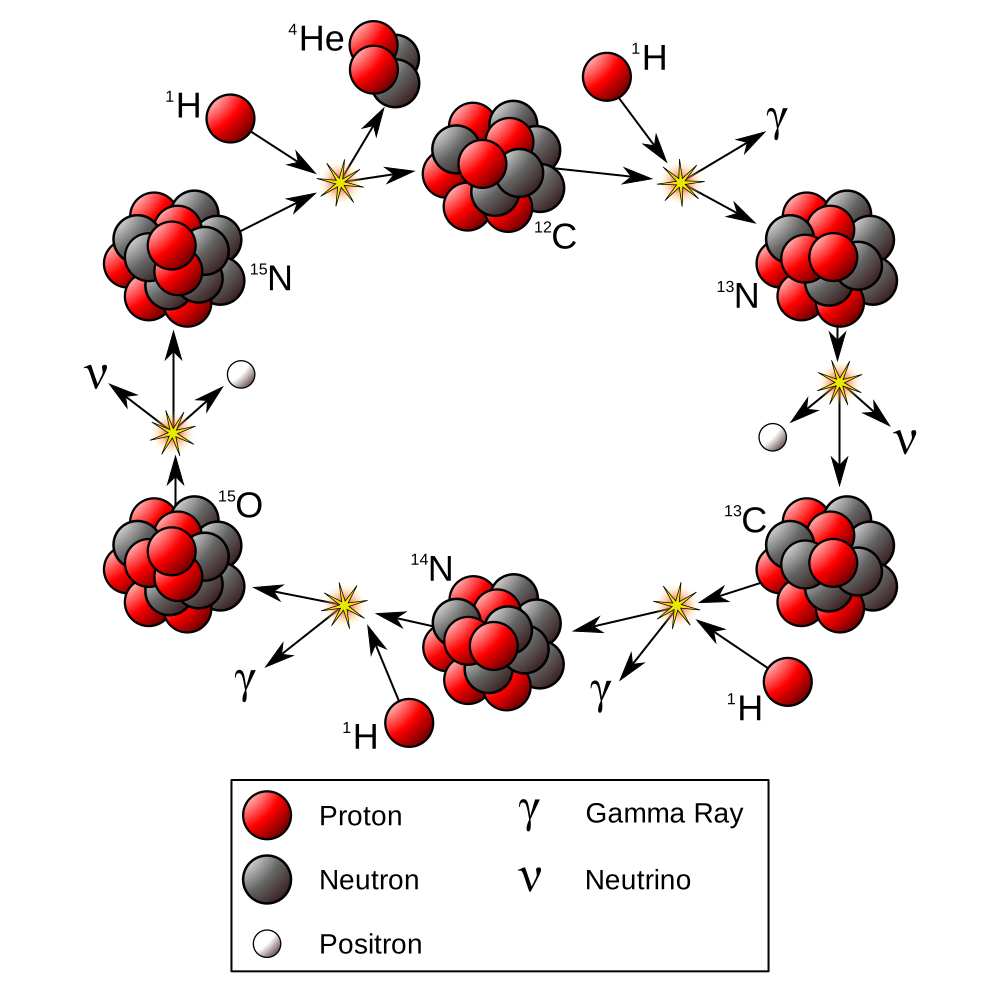
Another type of explosive is a nuclear explosive. The energy in these explosives come from a nuclear reaction. Wikipedia differentiates types of nuclear explosions into stellar and man-made. Another way to differentiate nuclear reactions is by fission and fusion. The explosions at the heart of stars fall under nuclear fusion and are called stellar nucleosynthesis.


Nuclear fusion is the process of forcing 2 atoms into 1 new, larger atom. The CNO cycle, diagrammed here, is one of the nuclear fusion reactions occurring in stellar nucleosynthesis.


Source

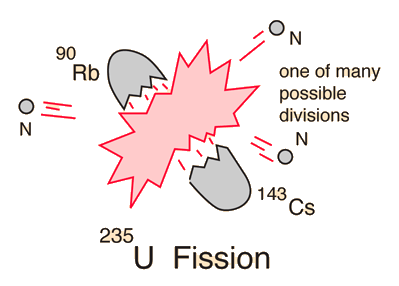
Nuclear fission is the process involved in nuclear weapons.


Nuclear fission is the process of dividing an atom into 2 or more smaller atoms. In both nuclear fusion and nuclear fission processes, specific types of radiation are emitted because the new atoms produced do not have the same energy as the starting material. The radiation emitted in these reactions is not just from a change of electrons but from a change from the nucleus of the atom. This emission of radiation is part of the light and heat from the sun and the light and heat of a nuclear bomb.


The third and last type of explosive I will cover is a mechanical explosive. These explosions occur as a purely physical process, but can then incite a chemical explosion. Mechanical explosions occur due to a sudden release of a build up of pressure. A specific kind of these explosions are under conditions where a liquid is pressurized in a vessel and a rupture brings it above its boiling point, called a boiling liquid expanding vapor explosion, BLEVE. Steam powered trains were sometimes damaged by these type of explosions. An explosion of a water heater falls into this category. Mechanical explosions are the rarest and perhaps least covered types of explosives.


Water heater explosion by the Mythbusters.


These views are the opinion of the author and do not necessarily either reflect or disagree with those of the DXS editorial team.

Literal XX Xplainer: How we can live with two X chromosomes

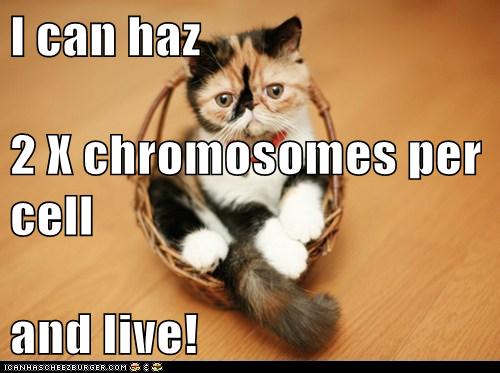
This cat also haz those two chromosomes
to blame for that splotch on its face.
By Emily Willingham, DXS managing editor

We are “Double X Science” because we target evidence-based information to women, most of whom carry two X chromosomes, although exceptions exist. Some women carry a single X chromosome, and some people can be XY and develop and/or identify as female. That’s one reason we mention “the woman in you” here at Double X Science.

But today, I’m writing about those of us who have at least two X chromosomes. You may know that usually, carrying around a complete extra chromosome can lead to developmental differences, health problems, or even fetal or infant death. How is it that women can walk around with two X chromosomes in each body cell-and the X is a huge chromosome-yet men get by just fine with only one? What are we dealing with here: a half a dose of X (for men) or a double dose of X (for women)?

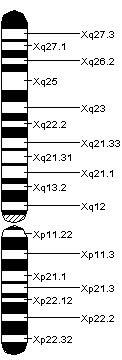
X chromosome
(Source)
The answer? Women are typically the ones engaging in what’s known as “dosage compensation.” To manage our double dose of X, each of our cells shuts down one of the two X chromosomes it carries. The result is that we express the genes on only one of our X chromosomes in a given cell. This random expression of one X chromosome in each cell makes each woman a lovely mosaic of genetic expression (although not true genetic mosaicism), varying from cell to cell in whether we use genes from X chromosome 1 or from X chromosome 2.

Because these gene forms can differ between the two X chromosomes, we are simply less uniform in what our X chromosome genes do than are men. An exception is men who are XXY, who also shut down one of those X chromosomes in each body cell; women who are XXX shut down two X chromosomes in each cell. The body is deadly serious about this dosage compensation thing and will tolerate no Xtra dissent.

If we kept the entire X chromosome active, that would be a lot of Xtra gene dosage. The X chromosome contains about 1100 genes, and in humans, about 300 diseases and disorders are linked to genes on this chromosome, including hemophilia and Duchenne muscular dystrophy. Because males get only one chromosome, these X-linked diseases are more frequent among males-if the X chromosome they get has a gene form that confers disease, males have no backup X chromosome to make up for the deficit. Women do and far more rarely have X-linked diseases like hemophilia or X-linked differences like color blindness, although they may be subtly symptomatic depending on how frequently a “bad” version of the gene is silenced relative to the “good” version.

The most common example of the results of the random-ish gene silencing XX mammals do is the calico or tortoiseshell cat. You may have heard that if a cat’s calico, it’s female. That’s because the cat owes its splotchy coloring to having two X chromosome genes for coat color, which come in a couple of versions. One version of the gene results in brown coloring while the other produces orange. If a cat carries both forms, one on each X, wherever the cells shut down the brown X, the cat is orange. Wherever cells shut down the orange X, the cat is brown. The result? The cat can haz calico.

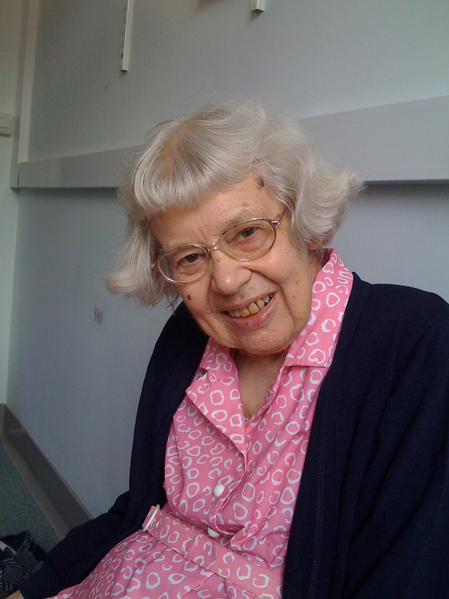
Mary Lyon (Source)
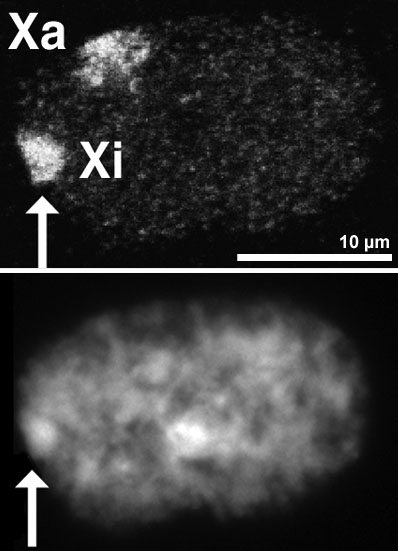
Cells “shut down” the X by slathering it with a kind of chemical tag that makes its gene sequences inaccessible. This version of genetic Liquid Paper means that the cellular machinery responsible for using the gene sequences can’t detect them. The inactivated chromosome even has a special name: It’s called a Barr body. The XXer who developed a hypothesis to explain how XX/XY mammals compensate for gene dosage is Mary Lyon, and the process of silencing an X by condensing it is fittingly called lyonization. Her hypothesis, based on observations of coat color in mice, became a law-the Lyon Law-in 2011.


Barr bodies (arrows).
(Source)
Yet the silencing of that single chromosome in each XX cell isn’t total. As it turns out, women don’t shut down the second X chromosome entirely. The molecular Liquid Paper leaves clusters of sequences available, as many as 300 genes in some women. That means that women are walking around with full double doses of some X chromosome genes. In addition, no two women silence or express precisely the same sequences on the “silenced” X chromosome.

What’s equally fascinating is that many of the genes that go unsilenced on a Barr body are very like some genes on the Y chromosome, and the X and Y chromosomes share a common chromosomal ancestor. Thus, the availability of these genes on an otherwise silenced X chromosome may ensure that men and women have the same Y chromosome-related gene dosage, with men getting theirs from an X and a Y and women from having two X chromosomes with Y-like genes.

Not all genes expressed on the (mostly) silenced X are Y chromosome cross-dressers, however. The fact is, women are more complex than men, genomically speaking. Every individual woman may express a suite of X-related genes that differs from that of the woman next to her and that differs even more from that of the man across the room. Just one more thing to add to that sense of mystery and complexity that makes us so very, very double X-ey.


[ETA: Some phrases in this post may have appeared previously in similar form in Biology Digest, but copyright for all material belongs to EJW.]