Filial cannibalism: one way evolution can bite
by Jeanne Garbarino Continue reading


Filial cannibalism: one way evolution can bite
by Jeanne Garbarino Continue reading

First move is ours: Ditch the guilt weighing you down.
by Jeanne Garbarino
On Monday, April 15th, two very profound things happened.
The first event was and is nothing less than harrowing and wretched. That afternoon, two bombs were detonated at the finish line of the Boston Marathon. This senseless act robbed this earth of three lives, including an eight-year-old boy, and resulted in countless injuries, many severe. Word of this tragedy spread rapidly, resulting in a global outpouring of compassion.
The second event was much more isolated, affecting only a handful of people, including me. Just hours after the news from Boston started streaming in, I joined my colleagues at The Rockefeller University in a discussion about work-life balance led by Anne-Marie Slaughter. Slaughter, who was catapulted into the limelight after her famous (infamous?) Atlantic article “Why Women Can’t Have It All,” presented compelling and honest points about gender equity in the workplace, and the current devaluing of the caretaker role versus that of the breadwinner. While it was a minor point in her presentation, Slaughter said something that burned into my brain: One of the most common things people say on their deathbeds is that they wished they’d spent more time with their family, that they had worked less.
The juxtaposition of these two events in my personal space-time continuum has made me seriously reevaluate what the hell I am actually doing in my life. On one hand, I am a caregiver. I have two special and very Continue reading

A new community resource to help us not mess up
By Jeanne Garbarino Continue reading
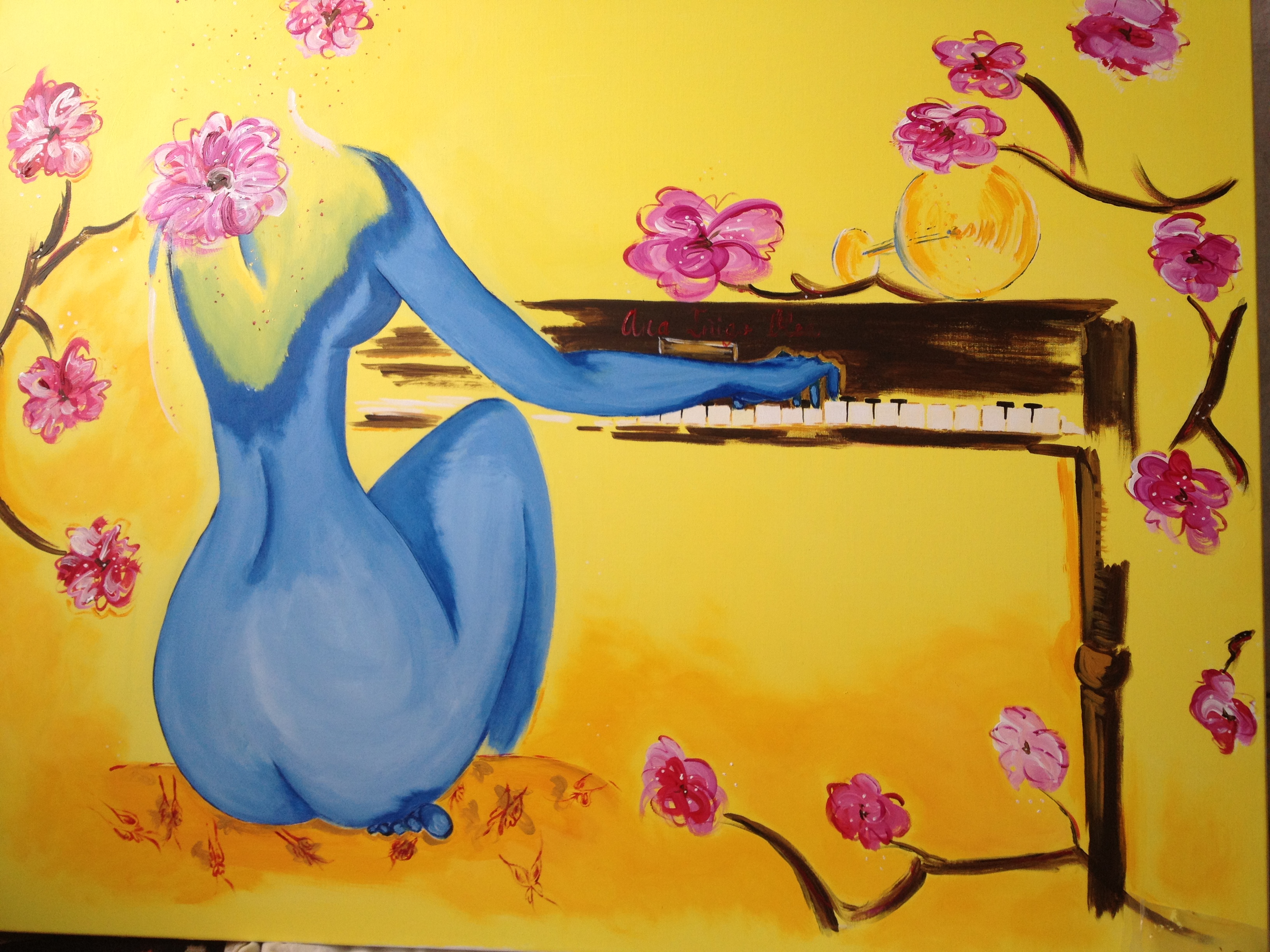
“Musick has Charms to sooth a savage Breast,/ To soften Rocks, or bend a knotted Oak.” — Excerpt from The Mourning Bride Continue reading
By Biology Editor Jeanne Garbarino
 |
|
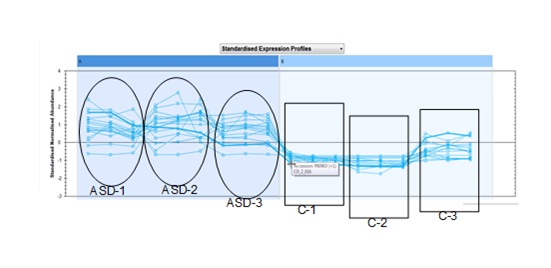
Preliminary data from the Darie Lab shows that there are saliva proteins showing a 20X or greater
difference between ASD (ovals) versus sibling non-ASD controls (rectangles). |
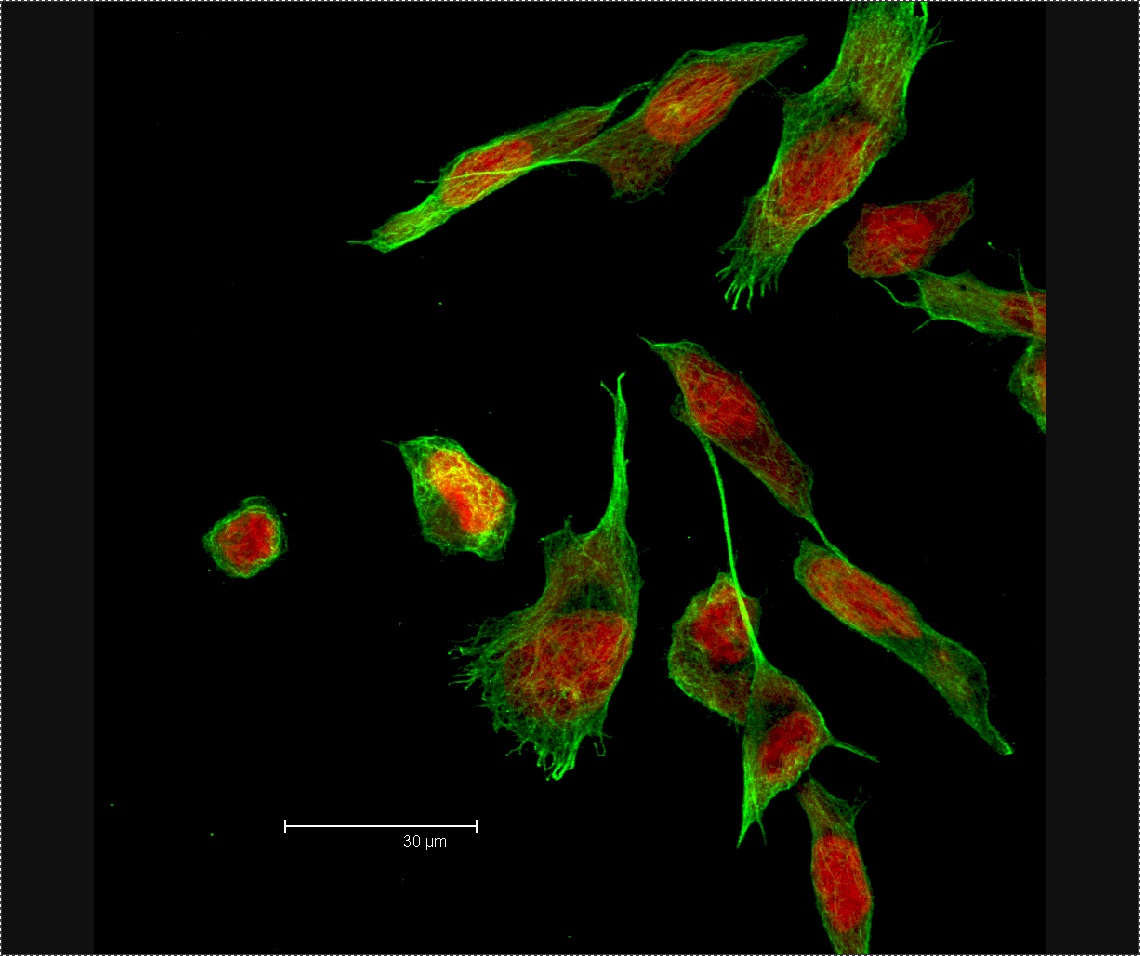
If you decide to kick in some funds, your good deed will not go unrewarded. As a thank-you for contributing, the Darie Lab has offered up a few cool perks, including high-quality prints of microscopic images in the brain.
If you are looking for a good cause, look no further. I am excited to see how the Darie Lab crowdfund experience goes, and I wish them all the best in their quest, both as professionals and as parents. To find out more, or to make a donation, visit the Darie Lab RocketHub page.
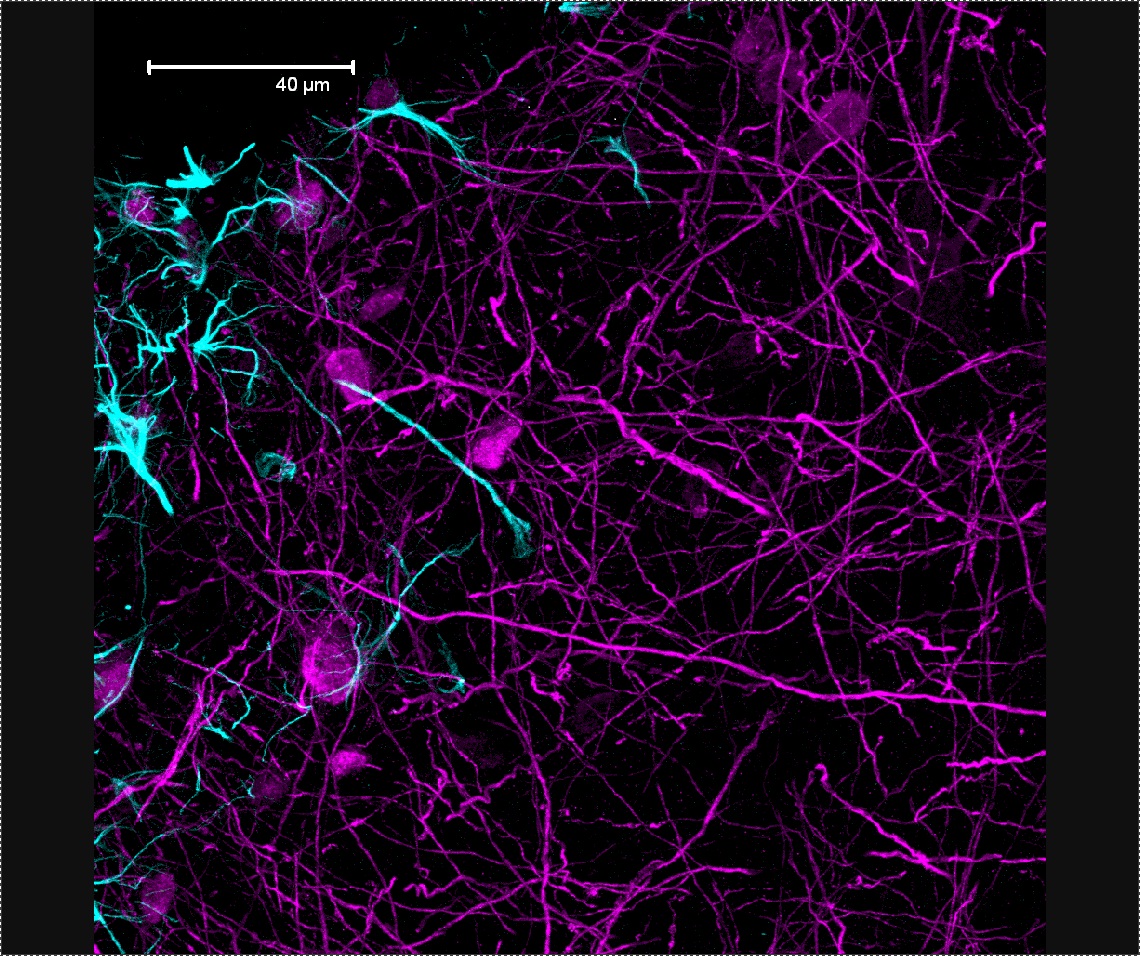 |
| Fluorescent images of the brain, available to those donating $100 or more. |
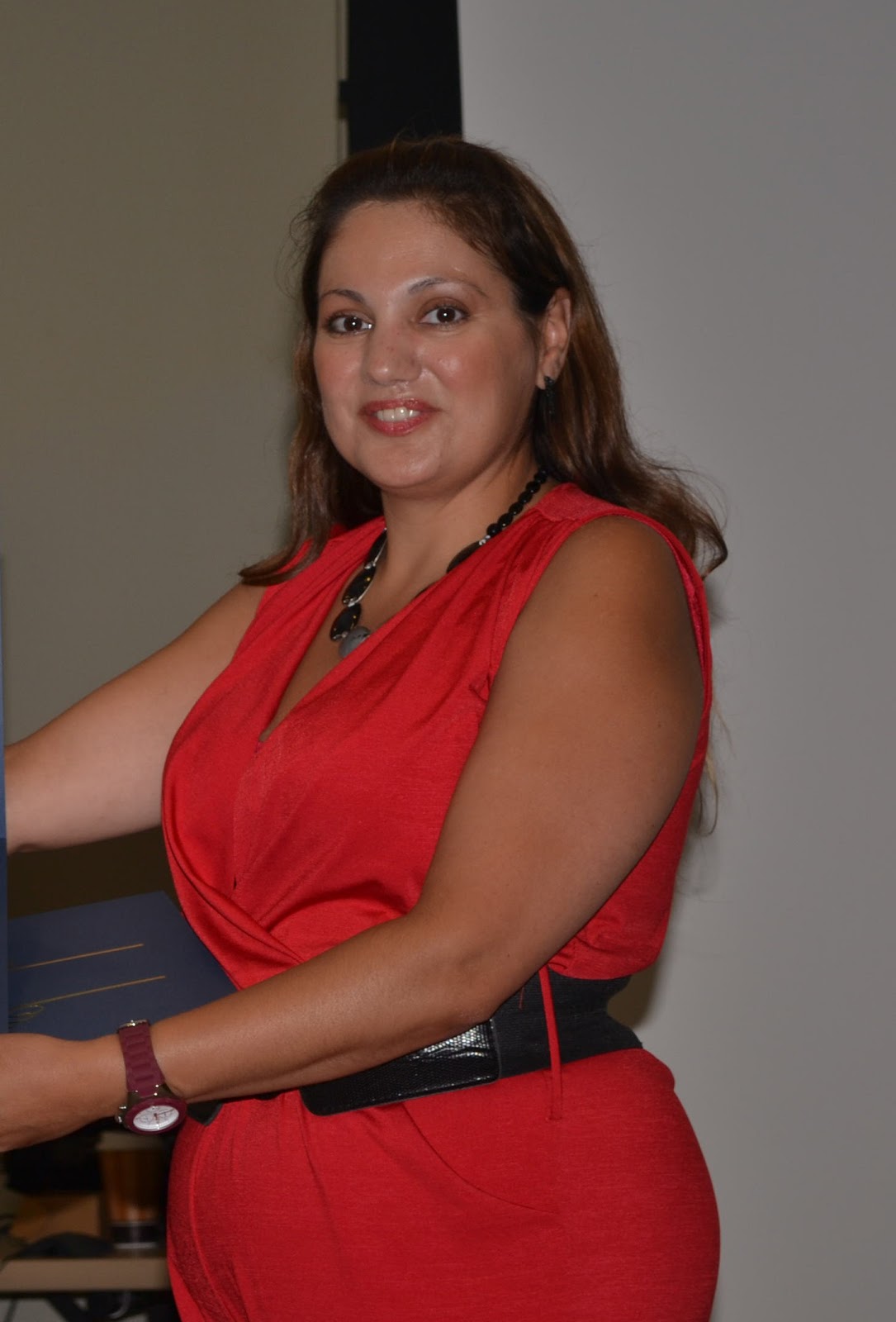
Jennifer Canale is a Senior Microbiologist for the United States Food and Drug Administration (FDA) in Queens, NY, as well as an adjunct microbiology lecturer for City University of NY (York College and College of Staten Island). Jennifer is also passionate about promoting women in science and leads an annual women in science event at the FDA as a means to promote awareness about gender discrimination in the workplace.
[DXS] First, can you give me a quick overview of what your scientific background is and your current connection to science?
 My family was supportive to a point, but when I asked for an erector set for Christmas, I got a Barbie town house. When I wanted to go camping with the Girl Scouts, I was sent to dance school (but, much to my amazement, I enjoyed that until I was 17). My parents started giving in around 3rdgrade, and I got the panda bear-shaped calculator I wanted, as well as the robot toy 2XL featuring the 8-track tape. My mom would beg me to watch Little House On the Prairie, but I preferred Star Trek (the original Kirk version), Lost in Space (Danger Will Robinson), and Land of the Lost. Of course this was all my dad’s fault according to mom – he was the sci-fi guy, but he always said, “Jen was born this way!”
  I graduated from NYU with honors, and my parents got me two presents: my name in diamonds and a stethoscope. My grandfather bought me a set of crisp white lab coats and gloated to his brothers with a cigar in his mouth. Apparently a bet was made amongst them and from hence forward they had to call me “doctoressa,” the hybrid feminized version of doctor in Italian.
  In the nineties – halfway through college – I did change my mind, and my uncles were dancing in the streets. They thought I met a nice boy in college and I was going to settle down, give them more kids, and make sauce and meatballs on a Sunday like the good Paesana I was supposed to be. I announced I didn’t want to be an MD anymore, I wanted to be a PhD, instead. I wanted to be a SCIENTIST, do research, and maybe teach in a university. A “Scientista”-“Professoressa” “Aiuta Dio” (which means help us god)! Back to church and the rosary beads. When I got my master’s degree in microbiology, the family was just convinced I liked to collect graduation hats.
  There was a feeling among my family members that science was a “boy thing,” and my cousins teased me as a result. They considered me a nerd and less feminine than my other girl cousins. I was told that I would never get married and have kids because I am a bookworm. Even in the mid-’90s, I had friends that told me not to tell guys that I was a scientist because they wouldn’t ask me out. I was kind of cute and only told a guy the truth about my profession if we got serious. As an experiment, I told one guy I met that I was a scientist and he said I looked too sexy to be that smart – and then he walked away.
Strike two was my long hair. I was told that my long hair was not practical in a scientific environment, and if I looked too glamorous on interviews I would not be taken seriously. I put my hair in a bun and toned down my make-up, but I didn’t cut it. Apparently, I looked too feminine, especially given my major curves, and even my power suits could not hide that. Women at the time were dressing very masculine (think early Miranda on Sex in the City) to compete with men for jobs. When I got the interview for my first job with Dr. Moretti in the Reproductive Immunology Lab at St. Vincent’s Medical Center in Staten Island, I remember wearing a black and white houndstooth print sheath dress with a matching short suit jacket, accessorized with pearls. Dr. Moretti said I was like Rosalind Franklin and Jackie Kennedy all rolled up into one, with a side order of cannoli.
 My wedding was the most joyful event in our family’s history because most of them thought that would never happen. I still get teased by my family when I give a long, drawn out scientific explanation of something or when I bake and make exact measurements of ingredients with my Pyrex bakeware with both the ounces and metric conversions. My husband responds for me and says “he learns something new everyday and hopes that our son becomes a nerd just like his mommy.”
[JC]My entire life is influenced by, or even revolves around, “Science.” I love science fiction movies, books, comic books, etc. Any inspiration I get for any of my creative projects always has some root in something “science-related.” I also think that my background in science helps make my visions come to life. Even the smallest details like the stemware I chose for my wedding was a Mikasa pattern that resembled a DNA double helix, or a hexagonal candleholder that looked like a benzene ring (at least it did to me!). Another example comes from my Women’s Program, when the theme was “Writing Women Back Into History.” So I found a book called The Women of Apollo, which gave the untold story of the women engineers who had critical contributions to the Apollo Space programs. For me, all roads lead back to science.
 [JC]I have experienced both negative and positive views by others when I am expressing my self creatively. On one hand, there were people that associate planning events with a negative stereotype of being a “party-girl” or “bimbo” type that cares more about the “girly fun” stuff than the serious business of science. On the other hand, there have been people who constantly praise me for presenting science-related topics in entertaining ways. The latter view me as a “flamboyant scientist” who shares her knowledge in an interesting manner. In this life you will never please everyone; only seek to please yourself and your loved ones because those are the only opinions that matter.
  [JC]I am comfortable with expressing my femininity in the way I dress and conduct myself in any setting. Although, many years ago, I was advised to dress in suits and tailored shirts similar to a man and wear neutral make-up or none at all if I wanted to be taken seriously in the scientific world, I went against the grain. I am a curvy girl, and there is no hiding my femininity. So I embrace it. I wore suits, but nothing drab – always something like a red or purple skirt suit with heels. I adhere to work environment rules like no open toe shoes in the lab, which is a safety concern, but I do not downplay my female attributes to fit in, or to present a more palatable image to my scientific peers. I do not concern myself with people’s perceptions of me based on my looks because once I “speak” and “communicate” scientific concepts, there is no question of my prowess. I am what I am, and that is a female scientist, and I pride myself in being a “stereotype buster.”
  [JC]I think that being the “flamboyant scientist” works in my favor, and as a science communicator, it is effective all aspects of my life. As an adjunct professor, my students often thank me for making science fun and understandable. As a scientist, my colleagues and interns find my training methods to be memorable and actually increase their understanding of the job. As the Women’s Program Coordinator at the FDA, I create unforgettable events that people look forward to and learn a lot from. As a wife, mother, daughter, aunt, cousin, and friend, I am the “Fun Fairy” (pictured with wings and a lab coat), and their lovable nerdy girl.
 by Biology Editor, Jeanne Garbarino
Wild. Sex. For some, those two words might conjure up a steamy scene set in the boudoir, or if you take what you can get, perhaps the back seat of a car. But for Dr. Carin Bondar, Biologist with a Twist, “wild sex” takes on a literal translation. In her new series, aptly named Wild Sex Continue reading
 |
| Source |
| Source |
 |
| A line of cars and their headlights: a reminder of higher DNA organization. (Source) |
| Actual “beads on a string,” aka DNA being organized for packaging. |
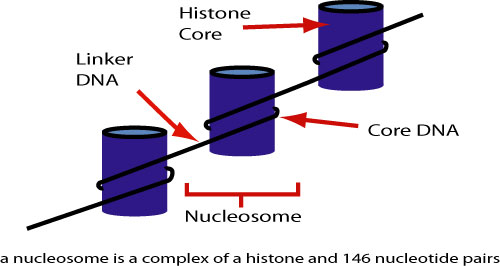 |
| (Source) |
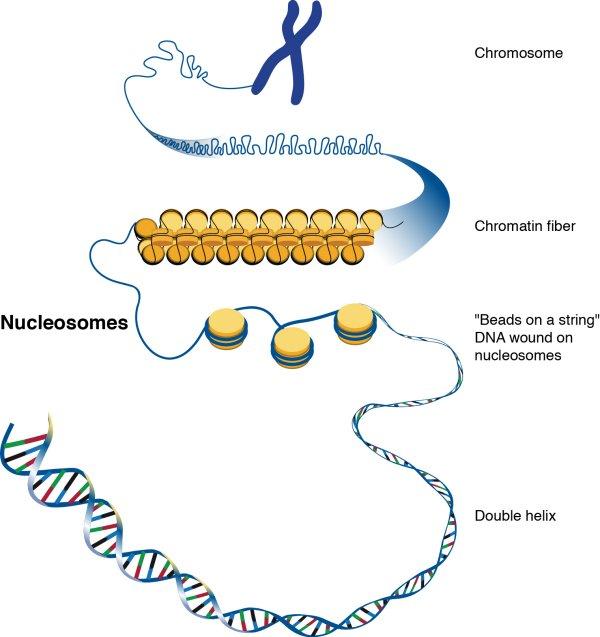 |
| The hierarchy of DNA organization. Source. |
